
The global energy landscape has been thrust into a state of unprecedented turmoil, marked by a historic surge in crude oil prices that has blindsided markets and policymakers alike. In March, Brent crude oil prices skyrocketed by 63%, the most significant monthly gain since records began in 1988, while U.S. West Texas Intermediate followed suit with a staggering 51% increase. This “nightmare” scenario is the direct result of an escalating conflict with Iran, which has triggered the most substantial supply disruption in modern history. This article aims to explore the multifaceted layers of this crisis, from the physical blockade of critical maritime routes to the high-stakes diplomatic maneuvering that could either stabilize the global economy or lead to total energy infrastructure destruction.
Historical Context and the Gravity of Supply Disruptions
To understand the magnitude of the current crisis, one must look at the historical role of the Middle East as the world’s primary energy hub. For decades, the stability of global markets has rested on the free flow of oil through strategic chokepoints. Past disruptions, such as the 1973 oil embargo or the “Tanker War” of the 1980s, caused significant economic pain, but they pale in comparison to the total cessation of traffic currently observed. These background factors matter because the global economy is now more interconnected than ever; a disruption of this scale doesn’t just raise prices at the pump—it threatens the foundational security of international trade and industrial production.
The Strategic Importance of the Strait of Hormuz
The Paralysis of a Critical Global Artery
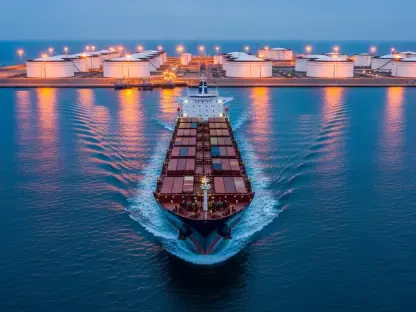
The central catalyst for the current price rally is the total blockade of the Strait of Hormuz. Traditionally, this narrow waterway facilitated 20% of the world’s seaborne oil shipments, acting as the primary exit point for crude from the Persian Gulf. Since the commencement of hostilities on February 28, shipping through the strait has effectively ceased, removing millions of barrels from the daily global supply. This disruption is not merely a logistical hurdle but a fundamental shift in market mechanics, as the absence of Iranian and neighboring exports creates a vacuum that other producers are currently unable to fill.
Asymmetric Warfare and the Risk of Escalation
The conflict has evolved into a complex asymmetric struggle where Iran seeks to exert maximum leverage over Western powers. The recent attack on a Kuwaiti oil tanker near Dubai serves as a grim demonstration of Iran’s ability to project force beyond the immediate boundaries of the strait. This strategy is designed to impose heavy economic costs on the international community while making a traditional military exit strategy for the U.S. increasingly difficult. By targeting commercial shipping, Iran has turned a regional dispute into a global economic siege, forcing analysts to reconsider the traditional definitions of maritime security.
Diplomatic Deadlocks and the Threat of Total War
The narrative is further complicated by the volatile relationship between Washington and Tehran. While reports suggest that both President Donald Trump and President Masoud Pezeshkian may be open to a ceasefire, the conditions for peace remain diametrically opposed. The U.S. administration has weighed high-risk options, including a ground operation to seize Kharg Island—the facility responsible for 90% of Iran’s crude exports. Conversely, threats to obliterate Iran’s civilian energy and desalination infrastructure represent an “all-or-nothing” approach to diplomacy that keeps market volatility at an all-time high.
Emerging Trends and the Future of Energy Security
Looking forward, this conflict is likely to catalyze a permanent shift in how nations approach energy independence and maritime security. We are seeing a move toward accelerated investment in alternative energy sources and non-Middle Eastern oil production as a hedge against future blockades. Furthermore, the use of automated and drone-based surveillance in maritime corridors is expected to become a standard regulatory requirement for insurance and shipping. Experts predict that even if a ceasefire is reached, the “risk premium” on oil prices will remain elevated for years as the world grapples with the vulnerability of traditional supply chains.
Navigating a High-Volatility Market Environment
For businesses and investors, the takeaway from this crisis is the absolute necessity of diversification and risk mitigation. Companies should prioritize securing long-term energy contracts and exploring local supply alternatives to buffer against sudden price spikes. Professionals in the logistics and manufacturing sectors must develop contingency plans for prolonged maritime disruptions. On a broader scale, the current situation serves as a stark reminder that geopolitical intelligence is just as vital as economic data when forecasting market trends. Applying these insights means moving away from a “just-in-time” supply chain model toward one that prioritizes resilience and strategic stockpiling.
Restoring Stability in an Uncertain World
The crisis underscored a fundamental truth regarding the fragility of modern energy dependence and the high cost of regional instability. Strategic planners moved toward decentralized production models to minimize reliance on singular maritime chokepoints. This shift necessitated a reevaluation of national security protocols, where securing domestic energy became a top priority for governments worldwide. Investors who adapted by diversifying into non-fossil assets or regional alternatives managed to weather the storm more effectively. Ultimately, the lessons learned from this period focused on the implementation of more robust, redundant supply networks that favored long-term stability over short-term efficiency.