
The shifting tides of the Persian Gulf have recently transformed a small speck of land into the most dangerous bottleneck in the history of the modern fuel economy. Kharg Island, a rugged outcrop roughly 30 miles off the Iranian coast, currently serves as the departure point for nearly 90% of Iran’s crude oil exports. With a staggering loading capacity of seven million barrels per day, it is less a geographic feature and more a high-stakes economic pressure point. Recent military maneuvers ordered by the Trump administration have signaled a departure from traditional diplomacy, placing a direct threat against Tehran’s primary financial engine.
The Seven-Million-Barrel Loaded Pistol in the Persian Gulf
While many geopolitical flashpoints flicker and fade, Kharg Island remains a permanent fixture in the crosshairs of global energy security. The island functions as the exit point for the vast majority of Iranian crude, making its infrastructure indispensable to the nation’s sovereign survival. The recent focus on this site by U.S. military planners highlights a strategic shift toward maximum economic leverage. In a world where supply chains are already stretched thin, the vulnerability of this single island creates a ripple effect that touches every gas station and corporate boardroom across the globe.
The tension on the island is not just about regional dominance; it is about the physics of the oil market. If the loading terminals were to go offline, the sudden absence of millions of barrels would cause an immediate shock to global reserves. Because the facility is so concentrated, a single afternoon of kinetic activity could dismantle decades of industrial development. This reality forces every major economy to reckon with the fact that their stability is partially tethered to a few square miles of heavily fortified territory.
Why the Stability of Kharg Island Dictates Global Economic Health
The strategic significance of Kharg Island is the linchpin of Iran’s ability to function as a modern state. Recent strikes on nearby military installations served as a calculated warning that the energy infrastructure is no longer off-limits if threats to maritime trade persist. For the international community, the stakes are exceptionally high because the removal of 1.5 million barrels of daily exports would create a supply vacuum that other producers cannot easily fill. This situation forces a confrontation with the reality that global energy flows are often dependent on singular, fragile hubs.
Furthermore, the economic health of emerging markets is particularly tied to the flow from this region. Many refineries in Asia are specifically calibrated to process the grade of crude that passes through Kharg’s terminals. A disruption would not only raise prices but could cause technical failures at refineries unable to switch to lighter or heavier blends quickly. This interdependence ensures that any local conflict in the Gulf manifests as a systemic crisis for the global industrial complex.
Strategic Vulnerabilities and the Threat of Regional Contagion
The fragility of the current energy landscape becomes clear when examining the potential for a “domino effect” across the Middle East. Should Kharg Island’s infrastructure be compromised, the damage would likely take years to repair, effectively severing Iran’s primary source of hard currency. However, the risk extends far beyond Iranian borders. Analysts warn that a cornered Tehran might seek to level the playing field by targeting other vital hubs, such as Saudi Arabia’s Abqaiq processing facility. This “mutually assured destruction” of infrastructure creates a hair-trigger environment for the entire region.
While Iran has attempted to mitigate this risk with the Goreh-to-Jask pipeline to bypass the Strait of Hormuz, these alternatives lack the scale to replace Kharg’s massive capacity. The secondary ports simply cannot handle the volume required to keep the national economy afloat. Consequently, the entire region faces a heightened state of alert where a single tactical decision could trigger a systemic collapse of energy exports, leaving global markets in a state of prolonged paralysis.
Expert Analysis on the Permanent Rise of the Security Premium
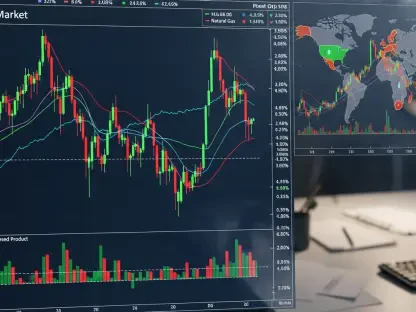
Energy strategists and institutions like the Council on Foreign Relations are now observing a fundamental reorganization of how oil is priced. With Brent crude surging past $100 per barrel, the market is no longer just accounting for supply and demand; it is embedding a permanent “security premium” into commodity costs. Experts suggest we have entered a new paradigm where geopolitical risk is a constant rather than a temporary variable. This shift is evidenced by skyrocketing war-risk insurance premiums for tankers and a desperate scramble by Western nations to find safer alternatives.
This new pricing model reflects a loss of faith in the “just-in-time” delivery system that defined the previous decade. Traders are now pricing in the high probability of a “black swan” event occurring in the Persian Gulf at any moment. As a result, even in periods of relative calm, the price of energy remains artificially inflated to account for the potential of a catastrophic shutdown at Kharg. This permanent increase in costs acts as a hidden tax on global productivity and consumer spending.
Adapting to the New Paradigm: Strategies for Global Energy Resilience
To navigate this era of heightened risk, market participants and nations adopted specific frameworks to safeguard their interests. These strategies included the aggressive buildup of strategic reserves—often referred to as hoarding—to buffer against sudden supply shocks originating in the Gulf. Companies also moved to renegotiate long-term contracts to include flexible delivery terms and force majeure clauses that accounted for regional military escalations. This proactive approach prioritized survival over short-term profit margins.
Furthermore, there was a prioritized shift toward diversifying supply chains, moving away from single-point-of-failure hubs like Kharg Island in favor of more geographically dispersed energy sources. Investment flowed toward domestic production and renewable infrastructure, not just for environmental reasons, but as a core component of national defense. By 2026, the global community realized that the only true protection against the volatility of the Persian Gulf was a fundamental decoupling from its most vulnerable export nodes. This transition ultimately redefined the meaning of energy independence in an interconnected world.