
The primary artery of the global energy trade is currently vibrating with a level of tension that suggests the old rules of maritime security have been permanently discarded. As the world watches the 22-mile-wide Strait of Hormuz, the collision of military brinkmanship and energy security now threatens global stability in ways not seen in a generation. This narrow waterway, once a predictable transit point, has transformed into a high-stakes arena where Iranian naval tactics and U.S. strategic objectives are locked in a volatile struggle.
This analysis explores the escalating friction within this maritime chokepoint, examining how the current volatility ripples through global markets and defense industries. By dissecting the disconnect between military rhetoric and operational reality, stakeholders can better understand the long-term implications for international energy transit. Readers will gain insights into current market data and the strategic shifts that are redefining how the world protects its most critical trade routes.
Quantifying the Crisis: Economic Shifts and Tactical Realities
Market Volatility and Energy Price Surges
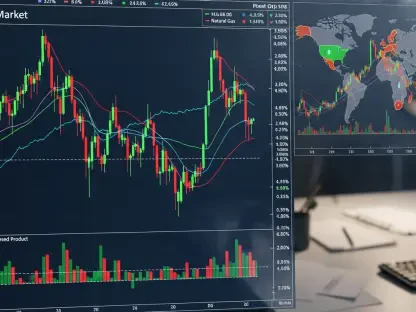
Since the escalation of hostilities on February 28, the global energy landscape has undergone a violent transformation, with West Texas Intermediate (WTI) crude surging 38% to climb from $67 to $93 per barrel. This rapid appreciation reflects a market that is no longer pricing in mere risk but is instead accounting for a fundamental disruption in supply. Global supply chains, particularly across Asia, face immediate and severe pressure; India, for instance, has reported significant threats to its Liquified Petroleum Gas (LPG) imports, a crisis that endangers its domestic service industry and overall economic stability.
The “roiling” nature of the current market is not merely a reaction to the physical blockade but is driven by a profound lack of a unified timeline for restoring safe passage through the corridor. Financial institutions suggest that without a clear roadmap for de-escalation, the price of energy will remain untethered from traditional supply-and-demand metrics. This economic uncertainty acts as a force multiplier for the geopolitical crisis, as every day of closed transit compounds the financial burden on developing and developed nations alike.
Military Infrastructure Degradation and Tactical Engagements
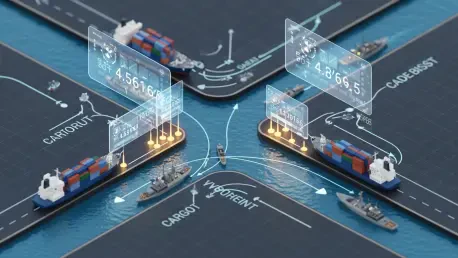
On the operational front, Pentagon briefings indicate a systematic effort to dismantle Iran’s domestic military-industrial complex, claiming the functional defeat of numerous companies involved in ballistic missile production. While tactical data confirms the sinking of 16 Iranian minelayers, the persistent threat of sophisticated naval mines continues to stall commercial traffic. These stealthy, low-cost weapons remain a significant hurdle, proving that even a technically degraded adversary can maintain a disproportionate influence over global shipping lanes through asymmetric means.
Furthermore, the conflict has entered a psychological dimension that targets the very heart of the Iranian leadership structure. U.S. officials have begun leveraging the “text-only” nature of Supreme Leader Mojtaba Khamenei’s recent communications to project a narrative of internal instability and physical incapacitation. By highlighting the lack of video or audio proof of the Leader’s well-being, the U.S. seeks to undermine the Iranian regime’s domestic authority while simultaneously executing its kinetic military objectives in the Gulf.
Divergent Perspectives: Military Optimism vs. Institutional Realism
The rhetoric emanating from Washington presents a stark contrast to the grounded assessments of maritime analysts. U.S. Defense Secretary Pete Hegseth characterizes the current blockade as an act of “sheer desperation” by a cornered regime, asserting that a sequential military plan is already in motion to restore order. This narrative of inevitable success is designed to project strength; however, it often ignores the logistical complexities of clearing one of the world’s most heavily contested waterways under constant fire.
In contrast, institutional realists like those at RBC Capital Markets express deep skepticism regarding the U.S. Navy’s immediate capacity to provide a robust, consistent tanker escort service. They cite significant resource constraints and the evolved nature of modern coastal defense systems as primary obstacles. This “Beltway Gap” has become a defining feature of the crisis: while Treasury Secretary Scott Bessent promises an international coalition “as soon as militarily possible,” Energy Secretary Chris Wright notes that the Navy is not yet fully prepared for the complexities of commercial escorts.
Future Outlook: A War of Attrition and Strategic Evolution
As the situation matures, the conflict is evolving into a protracted war of attrition where control over global energy flows serves as the primary lever of power. This shift suggests that the traditional methods of maritime policing are no longer sufficient. Future developments may hinge on the efficacy of the $20 billion insurance program launched by the U.S. International Development Finance Corp. This program currently faces criticism for its narrow 22-mile coverage zone, which many shipping companies argue is insufficient to mitigate the risks of a much broader conflict zone.
Long-term implications include a potential permanent shift in how maritime security is funded and insured, moving away from private markets toward state-backed guarantees. Additionally, we are likely to see a complete reconfiguration of the Iranian military-industrial landscape, whether through continued degradation or a forced shift in their strategic priorities. Positive outcomes rely heavily on the formation of a truly unified international coalition to secure the waterway, while negative trajectories suggest continued energy price hikes and heightened risks of environmental disasters in the Gulf.
Synthesis and Strategic Conclusion
The analysis underscored the precarious balance between the projection of military control and the logistical hurdles of a contested maritime corridor. It became evident that the Strait of Hormuz remains a volatile epicenter where tactical military success did not immediately translate into economic security or market confidence. The divergence between administrative optimism and institutional realism highlighted a critical gap in the global response strategy.
Moving forward, global stakeholders must transition toward more resilient logistics frameworks and diversified energy routes to mitigate this sustained volatility. Strategic planners should prioritize the development of more comprehensive maritime insurance products that extend beyond the immediate conflict zone to restore commercial confidence. Ultimately, until a robust, multi-national escort framework is realized, the global economy will remain tethered to the stability of these few miles of water, necessitating a fundamental rethink of maritime defense investments.