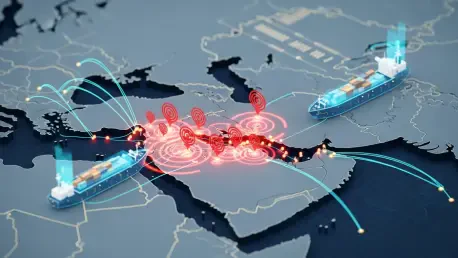

The sudden escalation of maritime hostilities in the Middle East has reached a critical boiling point as ballistic projectiles and drone strikes systematically disable commercial vessels navigating the world’s most vital energy corridor. This surge in aggression reached a fever pitch on March 11, when the Thailand-flagged cargo ship Mayuree Naree was struck while transiting the Strait of Hormuz, resulting in a severe onboard fire that forced the immediate evacuation of its crew members. The Iranian Revolutionary Guard Corps quickly asserted responsibility for this specific assault, signaling a calculated shift toward direct kinetic engagement with international trade assets. Beyond this high-profile incident, additional reports of explosions near the busy ports of Dubai and along the coast of the United Arab Emirates indicate that the traditional safe zones for commercial shipping have effectively vanished. Consequently, the maritime industry is grappling with a reality where the primary artery for global energy is no longer viable for standard operations.
A Strategic Chokepoint Under Siege
The strategic importance of the Strait of Hormuz cannot be overstated, as it serves as the primary conduit for approximately twenty percent of the global supply of petroleum and liquefied natural gas. Since the initiation of U.S. and Israeli airstrikes against Iranian military installations on February 28, the passage has transformed from a bustling trade route into a high-stakes combat zone. Data provided by the United Kingdom Maritime Trade Operations reveals a staggering uptick in hostile activities, documenting seventeen distinct incidents including thirteen direct kinetic attacks within a span of less than two weeks. This rapid deterioration of safety has prompted major shipping conglomerates to halt their operations or divert vessels around the Cape of Good Hope, a move that adds significant time and expense to global logistics. The paralysis of this waterway threatens to destabilize international markets that rely on the steady flow of energy products from the Persian Gulf to refineries across Europe and Asia.
Analysts at the risk firm Verisk Maplecroft have observed that the current disruption extends far beyond the crude oil market to encompass vital shipments of chemicals and refined petroleum products. The systematic targeting of cargo ships has effectively severed a critical link in the global supply chain, creating a ripple effect that is being felt in industrial sectors far removed from the immediate conflict zone. Unlike previous periods of tension, the current blockade is characterized by the use of advanced weaponry that makes traditional defensive maneuvers nearly impossible for civilian crews to execute safely. This environment of extreme risk has led to a near-total standstill of commercial traffic, as insurance premiums for transiting the region have soared to prohibitive levels. The overarching narrative emerging from this crisis is one of a global energy market that is fundamentally paralyzed, illustrating how the strategic necessity of this narrow waterway has been successfully leveraged into its greatest operational vulnerability by regional actors seeking leverage.
Naval Confrontations and Maritime Security Efforts
In a direct response to the escalating threats, U.S. Central Command has engaged in aggressive maritime interdiction operations to prevent a total Iranian blockade of the region. Recent military reports confirm that U.S. naval forces successfully neutralized sixteen Iranian minelaying vessels that were attempting to deploy underwater explosives across the narrowest sections of the shipping lanes. This proactive military stance aligns with the standing orders from President Donald Trump, who has demanded the immediate and total removal of any Iranian mines that threaten international navigation. Despite these successful tactical strikes against Tehran’s naval assets, the persistent threat of shore-based projectile attacks continues to haunt the waterway, making it difficult for the U.S. Navy to guarantee the safety of civilian traffic. The confrontation has shifted from a shadow war into an open military struggle for control over the surface of the water, with both sides deploying sophisticated electronic warfare and surveillance technology to gain a tactical advantage.
International maritime authorities emphasized the necessity of implementing enhanced convoy systems and automated defensive suites for all commercial vessels remaining in the vicinity. The regional crisis demonstrated that traditional maritime security protocols were insufficient against the current generation of shore-to-ship missile technology and coordinated drone swarms. Leaders in the shipping industry shifted their focus toward developing long-term alternative routes and investing in land-based pipeline infrastructure to mitigate the risks associated with such critical chokepoints. Military planners also recognized the need for a more permanent international coalition to maintain a constant presence within the Gulf of Oman and the Persian Gulf. By prioritizing the deployment of advanced sensor arrays and rapid-response interception teams, the international community sought to create a more resilient framework for protecting global commerce. These strategic adjustments reflected a fundamental change in how maritime security was managed in high-risk zones, emphasizing the importance of technological superiority.