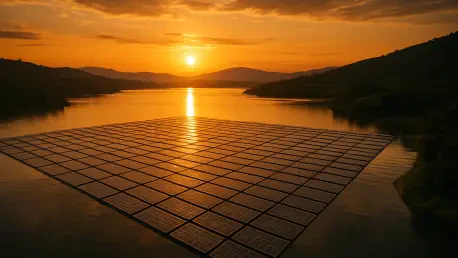

The serene waters of Lake Sake are no longer just a local resource for fishing but have become the foundation for a 200-megawatt energy revolution that could fundamentally redefine the economic trajectory of the entire East African region. Rwanda is currently undergoing a radical transformation of its power sector, moving away from traditional thermal reliance toward a diversified, renewable-heavy portfolio. With a current installed capacity of approximately 473 MW, the nation has identified energy security as a prerequisite for its industrialization goals. The introduction of the Lake Sake floating solar project represents a monumental shift, potentially increasing national capacity by over 40% in a single undertaking.
This strategic move places Rwanda at the forefront of the African energy transition, showcasing how a land-linked nation can utilize its water bodies to bypass land-scarcity issues while integrating cutting-edge technology into a developing grid. By prioritizing high-output renewable sources, the government is not only addressing the immediate needs of its population but also building a resilient infrastructure capable of supporting long-term commercial growth. This evolution marks a departure from the small-scale off-grid solutions of the past, signaling a new era of utility-scale dominance in the domestic energy market.
Bridging the Gap: Rwanda’s Bold Leap into Modern Energy Infrastructure
The expansion of the Rwandan power grid is no longer a matter of incremental growth but a necessary surge to meet the demands of a modernizing economy. As the country moves away from expensive and environmentally taxing thermal power plants, the focus has shifted toward projects that offer both scale and sustainability. The Lake Sake initiative is the centerpiece of this strategy, designed to bridge the gap between current generation levels and the high-demand projections of the coming decade. This transition is being managed through a coordinated effort to modernize the national utility framework, ensuring that the new capacity can be effectively absorbed and distributed.
Moreover, the integration of such a large-scale project into the national grid requires a sophisticated understanding of load management. With the current power mix relying heavily on hydropower and methane, the addition of 200 MW of solar energy provides a necessary buffer against seasonal fluctuations in water levels. This diversification is essential for maintaining a stable price for electricity, which remains a key factor in attracting foreign direct investment. The project serves as a clear indicator that Rwanda is ready to handle the complexities of large-scale renewable integration, setting a benchmark for the rest of the continent.
Harnessing Innovation to Meet Ambitious National Targets
Innovation in the energy sector is often driven by necessity, and Rwanda’s geography provides a unique set of challenges that require creative engineering. The government’s approach to meeting national targets involves more than just building more plants; it involves rethinking how and where energy is generated. By looking toward the water, the country is finding ways to turn environmental constraints into technological advantages. This mindset is critical for achieving the goal of universal electricity access while maintaining a commitment to carbon neutrality.
Maximizing Water Surfaces Through Floating Photovoltaic Evolution
The adoption of floating solar technology addresses Rwanda’s unique geographical constraints, where high-density settlements and intensive agriculture make land acquisition for traditional solar farms both expensive and socially complex. Beyond land preservation, floating arrays benefit from the natural cooling effect of the water, which enhances panel efficiency compared to ground-mounted systems. This trend reflects a broader global shift toward multi-use water infrastructure, where energy generation coexists with conservation. By utilizing the surface of Lake Sake, the project avoids the controversial displacement of local communities and the repurposing of valuable arable land.
Furthermore, the integration of an 800 MWh Battery Energy Storage System (BESS) marks a critical evolution in the industry, turning intermittent solar energy into a dispatchable base-load resource that can stabilize the national grid during peak evening hours. This massive storage capacity allows the grid to manage the sudden drop in solar production as the sun sets, preventing the need for expensive “peaker” plants that often run on imported fuels. The ability to store and release 200 MW of power over a four-hour window ensures that the solar investment provides value around the clock, making it a truly reliable pillar of the national infrastructure.
Strategic Growth Projections Toward the 2034 Energy Vision
The Lake Sake project serves as the primary engine for Rwanda’s long-term energy roadmap, which aims for 1,066 MW of total capacity by 2034. Market data suggests that with solar currently contributing only 4.2% to the national mix, this project alone will redefine the country’s energy statistics. Forecasts indicate that successful implementation will not only reduce the marginal cost of electricity but also decrease Rwanda’s reliance on expensive fuel imports. As the country seeks to achieve universal electricity access, the scaling of such high-output projects is essential to meeting the surging demand from both domestic consumers and a growing manufacturing sector.
Looking from 2026 to 2034, the trajectory of the energy sector is expected to be defined by a series of similar utility-scale investments. The success of the Lake Sake procurement process is being closely watched by international financiers as a litmus test for Rwanda’s ability to manage complex Public-Private Partnerships. If the project meets its delivery milestones, it will likely trigger a wave of secondary investments in the Eastern Province, transforming the region into an industrial corridor powered by clean, locally generated energy.
Navigating the Technical and Ecological Hurdles of Floating Solar
The transition to floating solar is not without significant complexities, particularly regarding the long-term environmental impact on Lake Sake’s delicate ecosystem. Developers face the challenge of maintaining water quality and protecting local fishing livelihoods while managing the corrosive effects of moisture on electrical components. The installation of thousands of floating pontoons and thousands of miles of cabling requires a specialized maintenance regime to prevent biofouling and structural degradation. Ensuring that the aquatic life is not disrupted by the shading effect of the panels is a primary concern for the environmental monitoring teams.
From a technical standpoint, the integration of 200 MW of variable power requires a massive overhaul of the existing transmission and distribution infrastructure. To prevent grid bottlenecks, the government must ensure that evacuation lines and substations are upgraded in lockstep with the plant’s construction, necessitating a highly synchronized multi-agency approach to infrastructure management. This involves significant capital expenditure in high-voltage transmission lines that can transport power from the Eastern Province to the high-demand centers in Kigali and beyond. Without these upgrades, the risk of technical losses and grid instability could undermine the financial viability of the entire project.
Creating a Resilient Regulatory and Public-Private Framework
Rwanda’s energy strategy is anchored in a robust Public-Private Partnership (PPP) model, designed to attract global investment while ensuring national interests are protected. The regulatory landscape is defined by 25-year Power Purchase Agreements (PPAs), which provide the long-term financial certainty required by Independent Power Producers (IPPs). To ensure compliance and security, the state-owned Energy Development Corporation Limited (EDCL) has established rigorous prequalification standards that emphasize technical expertise and financial stability. The current procurement phase, with its November 12, 2026 deadline, is designed to filter for partners who can handle the immense technical scope of the 800 MWh battery system.
This framework is crucial for mitigating risks such as currency volatility and operational performance, ensuring that the cost of green energy remains affordable for the end-user while remaining profitable for investors. By creating a transparent and predictable bidding environment, Rwanda has managed to lower the perceived risk for international lenders. This stability is vital in a global market where capital for emerging market energy projects is highly competitive. The regulatory success here could serve as a template for other nations in the region looking to attract private capital for their own renewable energy transitions.
Pioneering a Sustainable and Decentralized Energy Paradigm
The future of Rwanda’s energy sector lies in the successful fusion of high-tech storage and renewable generation. As battery costs continue to decline, the Lake Sake model of pairing solar with massive BESS capacity is likely to become the standard for regional energy projects across East Africa. Innovation in the localization of services is also expected to disrupt the market, as local firms gain the specialized skills needed to maintain floating solar arrays. This development not only creates jobs but also ensures that the technical knowledge required to sustain the project remains within the country, reducing the long-term dependence on foreign consultants.
Looking ahead, the focus will likely shift toward smarter, more flexible grids capable of managing decentralized energy sources, eventually positioning Rwanda as a regional hub for green energy exports and technological expertise. The ability to export surplus green power to neighboring states could provide a new revenue stream for the government, further strengthening the national economy. As the grid becomes more intelligent, the integration of smaller, community-based renewable projects could complement large-scale installations like Lake Sake, creating a truly diverse and resilient energy ecosystem.
Synthesizing Rwanda’s Path to an Electrified Future
The 200 MW Lake Sake project represented a strategic decision to prioritize long-term energy independence over short-term fixes. The administration recognized that the energy trilemma of security, equity, and sustainability required a bold departure from traditional land-based generation. By aligning the interests of private investors with the nation’s industrial goals, the government successfully established a framework that prioritized high-quality procurement and rigorous environmental oversight. This initiative functioned as a essential proof-of-concept, proving that innovative floating technology could be effectively integrated into a national grid without compromising ecological integrity.
As the project moved toward its operational phase, the focus shifted toward the synchronization of grid investments and the development of local technical expertise. The lessons learned from the Lake Sake procurement process were applied to subsequent renewable tenders, further lowering the cost of capital for the nation. Ultimately, the successful deployment of the 800 MWh battery system provided the stability needed to phase out old thermal plants entirely. This comprehensive approach ensured that Rwanda’s path to a fully electrified future was built on a foundation of technological leadership and fiscal responsibility, setting an example for the global community.