
The Shifting Economics of the Solar Grid
The rapid proliferation of solar energy across regions like California once created a surplus so vast that electricity prices frequently plummeted into negative territory during the sunniest hours of the day. This phenomenon of “free” power was a hallmark of the early renewable transition, signaling a temporary glut that the existing grid infrastructure was not yet equipped to manage. However, as of 2026, the narrative has shifted decisively. Battery energy storage systems have become a dominant force on the grid, soaking up excess supply and fundamentally altering the financial landscape. This analysis explores how the rise of storage is neutralizing negative pricing while introducing new economic challenges for the industry.
The Historical Context: The Midday Price Collapse
The “duck curve” long defined the operational challenges of solar integration, characterized by a massive drop in net load when the sun reached its peak. Historically, this mismatch led to widespread curtailment, where clean production was wasted because supply exceeded immediate demand. To avoid total loss, wholesale market prices in the California Independent System Operator often hit the floor, reaching lows of -$50 per megawatt-hour. Solar developers could endure these negative prices because federal production tax credits and renewable energy credits ensured they remained profitable even when paying the grid to take their power. This era provided a unique window where renewable energy was effectively free to those capable of consuming it.
The Transformation: Wholesale Market Dynamics
Market Elevation: Charging Demand and Midday Prices
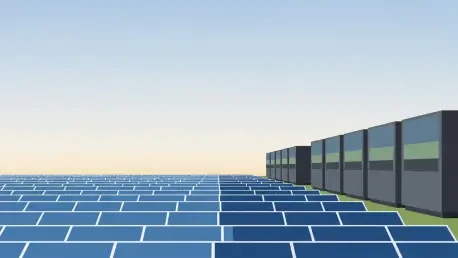
The introduction of massive battery fleets has created a reliable source of demand during peak solar hours. Recent market data indicates that as battery capacity scales, it exerts significant upward pressure on midday electricity rates. Current projections for the 2026-2028 period suggest that several gigawatts of storage capacity can raise the price of solar-generated electricity by over $40 per megawatt-hour compared to a baseline without storage. By consuming the surplus that once forced prices into the negatives, batteries are effectively setting a floor for the market. This shift transforms solar assets into productive generators capable of capturing real market value rather than relying on subsidies to survive midday dips.
The Profitability Squeeze: Challenges for Storage Operators
While battery storage benefits solar generators, it creates a self-limiting economic paradox for storage operators. The primary revenue model relies on arbitrage—buying electricity when it is cheap and selling it during the evening peak. As more batteries enter the market, they compete to buy the same midday solar power, driving the purchase price higher. Simultaneously, when these batteries discharge later, they increase the total supply, which suppresses the selling price. This narrowing spread has caused projected annual revenues for some assets to drop significantly, forcing operators to move away from simple arbitrage toward more sophisticated trading and grid-service strategies.
Regional Variances: The Impact of Federal Subsidies
The transition away from free solar is not uniform and remains heavily influenced by federal incentives. In specific markets, the structural influence of fixed-price power purchase agreements encourages production at any cost, even when demand is low. As these incentives evolve and regional grids become more interconnected, the “free power” phenomenon may reappear in newer, less developed markets before being neutralized by localized storage. It is not a lack of demand alone that drives negative pricing, but rather a regulatory framework that was designed for an era of scarcity rather than the current era of intermittent abundance.
The Future Landscape: Integrating Renewables Beyond 2026
Looking toward the end of the decade, the relationship between solar and storage will continue to tighten. If the deployment of battery capacity outpaces the installation of new solar farms, the cost to charge will rise quickly, potentially reaching a point where midday power is consistently priced at a premium. There is a clear trend toward long-duration storage technologies capable of holding energy for days rather than hours. Furthermore, hybrid projects where solar and storage are co-located are becoming the industry standard. Regulatory shifts will be necessary to ensure market rules reflect a grid managed by software and chemistry rather than traditional thermal spinning reserves.
Strategic Takeaways: Navigating a Tightening Market
The end of free solar power necessitates a shift in strategy for all energy stakeholders. Solar developers should view the rise of batteries as a stabilizing force that protects their revenue from collapsing during peak production. For storage investors, the focus must move toward “stacking” multiple revenue streams, such as frequency regulation and grid resiliency services, to compensate for narrowing price spreads. Consumers and industrial businesses should prepare for a more stable but potentially higher-cost midday period. Consequently, investments in behind-the-meter storage and demand-side management will become increasingly critical for cost control in the coming years.
Conclusion: Balancing the Grid of Tomorrow
The era of free midday solar served as a transitional phase for a grid that possessed more generation than it knew how to store. As battery energy storage systems matured, they fulfilled their promise of balancing the market, but they also brought the laws of supply and demand back to the midday hours. While this ended the novelty of negative pricing, it signaled a healthier and more resilient energy market. The long-term significance of this shift represented the maturation of the renewable sector into a reliable, market-driven pillar of the economy. Moving forward, the goal shifted from merely producing clean energy to mastering the precise timing of its delivery.