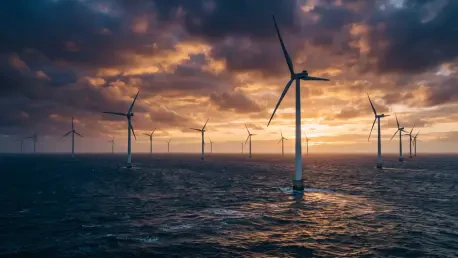

The lack of long-term power purchase agreements has left Ignitis with over 60 million euros in development costs and no guaranteed buyers for the future electricity. This financial exposure sits at the heart of the decision to pause the Curonian Nord offshore wind farm, a project once heralded as the cornerstone of the nation’s energy independence. Located nearly 40 kilometers off the Baltic coast, the facility was intended to deploy dozens of massive turbines to satisfy a quarter of the country’s total demand. However, the economic landscape of 2026 has proven far more hostile than initial projections suggested. The transition from rapid expansion to cautious reassessment reflects a broader cooling in the offshore wind sector, where the enthusiasm for green transitions has collided with the math of high-interest rates. Without the security of fixed-price contracts, the massive capital expenditure required for such an installation represents an unacceptable risk for the state.
Economic Shifts: Rising Costs
The financial profile of the Curonian Nord project underwent a drastic transformation as global inflationary pressures and equipment scarcity drove development costs skyward. National audits recently revealed that the estimated budget for the 700-megawatt facility surged by 27 percent, climbing from an initial 2.2 billion euros to a daunting 2.8 billion euros. This capital bloat coincided with a simultaneous collapse in the expected return on investment, which has reportedly plummeted by nearly 40 percent since the project’s inception. Such a sharp divergence between cost and profitability has effectively eroded the commercial logic that once underpinned the initiative. In previous years, the assumption was that economies of scale would keep prices low, but the reality of 2026 shows that manufacturers and logistics providers are passing increased costs to developers. Consequently, what was envisioned as a high-yield green asset has transformed into a financial anchor for the energy group.
Beyond the immediate internal costs, the stagnation of the European green hydrogen market has removed a vital pillar of support for large-scale offshore wind developments. Many energy experts had anticipated that a surge in domestic hydrogen production would create a massive, consistent demand for renewable power, providing the necessary offtake agreements to justify multi-billion-euro investments. Unfortunately, the slow rollout of electrolyzer capacity across the continent has left projects like Curonian Nord without the “anchor” customers they desperately need. This lack of demand visibility is further complicated by the regulatory environment in Lithuania, which imposes heavy daily penalties for failing to meet development milestones. Under current laws, the company faces fines of approximately 24,000 euros for every day the project remains stalled past its deadlines. These pressures created a situation where a formal postponement was a necessary legal maneuver to stop the bleeding.
Strategic Future: Project Resilience
While the immediate construction phase has been sidelined, the technical and preparatory efforts for the Curonian Nord site are proceeding with a focus on long-term viability. The current strategy involves maintaining all existing environmental assessments and site surveys to ensure that a construction permit can still be secured by 2027. By keeping the administrative momentum alive, Ignitis aims to stay ready for a potential market rebound later in 2026, when inflation might stabilize and supply chains could regain their fluidity. This approach allows the organization to avoid a total write-down of its 60-million-euro development investment while remaining agile enough to act if technological breakthroughs or new government subsidies improve the project’s economics. The decision-making process is being closely monitored by the Ministry of Energy, which recognizes that rushing into a flawed financial model could damage the nation’s credit rating and jeopardize future project partnerships.
The postponement of this massive offshore initiative served as a sobering reminder of the complexities inherent in the global energy transition. To move forward, stakeholders focused on creating more flexible auction mechanisms that could better account for the sudden fluctuations in material costs seen in recent years. Analysts recommended that the Lithuanian government prioritize the development of local industrial clusters that could consume the power directly, thereby reducing reliance on uncertain international hydrogen markets. Furthermore, the integration of advanced energy storage solutions was identified as a critical step to increase the value of the intermittent wind power generated in the Baltic Sea. By late 2026, the strategy shifted toward building a more resilient supply chain and revising the legislative framework to eliminate punitive daily fines. This period of reflection allowed for a more balanced approach that aligned national security interests with fiscal responsibility.