
The global expansion of solar and wind power is entering a new, accelerated phase, with forecasts from major energy analysts confirming a strong and steady growth trajectory for the rest of the decade. While average annual growth projections from prominent bodies like the International Energy Agency and Bloomberg New Energy Finance hover between a robust 15% and 17%, the story behind the numbers reveals a profound shift in motivation. This boom is no longer driven solely by the urgent need for decarbonization. A powerful new trio of catalysts has emerged to propel the energy transition forward: the staggering and unprecedented energy demands of artificial intelligence, the strategic and geopolitical urgency of achieving national energy security, and the fierce pursuit of a competitive industrial edge in a rapidly evolving global economy. These factors are fundamentally reshaping national priorities and corporate strategies, ensuring that the renewables buildout continues at a relentless pace, even amidst persistent global economic and political headwinds.
The New Engines of Expansion
While the overarching goal of sustainability remains a foundational element, the most potent forces now driving the global renewables market are decidedly economic and strategic, creating a new era of demand. In the United States, the explosive growth of artificial intelligence and the proliferation of power-hungry data centers are creating an insatiable appetite for electricity. With their comparatively shorter construction times and fewer supply chain hurdles than new nuclear or gas-fired power plants, solar and wind installations are serving as a critical “bridge” fuel to meet this immediate, massive demand. This is further amplified by major technology companies actively procuring renewable energy on a massive scale to offset the significant carbon footprint associated with their AI operations. In parallel, Europe’s energy strategy underwent a fundamental reshaping following the conflict in Ukraine. The imperative to achieve energy independence from Russian gas has become the continent’s paramount driver, transforming the renewables buildout from a climate-focused initiative into a cornerstone of strategic autonomy, national security, and long-term economic stability and innovation.
This global shift in priorities manifests differently across key regions, each with its own unique momentum. China continues to steer its full-speed-ahead approach, a strategy underpinned by its unparalleled and deeply entrenched dominance in the manufacturing of nearly all solar and wind components. This industrial might is coupled with ambitious national targets to reduce emissions by 7–10% from peak levels by 2035, ensuring a sustained and aggressive domestic deployment of renewable assets. Projections show China leading solar generation growth at an astonishing 94% between 2026 and 2030, while sharing the lead in wind growth with Europe at 50%. The United States market, in contrast, is being pulled forward by a powerful combination of federal incentives and immense private sector demand, particularly from the tech industry. Meanwhile, Europe’s determined push for renewables has broadened significantly; it is no longer just a climate initiative but a core component of its strategy for geopolitical sovereignty, energy affordability for its citizens, and fostering a new generation of green industrial innovation to maintain its competitive position on the world stage.
Navigating Regional Roadblocks
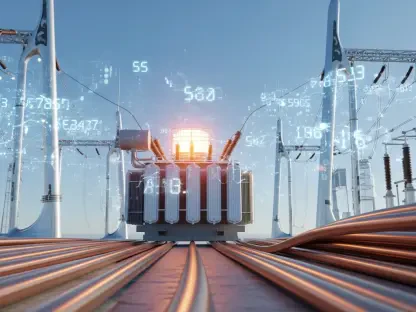
Despite the overwhelmingly optimistic outlook and powerful new drivers, each major market faces a unique and formidable set of supply-side challenges that could temper the pace of growth if left unaddressed. Europe’s primary bottleneck is its aging and fragmented grid infrastructure. In many areas, limited transmission and interconnection capacity physically restricts the ability to connect new, large-scale renewable projects to the population centers that need the power. To combat this, the European Union is implementing its comprehensive Grid Package to modernize and expand this critical infrastructure. Furthermore, the offshore wind sector has faced weakening project economics due to soaring costs and lower wholesale power prices, a trend expected to drive wider adoption of government-backed “contracts for differences” to provide essential revenue stability for developers. In the United States, the market is navigating significant turbulence from aggressive tariffs, which are actively reshaping long-standing supply-chain partnerships and introducing cost uncertainty. This is compounded by complex and often lengthy permitting processes at both state and federal levels that can lead to costly project delays and, in some cases, outright cancellations.
While China has largely overcome the grid and supply chain issues that plague its Western counterparts, it now faces a new and distinct challenge: adapting to a recent, nationwide shift away from fixed tariffs to a system of market-based auctions for new energy projects. This transition, while beneficial for long-term market efficiency and cost reduction, is currently squeezing the profit margins of developers and forcing a significant strategic re-evaluation across the industry. Chinese energy companies must now place a much greater emphasis on operational cost efficiency, technological innovation to maximize output, and sophisticated strategic bidding to remain competitive and profitable in this new environment. For established developers in the United States, legislative uncertainty, such as that posed by the “One Big Beautiful Bill Act” (OBBBA), is viewed as a lesser concern for those who have already secured their long-term tax credits. However, the cumulative effect of tariffs and permitting hurdles suggests a market environment of solid but potentially tempered development, where navigating regulatory risk has become as important as engineering and construction.
The Unseen Partner: Energy Storage
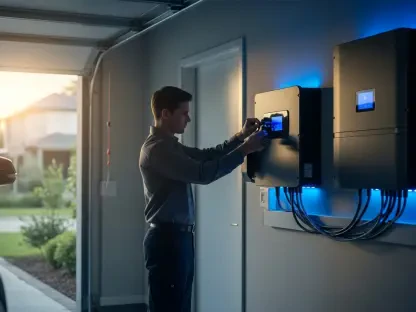
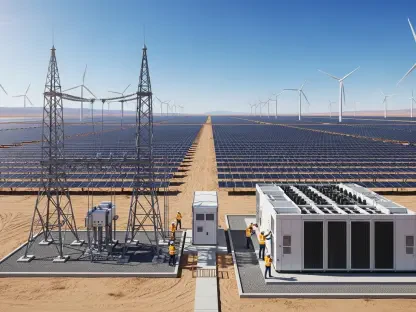
The continued and accelerated growth of renewables is inextricably linked to the parallel and explosive rise of Battery Energy Storage Systems (BESS). A firm consensus has been reached across the energy industry that solving the inherent intermittency of solar and wind generation is no longer an option but a non-negotiable prerequisite for sustained expansion. BESS technology is the crucial enabler, allowing grid operators to store excess energy when the sun is shining and the wind is blowing, and dispatch it later when demand is high or generation is low. This capability is becoming economically essential, driven by plummeting BESS costs, which fell by a remarkable 61% between 2020 and 2025. This cost reduction is fueling forecasts of a 31% annual growth in global installed BESS capacity through 2030. In the US, a clear trend is emerging where major solar developers anticipate that the proportion of their new projects co-located with storage will surge from 26% in 2026 to over 50% by the end of the decade, transforming solar farms from simple generators into dispatchable power assets.
The technological landscape of this storage boom is dominated by Lithium-ion Phosphate (LFP) battery chemistry, which has become the standard for stationary BESS applications. Its advantages over the Nickel Manganese Cobalt (NMC) chemistries often used in electric vehicles are significant for grid-scale use, including a longer cycle life, enhanced safety, and a lower cost structure, as it does not require expensive and often controversially sourced metals like nickel and cobalt. While emerging technologies such as sodium-based batteries show promise as a cheaper alternative due to the global abundance of sodium, they are expected to remain a niche market, capturing only a mid-single-digit share this decade. A key limitation of current battery technology, however, is its relatively short discharge duration, typically around four hours. While Long-Duration Energy Storage (LDES) solutions offer a potential answer to this challenge, they remain too costly and technologically immature to make a significant market impact in the near term. This technological hurdle is compounded by the fact that the entire battery supply chain remains highly vulnerable to geopolitical tensions, particularly the risk of a trade war over the rare-earth elements critical to their production.
The West’s Strategic Crossroads
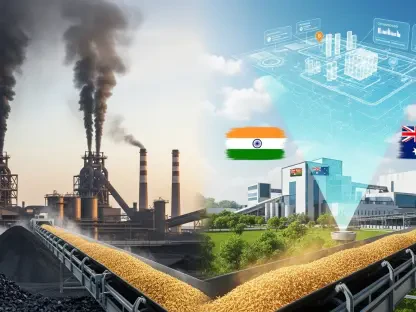
Western economies are confronting a fundamental and consequential strategic dilemmwhether to prioritize the long-term goal of building secure domestic manufacturing capabilities or to continue relying on the flood of inexpensive Chinese imports that has enabled a rapid and cost-effective energy transition to date. The stark reality of this choice is crystallized by the fact that the European Union currently sources approximately 98% of its solar panel imports from China. Attempting to shift away from this profound dependency in the short term would inevitably raise project costs, disrupt deeply integrated supplier relationships, and significantly slow the pace of installation at a time when energy security and climate goals demand acceleration. This creates a difficult and precarious balancing act for policymakers in 2026 and beyond, forcing them to weigh industrial policy ambitions against immediate energy and environmental objectives. The decision made will have lasting implications for the speed, cost, and geopolitical resilience of the West’s transition to clean energy.
In response to this strategic challenge, the United States and Europe are pursuing divergent and distinct paths, each laden with its own set of risks and potential rewards. The US has chosen tariffs as its primary tool, imposing steep duties ranging from 350% to 670% on solar products from Cambodia, Thailand, and Vietnam, with further investigations into imports from other nations underway. This aggressive strategy is intended to level the playing field and make US-made modules price-competitive, but it has created considerable turbulence for developers, who face the time-consuming and costly process of renegotiating supply contracts amidst surging domestic demand. In contrast, the EU is focusing on regulatory measures through its Net-Zero Industry Act (NZIA), which aims to incentivize domestic production rather than imposing broad tariffs. However, the bloc is growing increasingly wary of its dependency, and some member states, like Italy, have begun holding auctions that explicitly ban Chinese-made components. This trend is expected to grow, with more nations likely to implement auction rules that prioritize EU-made equipment, even if it raises project costs—by an estimated 17% in Italy’s case—and despite concerns that the funding available under the NZIA may be insufficient to catalyze the substantial private investment needed for new manufacturing capacity.
A Path Defined by Pragmatism
The trajectory of the global renewables sector was ultimately shaped by a complex interplay of competing priorities and pragmatic choices. The immense energy demands from new technologies, coupled with the urgent need for geopolitical energy independence, created a powerful momentum that overshadowed earlier, purely environmental motivations. In this environment, nations navigated difficult trade-offs. The strategic dilemma between fostering domestic manufacturing and leveraging inexpensive imports was a defining conflict, with different regions adopting varied strategies of tariffs and incentives that introduced both opportunity and market friction. At the same time, the industry’s recognition that energy storage was not just an accessory but a critical enabler led to a surge in investment and deployment, fundamentally altering the value proposition of intermittent resources. The challenges of grid modernization, supply chain vulnerabilities, and shifting market dynamics were not solved, but they were met with targeted policies and technological innovations. These decisions, made in response to pressing economic and security realities, established the foundational landscape upon which the next phase of the energy transition would be built.Fixed version:
The global expansion of solar and wind power is entering a new, accelerated phase, with forecasts from major energy analysts confirming a strong and steady growth trajectory for the rest of the decade. While average annual growth projections from prominent bodies like the International Energy Agency and Bloomberg New Energy Finance hover between a robust 15% and 17%, the story behind the numbers reveals a profound shift in motivation. This boom is no longer driven solely by the urgent need for decarbonization. A powerful new trio of catalysts has emerged to propel the energy transition forward: the staggering and unprecedented energy demands of artificial intelligence, the strategic and geopolitical urgency of achieving national energy security, and the fierce pursuit of a competitive industrial edge in a rapidly evolving global economy. These factors are fundamentally reshaping national priorities and corporate strategies, ensuring that the renewables buildout continues at a relentless pace, even amidst persistent global economic and political headwinds.
The New Engines of Expansion
While the overarching goal of sustainability remains a foundational element, the most potent forces now driving the global renewables market are decidedly economic and strategic, creating a new era of demand. In the United States, the explosive growth of artificial intelligence and the proliferation of power-hungry data centers are creating an insatiable appetite for electricity. With their comparatively shorter construction times and fewer supply chain hurdles than new nuclear or gas-fired power plants, solar and wind installations are serving as a critical “bridge” fuel to meet this immediate, massive demand. This is further amplified by major technology companies actively procuring renewable energy on a massive scale to offset the significant carbon footprint associated with their AI operations. In parallel, Europe’s energy strategy underwent a fundamental reshaping following the conflict in Ukraine. The imperative to achieve energy independence from Russian gas has become the continent’s paramount driver, transforming the renewables buildout from a climate-focused initiative into a cornerstone of strategic autonomy, national security, and long-term economic stability and innovation.
This global shift in priorities manifests differently across key regions, each with its own unique momentum. China continues to steer its full-speed-ahead approach, a strategy underpinned by its unparalleled and deeply entrenched dominance in the manufacturing of nearly all solar and wind components. This industrial might is coupled with ambitious national targets to reduce emissions by 7–10% from peak levels by 2035, ensuring a sustained and aggressive domestic deployment of renewable assets. Projections show China leading solar generation growth at an astonishing 94% between 2026 and 2030, while sharing the lead in wind growth with Europe at 50%. The United States market, in contrast, is being pulled forward by a powerful combination of federal incentives and immense private sector demand, particularly from the tech industry. Meanwhile, Europe’s determined push for renewables has broadened significantly; it is no longer just a climate initiative but a core component of its strategy for geopolitical sovereignty, energy affordability for its citizens, and fostering a new generation of green industrial innovation to maintain its competitive position on the world stage.
Navigating Regional Roadblocks
Despite the overwhelmingly optimistic outlook and powerful new drivers, each major market faces a unique and formidable set of supply-side challenges that could temper the pace of growth if left unaddressed. Europe’s primary bottleneck is its aging and fragmented grid infrastructure. In many areas, limited transmission and interconnection capacity physically restricts the ability to connect new, large-scale renewable projects to the population centers that need the power. To combat this, the European Union is implementing its comprehensive Grid Package to modernize and expand this critical infrastructure. Furthermore, the offshore wind sector has faced weakening project economics due to soaring costs and lower wholesale power prices, a trend expected to drive wider adoption of government-backed “contracts for differences” to provide essential revenue stability for developers. In the United States, the market is navigating significant turbulence from aggressive tariffs, which are actively reshaping long-standing supply-chain partnerships and introducing cost uncertainty. This is compounded by complex and often lengthy permitting processes at both state and federal levels that can lead to costly project delays and, in some cases, outright cancellations.
While China has largely overcome the grid and supply chain issues that plague its Western counterparts, it now faces a new and distinct challenge: adapting to a recent, nationwide shift away from fixed tariffs to a system of market-based auctions for new energy projects. This transition, while beneficial for long-term market efficiency and cost reduction, is currently squeezing the profit margins of developers and forcing a significant strategic re-evaluation across the industry. Chinese energy companies must now place a much greater emphasis on operational cost efficiency, technological innovation to maximize output, and sophisticated strategic bidding to remain competitive and profitable in this new environment. For established developers in the United States, legislative uncertainty, such as that posed by the “One Big Beautiful Bill Act” (OBBBA), is viewed as a lesser concern for those who have already secured their long-term tax credits. However, the cumulative effect of tariffs and permitting hurdles suggests a market environment of solid but potentially tempered development, where navigating regulatory risk has become as important as engineering and construction.
The Unseen Partner: Energy Storage
The continued and accelerated growth of renewables is inextricably linked to the parallel and explosive rise of Battery Energy Storage Systems (BESS). A firm consensus has been reached across the energy industry that solving the inherent intermittency of solar and wind generation is no longer an option but a non-negotiable prerequisite for sustained expansion. BESS technology is the crucial enabler, allowing grid operators to store excess energy when the sun is shining and the wind is blowing, and dispatch it later when demand is high or generation is low. This capability is becoming economically essential, driven by plummeting BESS costs, which fell by a remarkable 61% between 2020 and 2025. This cost reduction is fueling forecasts of a 31% annual growth in global installed BESS capacity through 2030. In the US, a clear trend is emerging where major solar developers anticipate that the proportion of their new projects co-located with storage will surge from 26% in 2026 to over 50% by the end of the decade, transforming solar farms from simple generators into dispatchable power assets.
The technological landscape of this storage boom is dominated by Lithium-ion Phosphate (LFP) battery chemistry, which has become the standard for stationary BESS applications. Its advantages over the Nickel Manganese Cobalt (NMC) chemistries often used in electric vehicles are significant for grid-scale use, including a longer cycle life, enhanced safety, and a lower cost structure, as it does not require expensive and often controversially sourced metals like nickel and cobalt. While emerging technologies such as sodium-based batteries show promise as a cheaper alternative due to the global abundance of sodium, they are expected to remain a niche market, capturing only a mid-single-digit share this decade. A key limitation of current battery technology, however, is its relatively short discharge duration, typically around four hours. While Long-Duration Energy Storage (LDES) solutions offer a potential answer to this challenge, they remain too costly and technologically immature to make a significant market impact in the near term. This technological hurdle is compounded by the fact that the entire battery supply chain remains highly vulnerable to geopolitical tensions, particularly the risk of a trade war over the rare-earth elements critical to their production.
The West’s Strategic Crossroads
Western economies are confronting a fundamental and consequential strategic dilemmwhether to prioritize the long-term goal of building secure domestic manufacturing capabilities or to continue relying on the flood of inexpensive Chinese imports that has enabled a rapid and cost-effective energy transition to date. The stark reality of this choice is crystallized by the fact that the European Union currently sources approximately 98% of its solar panel imports from China. Attempting to shift away from this profound dependency in the short term would inevitably raise project costs, disrupt deeply integrated supplier relationships, and significantly slow the pace of installation at a time when energy security and climate goals demand acceleration. This creates a difficult and precarious balancing act for policymakers in 2026 and beyond, forcing them to weigh industrial policy ambitions against immediate energy and environmental objectives. The decision made will have lasting implications for the speed, cost, and geopolitical resilience of the West’s transition to clean energy.
In response to this strategic challenge, the United States and Europe are pursuing divergent and distinct paths, each laden with its own set of risks and potential rewards. The US has chosen tariffs as its primary tool, imposing steep duties ranging from 350% to 670% on solar products from Cambodia, Thailand, and Vietnam, with further investigations into imports from other nations underway. This aggressive strategy is intended to level the playing field and make US-made modules price-competitive, but it has created considerable turbulence for developers, who face the time-consuming and costly process of renegotiating supply contracts amidst surging domestic demand. In contrast, the EU is focusing on regulatory measures through its Net-Zero Industry Act (NZIA), which aims to incentivize domestic production rather than imposing broad tariffs. However, the bloc is growing increasingly wary of its dependency, and some member states, like Italy, have begun holding auctions that explicitly ban Chinese-made components. This trend is expected to grow, with more nations likely to implement auction rules that prioritize EU-made equipment, even if it raises project costs—by an estimated 17% in Italy’s case—and despite concerns that the funding available under the NZIA may be insufficient to catalyze the substantial private investment needed for new manufacturing capacity.
A Path Defined by Pragmatism
The trajectory of the global renewables sector was ultimately shaped by a complex interplay of competing priorities and pragmatic choices. The immense energy demands from new technologies, coupled with the urgent need for geopolitical energy independence, created a powerful momentum that overshadowed earlier, purely environmental motivations. In this environment, nations navigated difficult trade-offs. The strategic dilemma between fostering domestic manufacturing and leveraging inexpensive imports was a defining conflict, with different regions adopting varied strategies of tariffs and incentives that introduced both opportunity and market friction. At the same time, the industry’s recognition that energy storage was not just an accessory but a critical enabler led to a surge in investment and deployment, fundamentally altering the value proposition of intermittent resources. The challenges of grid modernization, supply chain vulnerabilities, and shifting market dynamics were not solved, but they were met with targeted policies and technological innovations. These decisions, made in response to pressing economic and security realities, established the foundational landscape upon which the next phase of the energy transition would be built.