
Mountains of urban organic waste, often seen as a public health crisis and an environmental liability, actually hold the untapped potential to power and nourish the very communities that produce them. Waste-to-Energy Biodigester technology represents a significant advancement in the sustainable waste management and renewable energy sectors. This review explores the evolution of the technology, its key features, performance metrics, and the impact it has had on various applications, with a specific focus on the Ikosi Fruit Market Biodigester Plant in Lagos. The purpose of this review is to provide a thorough understanding of the technology, its current capabilities, and its potential for future development in creating circular economies.
Introduction to Biodigester Technology
Waste-to-energy biodigesters are innovative systems that harness a natural biological process to convert organic waste into valuable resources. At its core, the technology leverages anaerobic digestion, where microorganisms thrive in an oxygen-deprived environment to break down materials like food scraps, agricultural residue, and market waste. This process stands in stark contrast to traditional disposal methods like landfilling, which generate uncontrolled methane emissions and pose significant environmental risks.
The emergence of this technology is a direct response to the dual pressures of escalating urban waste and the urgent need for renewable energy sources. By treating organic waste not as refuse but as a feedstock, biodigesters position themselves at the intersection of sanitation, energy security, and climate action. They provide a decentralized solution that turns an environmental liability into a community asset, aligning with global efforts to mitigate climate change while addressing local public health concerns.
Core Technology and Process Breakdown
The Anaerobic Digestion Process
The primary mechanism driving a biodigester is anaerobic digestion, a complex sequence of biological processes. Inside the sealed reactor, a consortium of anaerobic bacteria metabolizes organic matter, such as the unsold produce and fruit peels abundant in markets. This decomposition occurs without oxygen, a critical feature that prevents the direct release of methane—a potent greenhouse gas—into the atmosphere, which commonly occurs in open landfills.
This controlled biological breakdown is not merely a waste treatment method but a proactive environmental intervention. By capturing and processing organic waste at its source, the system significantly reduces the volume of material sent to overwhelmed landfills. Consequently, it mitigates public health hazards associated with unmanaged waste, such as pest infestation and the contamination of water sources from leachate, contributing to cleaner and healthier urban environments.
Key Outputs Biogas and Biofertilizer
The anaerobic digestion process yields two highly valuable outputs that are central to its role in a circular economy. The first is biogas, a mixture of methane and carbon dioxide, which is captured and utilized as a clean and renewable energy source. This gas can be used directly for cooking fuel, replacing traditional sources like charcoal or kerosene, or it can power generators to produce electricity for the local community, creating energy independence.
Simultaneously, the process produces a nutrient-dense liquid or semi-solid residue known as biofertilizer. This byproduct is an excellent organic soil conditioner, rich in nitrogen, phosphorus, and potassium. Its application in agriculture improves soil health and crop yields, offering a sustainable alternative to synthetic chemical fertilizers. By returning essential nutrients to the soil, the biodigester closes the loop, transforming waste back into a resource that supports food production.
Recent Innovations in Community Level Implementation
A significant trend in biodigester technology is its deployment at a localized, community level, directly at the source of waste generation. This approach marks a strategic shift from large, centralized waste processing facilities to smaller, more adaptable systems embedded within neighborhoods or commercial hubs. This model reduces the logistical and financial burdens associated with transporting waste over long distances, making the solution more efficient and responsive to local needs.
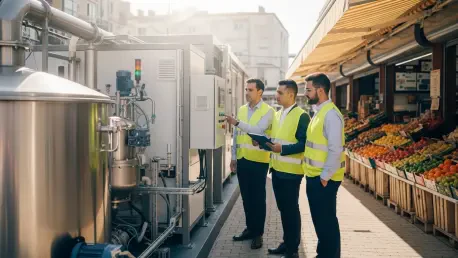
The Ikosi Fruit Market Plant in Lagos exemplifies this innovative application. By situating the technology within a bustling market, the project directly addresses the site-specific challenge of massive daily organic waste production. This community-level implementation demonstrates how global climate commitments can be translated into tangible, on-the-ground action that simultaneously resolves local sanitation, energy, and environmental issues, empowering the community it serves.
Real World Applications The Lagos Model
The Ikosi Fruit Market Biodigester Plant serves as a powerful real-world case study of the technology’s effectiveness in an urban setting. The facility was specifically engineered to handle the large volumes and unique composition of organic waste generated by one of Lagos’s busiest fruit markets. Previously, this waste would clog local drainage systems or end up in landfills, but the biodigester now provides a structured and beneficial disposal pathway.
This application showcases how technology can be tailored to solve a distinct local environmental problem. The Lagos model transforms a daily operational challenge for market vendors and a sanitation issue for the city into a sustainable resource hub. It provides clean energy and valuable fertilizer back to the community, creating a self-sustaining ecosystem where waste is no longer an endpoint but the beginning of a new value chain.
Challenges and Collaborative Solutions
Deploying advanced technologies like biodigesters is not without its challenges. Obstacles often include securing the necessary financial investment for construction and operation, overcoming technical hurdles related to waste consistency and process optimization, and ensuring effective integration and acceptance within the community. These multifaceted issues require more than just a technological fix; they demand a strategic and cooperative approach.
The success of the Lagos project underscores the critical importance of collaborative partnerships in overcoming these barriers. The initiative was brought to fruition through a robust alliance between the Lagos State government, the global network of C40 Cities, and UK International Development. This synergy of local governance, international expertise, and financial support proved essential for navigating the complexities of the project, from planning and funding to successful launch and operation.
Future Outlook and Scalability
The future of waste-to-energy biodigester technology appears promising, with significant potential for scalability and replication. The Lagos model provides a validated and adaptable blueprint that can be implemented in other urban markets, agricultural centers, and high-density communities across the globe. As cities worldwide grapple with increasing waste volumes, such decentralized systems offer a resilient and economically viable path forward.
In the long term, the widespread adoption of this technology could have a profound impact on global sustainability goals. Each new plant contributes to a measurable reduction in greenhouse gas emissions by diverting organic waste from landfills and displacing fossil fuels. Moreover, these projects foster local economic development by creating green jobs, improving public health outcomes, and strengthening community-based waste management infrastructure, paving the way for more self-sufficient urban centers.
Conclusion: A Blueprint for Sustainable Urban Development
This review showcased waste-to-energy biodigesters as a mature and highly effective technology for integrated urban management. The analysis of the core anaerobic digestion process and its valuable outputs—biogas and biofertilizer—demonstrated its capacity to transform environmental liabilities into sustainable assets. The technology proved its effectiveness not just in theory but in demanding, real-world conditions.
The Ikosi Fruit Market project, in particular, stood out as a powerful testament to this potential. It provided a practical blueprint for how municipalities can apply circular economy principles to build more resilient, self-sufficient, and sustainable futures. The successful collaboration behind the Lagos model illustrated that with strategic partnerships and community-focused design, cities can effectively tackle pressing climate, energy, and sanitation challenges simultaneously.