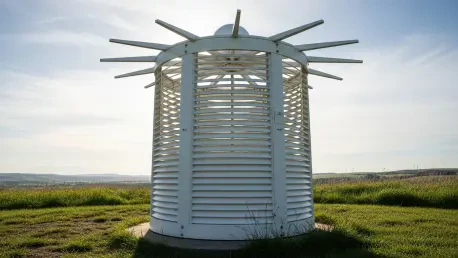

The push for sustainable energy has frequently bypassed cityscapes, where the very architecture that defines them creates wind conditions too chaotic for conventional power generation. The Ventum Dynamics VX175 represents a significant advancement in the urban renewable energy sector, designed to thrive in the complex aerodynamic environment of cities. Traditional wind power has long faced obstacles in city environments, limiting its contribution to localized, clean energy generation. This review will explore the innovative design of the VX175, its key features, performance metrics, and the impact it is poised to have on urban energy applications. The purpose of this review is to provide a thorough understanding of this new technology, its capabilities in addressing longstanding challenges, and its potential for future development.
The Problem with Traditional Wind Power in Cities
The deployment of conventional wind turbines in urban settings has been historically impractical, a reality rooted in the fundamental design of these massive structures. Standard turbines require consistent, laminar airflow to operate efficiently, a condition rarely found among the towering buildings and shifting corridors of a city. This leads to underperformance and mechanical stress, rendering them an unreliable source of power.
Furthermore, the social and logistical barriers have proven just as significant as the technical ones. The aesthetic disruption of large, bladed turbines and the audible noise they produce are major sources of public opposition. These factors, combined with high initial investment costs and the need for vast open spaces, have largely relegated wind power to rural and offshore locations, creating a gap in the urban renewable energy portfolio that new technologies now seek to fill.
Technical Breakdown of the Ventum Dynamics VX175
Omnidirectional Shroud and Rotor Mechanism
The core innovation of the VX175 is its enclosed horizontal axis rotor, housed within a specially designed shroud that functions as a “white vortex.” This structure is not merely a protective casing; it is an active aerodynamic component engineered to capture wind from any direction, a critical feature for the unpredictable air currents found in urban canyons. By creating a low-pressure zone, the shroud accelerates the airflow and focuses it onto the turbine blades.
This design masterfully maximizes energy capture from inconsistent urban wind patterns and minimizes the aerodynamic losses that plague traditional open-rotor systems. The result is a mechanism that generates power consistently, even when wind direction shifts rapidly. The shroud effectively turns the chaotic nature of city wind from a liability into an asset, ensuring the turbine maintains a steady and efficient operational state.
Performance Metrics and Energy Output
The VX175 demonstrates superior performance in conditions where traditional turbines falter, setting a new benchmark for urban wind generation. It begins generating power at a low wind speed of just 3.5 m/s, a threshold significantly lower than that of its conventional counterparts. This allows it to harness the gentle breezes common in populated areas, reaching a maximum output of 3 kW in stronger winds.
In a typical urban environment with average wind speeds of 6 m/s, a single unit is estimated to produce 4,000 kWh of energy annually. This level of efficiency makes it a practical solution for supplementing the energy needs of commercial buildings, residential complexes, and public infrastructure. Its ability to generate meaningful power in suboptimal conditions positions it as a reliable contributor to a decentralized energy grid.
Urban-Centric Design and Materials
Engineered specifically for city life, the VX175 prioritizes coexistence with its human neighbors. The turbine operates at a noise level below 40 dB, comparable to a quiet library, eliminating the disruptive hum associated with large-scale wind farms. Its enclosed rotor enhances safety for urban wildlife, particularly birds, and presents a more aesthetically pleasing, sculptural profile that can integrate seamlessly into modern architecture.
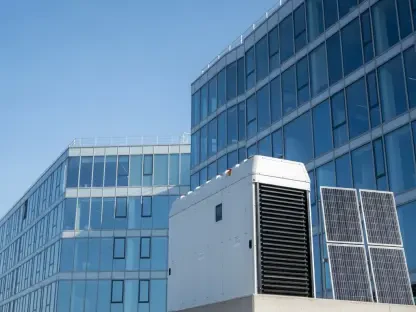
The turbine is constructed from a lightweight, recyclable DANU composite, a material choice that simplifies rooftop installation and underscores a commitment to sustainability throughout the product’s lifecycle. Furthermore, its design is inherently scalable, requires minimal maintenance, and can be integrated into hybrid systems with solar panels, offering a versatile and robust solution for urban energy independence.
Current Developments and Market Introduction
The key trend driving this technology is the increasing demand for decentralized, clean energy solutions within densely populated areas. Ventum Dynamics has successfully moved from a prolonged development phase to full commercialization, with production and delivery of the VX175 beginning in 2024. This transition marks a critical moment for urban wind technology, as a viable, market-ready product is now available to challenge both conventional energy sources and previous turbine designs that failed to gain traction. The initial market response indicates a strong interest from commercial property owners and municipalities aiming to meet ambitious sustainability targets.
Real-World Applications and Scalability
The VX175 is designed for a wide range of urban and suburban applications, moving beyond niche installations to offer a genuinely scalable energy solution. Its primary use case is for installation on the rooftops of commercial and residential buildings, providing on-site power generation to reduce reliance on the grid and lower energy costs. This direct-to-consumer model empowers property owners to become active participants in the green energy transition.
Beyond individual buildings, its scalability allows for the creation of small-scale wind farms on large industrial facilities or distributed networks throughout a neighborhood. The low noise and minimal visual impact also make it suitable for integration into public spaces, transportation hubs, and telecommunication towers, turning passive infrastructure into active energy generators.
Addressing Key Challenges in Urban Wind Generation
The VX175 directly confronts the primary technical and social hurdles that have long hindered the progress of urban wind power. It mitigates noise and vibration issues through its contained design, offering a “silent” alternative that is crucial for residential and commercial harmony. Simultaneously, it resolves the problem of inefficiency in turbulent wind with its omnidirectional shroud, ensuring consistent output where other turbines would stall.
By using lightweight, durable materials and promising a long operational lifespan with minimal upkeep, it also aims to lower the long-term cost of ownership, addressing the financial barriers to adoption. This holistic approach, which solves aesthetic, auditory, and performance problems in a single package, represents a significant leap forward in making urban wind power not just possible, but practical.
Future Outlook and Potential Impact
The introduction of the VX175 and similar shrouded turbine technologies could signify a turning point for urban renewable energy. Widespread adoption of these systems has the potential to foster more resilient and decentralized urban power grids, reducing the strain on centralized power plants and increasing energy security during peak demand or outages.
Looking ahead, potential breakthroughs may include enhanced AI-driven power management for optimizing output from hybrid solar-wind systems and the use of even more advanced composite materials to further reduce weight and cost. The long-term impact could be a substantial increase in the share of wind power in the urban energy mix, contributing to the development of smarter, more sustainable cities that generate clean energy right where it is consumed.
Conclusion and Final Assessment
The Ventum Dynamics VX175 turbine presents a groundbreaking solution that effectively addresses the major drawbacks of traditional wind turbines in urban environments. By combining an innovative omnidirectional shroud design with low-noise operation and high efficiency in turbulent conditions, it establishes a compelling case for the future of localized wind energy. The technology stands as a formidable and potentially transformative force in the urban clean energy sector. While its long-term market performance since its 2024 launch continues to unfold, its current capabilities and thoughtful design position it as a critical enabler of sustainable urban development.