
The United Kingdom’s recent approval of the Berwick Bank offshore wind farm marks a watershed moment where the nation’s ambitious pursuit of clean energy directly confronts profound ecological conservation concerns. The decision to move forward with one of the world’s largest offshore wind projects has ignited a fierce debate, pitting the undeniable benefits of renewable power against the potentially devastating impact on vulnerable seabird populations, creating a landmark test case for the future of sustainable development.
A Landmark Energy Project Forged in Controversy
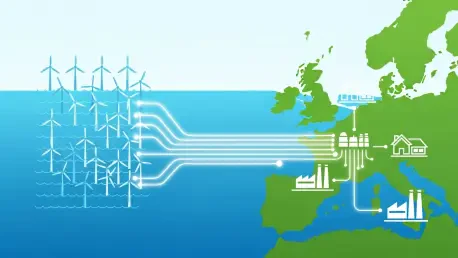
The Berwick Bank wind farm, slated for construction in the North Sea off the coast of East Lothian, represents a pivotal step in the UK’s transition away from fossil fuels. With a planned capacity of 4.1 gigawatts generated from up to 307 turbines, the project is a cornerstone of the nation’s strategy to enhance energy security and achieve its climate targets. Its scale is monumental, promising to power millions of homes and inject billions into the economy, solidifying the UK’s status as a leader in offshore wind technology.
However, the government’s greenlighting of this project is not a straightforward victory for clean energy. It represents a complex negotiation between competing national priorities. On one side are the urgent demands for energy independence and decarbonization, while on the other are the stark warnings from environmental advocates. The core conflict is clear: a project hailed as a triumph of green engineering is simultaneously condemned by conservationists as a looming ecological disaster, particularly for Scotland’s iconic seabird colonies. This approval, therefore, is less a simple decision and more a high-stakes gamble on balancing progress with preservation.
The High-Stakes Calculus of Progress and Preservation
Powering the Nation: The Economic and Security Imperative
From a strategic standpoint, the case for Berwick Bank is compelling. Industry leaders and government officials champion the project for its capacity to power up to six million homes, a significant contribution to the national grid. The economic projections are equally impressive, with estimates suggesting a contribution of up to £6 billion to the UK economy during its construction phase alone. This development is framed as a critical move toward delivering “homegrown” energy, thereby reducing the nation’s reliance on volatile international gas markets.
The financial architecture enabling this massive undertaking is the “Contract for Difference” (CfD) mechanism. This government instrument provides developers with a guaranteed price for the electricity they generate, creating the long-term revenue certainty required to attract large-scale investment. Proponents argue that this model not only secures a stable energy supply but also drives down costs for consumers. Analysis suggests the price agreed upon for this offshore wind power is substantially lower than the cost of building new gas-fired power plants, positioning it as a fiscally responsible long-term solution to rising energy bills.
A Gathering Storm for Scotland’s Seabirds
In stark contrast to the economic optimism, a coalition of environmental organizations, led by RSPB Scotland, has labeled the project an ecological catastrophe in the making. Their opposition is rooted in detailed projections of mass bird mortality. Conservationists warn that the massive array of spinning turbines could result in the deaths of tens of thousands of seabirds over the wind farm’s operational lifetime, posing an existential threat to already fragile ecosystems.
The concerns are highly specific, focusing on the potential for devastating impacts on at-risk populations of Kittiwakes and Puffins, species for which Scotland is a critical global habitat. Environmental groups argue that such a heavy toll could push these colonies toward local extinction, making the project fundamentally incompatible with nature conservation goals. While the government has mandated that developers implement mitigation and compensation measures, critics remain deeply skeptical, questioning whether any such strategies can truly offset the predicted scale of harm and arguing that public funds should not support a project with such a high and unavoidable ecological cost.
Unsettled Waters: The Political Divide Between Westminster and Holyrood
The approval of the Berwick Bank contract has also exposed underlying political tensions between the UK and Scottish governments. While the investment in Scottish waters is welcome, the reaction from Holyrood has been mixed with criticism. The Scottish Energy Secretary described the outcome of the latest contract allocation round as a “missed opportunity,” suggesting that a more ambitious budget from the UK government could have supported additional eligible Scottish renewable projects.
This critique reveals a deeper policy disagreement concerning the financial and regulatory landscape for renewables. The Scottish government contends that “unfair” transmission charging policies systematically place its projects at a competitive disadvantage compared to developments in other parts of the UK. This highlights a disconnect in the national strategy, challenging the narrative of a unified effort and revealing a layer of regional competition and policy friction that complicates the path toward a cohesive nationwide energy transition.
Beyond Berwick Bank: Contextualizing the UK’s Record-Breaking Renewables Push
The Berwick Bank approval did not occur in a vacuum; it was the centerpiece of the UK’s largest-ever offshore wind procurement round. This round saw 11 other renewable energy projects awarded contracts, including the smaller Pentland floating wind farm, also located in Scotland. The sheer scale of this coordinated investment underscores a national strategy aimed at rapidly accelerating the country’s clean energy capacity, with the combined projects expected to power approximately 12 million homes.
This massive procurement solidifies the UK’s position as a dominant force in European offshore wind development. By committing to projects of Berwick Bank’s magnitude, the government is signaling its long-term dedication to decarbonizing its energy sector. This forward-looking strategy not only helps in meeting climate goals but also fosters a domestic green industry, promising to create thousands of jobs and drive technological innovation in the renewable energy field for years to come.
Key Insights from a Contentious Approval
The Berwick Bank decision exemplifies the direct and often uncomfortable clash between the urgent need to decarbonize the economy and the non-negotiable duty to protect biodiversity. It moves the conversation beyond abstract policy goals into the tangible reality of trade-offs, where a definitive “green” choice is not immediately apparent. The project serves as a stark reminder that the path to a sustainable future is fraught with complex choices that carry significant consequences for both the climate and the natural world.
For future large-scale infrastructure projects, this approval highlights an urgent need for more deeply integrated ecological planning from the earliest stages of development. Rather than treating environmental impact assessments as a final hurdle, a new paradigm is needed where conservation is a core design principle. This approach would help mitigate conflicts, foster more innovative solutions, and avoid situations where economic and environmental goals are positioned as mutually exclusive. This case provided a framework for stakeholders to assess the true cost-benefit analysis of renewable projects by demanding the inclusion of all environmental and political factors from the outset.
Redefining “Green”: The Precedent Set and the Path Forward
Ultimately, the Berwick Bank approval is more than just a single energy project; it is a defining test case that will shape the future of sustainable development in the UK and beyond. It forces a critical re-evaluation of what “green” truly means, challenging the notion that any renewable energy source is inherently beneficial, regardless of its ecological footprint. This decision sets a powerful precedent for how future projects with significant, acknowledged environmental impacts will be judged.
The long-term implications of this decision will be closely watched. By proceeding despite grave warnings from leading conservation bodies, the government signaled a willingness to accept substantial ecological damage in pursuit of its climate and energy security objectives. This move has established a new benchmark for acceptable trade-offs, one that will undoubtedly influence regulatory and investment decisions for years to come. The approval ultimately underscored the critical need for a more holistic and sophisticated national energy policy—one that successfully navigates the intricate and often competing demands of climate, nature, and the economy.