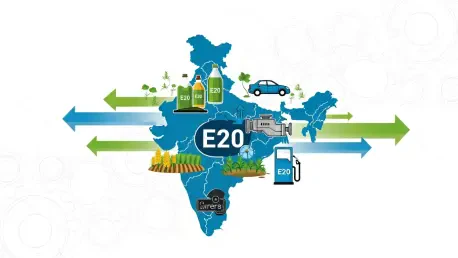

A move that fundamentally reshapes the subcontinent’s energy landscape, India’s widespread rollout of E20 fuel stands as a decisive pillar of national progress and ecological responsibility. By integrating ethanol, the government seeks to insulate the market from crude volatility while addressing carbon reduction.
This analysis explores the friction between policy goals and mechanical reality. It weighs foreign exchange savings against technical burdens and the balance of resources required to keep the nation moving toward energy sovereignty.
Decoding the Drive: Market Adoption and Practical Implementation
Statistical Momentum and the Ethanol Roadmap
The push toward E20 has been a logistical sprint. NITI Aayog projects suggest nationwide availability by 2027, ensuring infrastructure keeps pace with mandates. This effort could save billions in foreign exchange as fossil fuel reliance diminishes.
Petroleum ministry reports show the rollout saturating urban centers first. This roadmap serves as a blueprint, showing how domestic agricultural surplus can be converted into economic fuel to bolster the local economy.
Real-World Integration and Industry Response
Automakers like Maruti Suzuki have pivoted by redesigning engine blocks for higher ethanol content. The Automotive Research Association of India remains at the forefront, testing hardware to ensure vehicles do not succumb to premature wear.
Upgrading petrol pumps required significant capital, but the industry responded by creating a seamless experience. Retail outlets are expanding rapidly to meet the growing demand for this modern fuel blend.
Expert Perspectives on Technical and Economic Friction
Experts point out that ethanol contains less energy than gasoline. This discrepancy translates into a fuel efficiency drop of up to 7%, meaning drivers might visit the pump more frequently despite lower prices.
Scientists raised concerns regarding older fleets. Ethanol’s tendency to pull moisture can lead to corrosion in rubber seals and plastic lines that were not originally designed for such a chemically active fuel blend.
Industrial analysts noted a supply squeeze as ethanol is diverted from chemical sectors. This shift forced these industries to find alternative raw materials to maintain their production margins during the transition.
The Future Horizon: Balancing Sustainability and Food Security
The “Food vs. Fuel” debate grows as sugarcane demand increases. Critics worry that prioritizing energy could drive up food prices, making fuel competition a risk to basic national nutritional needs.
Second-generation biofuels derived from agricultural waste offer a solution to land-use dilemmas. These alternatives could resolve the water-consumption issues currently shadowing the broader ethanol program.
Environmental trade-offs involve a rise in nitrogen oxide emissions. This shift might also delay electric vehicle adoption if the ethanol focus dilutes the incentives needed for mass battery-powered transport.
Conclusion: Navigating the Ethanol Intersection
The journey toward an E20 market proved that strategic assets required a balance of technical adaptation and consumer protection. Policymakers recognized that localized emission standards were essential for long-term viability.
Ultimately, success hinged on the development of 2G technologies and a willingness to adapt. This transition showed that a sustainable future demanded a framework protecting both ecological health and the interests of the driver.