
With a deep background in energy management and grid security, Christopher Hailstone has a unique vantage point on how our global systems are responding to climate-induced stress. We sat down with him to explore the stark contrasts of our planet’s new reality, from the searing heat and wildfires gripping the Southern Hemisphere to the dual crises of drought and deluge reshaping nations. Our conversation covers the urgent need for resilient infrastructure, the complexities of financing climate adaptation in conflict-affected regions, and the critical strategies required to protect the world’s most vulnerable communities.
Countries from Australia to Argentina are experiencing record-breaking heat and catastrophic wildfires. What common atmospheric drivers connect these events, and what are the most critical, immediate steps for governments to protect both remote and coastal communities from these dual threats?
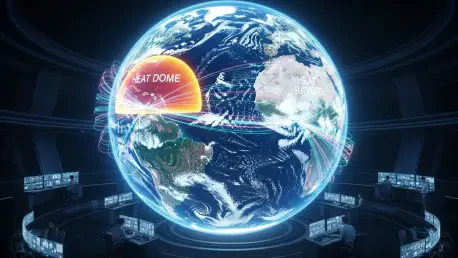
What we’re seeing is a terrifyingly interconnected pattern. Massive heat domes, like the one that pushed temperatures in Australia toward 50 degrees Celsius, are creating vast tinderbox conditions. This isn’t a series of isolated incidents; it’s a symptom of a super-heated global system. The immediate, most critical step is a massive investment in predictive analytics and real-time monitoring. For remote regions like Argentina’s Patagonia, this means satellite-based fire detection and prepositioned aerial firefighting resources. For coastal communities, like those in Chile where we tragically saw 21 people lose their lives, it means establishing and ruthlessly practicing clear evacuation routes and building community fire shelters that can withstand these infernos. It’s no longer about just fighting the fire; it’s about moving people out of its path before it even arrives.
Severe droughts are impacting diverse regions from the Horn of Africa to South Africa’s Western Cape. Beyond emergency aid, what are the most effective long-term water management and agricultural strategies for these areas, and what primary obstacles hinder their successful implementation on the ground?
Emergency aid is a bandage on a gaping wound. The long-term solution has to be a fundamental rethinking of how water is valued, stored, and used. In regions like Kenya or Somalia, which declared a national emergency after seasons of poor rainfall, this means a major push for micro-irrigation, rainwater harvesting on a national scale, and shifting agricultural subsidies toward drought-resistant crops. We’re talking about a complete overhaul. The biggest obstacles are twofold: a lack of consistent capital investment and pervasive instability. You can design the most brilliant water reclamation project, but if there’s internal conflict, as we see in many vulnerable nations, the project can’t be secured or maintained. This is what cripples progress and keeps communities locked in a cycle of crisis.
We are seeing extreme contrasts, with devastating droughts in East Africa while nations like Morocco are spending hundreds of millions to recover from massive floods. How should global climate adaptation funds be allocated to address such opposite crises, and what infrastructure changes are key to building regional resilience?
This is the whiplash effect of climate change, and it demands a flexible, dual-pronged funding strategy. We can’t just have a “drought fund” and a “flood fund.” The allocation needs to be dynamic, capable of deploying rapid relief while simultaneously financing long-term resilience projects. Morocco’s plan to spend $330 million is a great example of this; it’s not just for immediate support to farmers and residents but for upgrading infrastructure. The key infrastructure change is building for both extremes. In a flood-prone area, that means not just higher sea walls but also creating massive retention basins and green spaces that can absorb torrential rains—and those same basins can be used to store water for the inevitable dry periods. It’s about creating systems that can handle both scarcity and surplus.
Mineral-rich nations like Congo are seeking to fund projects, including hydropower, by issuing new debt. How can these countries ensure this financing genuinely supports climate resilience, and what specific measures can prevent the funds from being diverted due to internal conflict or corruption?
This is an enormous challenge, but it’s not insurmountable. The key is to bake transparency and accountability into the very structure of the debt instruments. For a country like Congo, which is blighted by internal conflict, any new bond issuance must have its proceeds tied to specific, measurable, and independently audited projects. This means moving beyond vague promises to finance “hydropower plants” and instead linking funds to explicit outcomes, like gigawatt-hours produced or the number of communities connected to a resilient grid. To prevent diversion, you need robust third-party oversight—international bodies or trusted NGOs—that can track every dollar from issuance to implementation. Without that ironclad chain of custody, the risk is simply too high that the money will disappear into modernizing an airport instead of building the rural infrastructure that truly builds resilience.
What is your forecast for global extreme weather patterns?
My forecast, unfortunately, is for an acceleration of this volatility. We’ve seen three of the hottest years on record, and the science suggests we are just at the beginning of this trend. We should expect to see these “weather whiplash” events become more frequent and more severe. The contrast of devastating droughts in one region and catastrophic flooding in another will become the new, unsettling norm. The window for incremental change is closed. We’re now in an era where radical, large-scale adaptation isn’t just an option; it’s the only path to survival for millions of people.