
Solving the Aesthetic Dilemma: Are Terracotta Panels a Worthwhile Investment
For years, the picturesque rooftops of historic districts and aesthetically controlled communities have remained a battleground where the urgent need for renewable energy clashes with the cherished goal of architectural preservation. This long-standing conflict has often forced homeowners to choose between generating clean power and complying with strict visual codes, leaving countless suitable roofs bare. This review examines a promising solution from the Vienna-based manufacturer Sonnenkraft, evaluating whether its Terracotta solar panels can finally bridge this divide. The central question is whether this technology offers a practical and financially sound path for property owners in sensitive areas to embrace solar without compromising heritage.
The core issue has never been a lack of desire for sustainability but rather the intrusive appearance of conventional blue and black photovoltaic panels on traditional buildings. The visual disruption caused by these modules has led many preservation boards and homeowners’ associations to prohibit solar installations outright, effectively locking entire neighborhoods out of the green energy transition. By creating a panel that mimics the appearance of classic roof tiles, Sonnenkraft aims to neutralize the primary objection that has stalled progress for so long. This analysis will determine if the product successfully harmonizes form and function, making it a viable investment for a previously excluded market.
What Are Terracotta Solar Panels: A Closer Look at the Technology
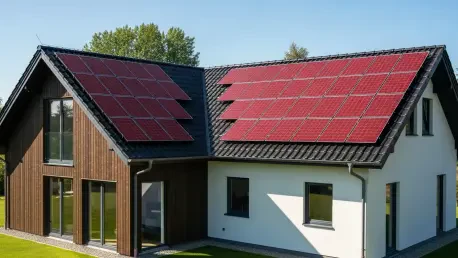
At its core, the Terracotta solar module is a specialized photovoltaic panel engineered to visually integrate with classic terra cotta roofing, a material prevalent across Europe and in many historic American neighborhoods. Instead of the typical dark, monolithic appearance, these panels feature a distinct red hue designed to blend almost invisibly into the roofline. This aesthetic camouflage is not achieved with a simple surface coating, which would significantly impair performance. Instead, Sonnenkraft utilizes an advanced colored encapsulation layer that allows sunlight to pass through to the high-efficiency cells beneath while reflecting a rich, earthy red color.
The technology behind this seamless integration is as focused on performance as it is on appearance. The modules are built with Tunnel Oxide Passivated Contact (TOPCon) solar cells, a leading-edge technology known for minimizing electron losses and maximizing energy conversion. This choice ensures that the aesthetic compromise does not come at a substantial cost to power generation. The result is a product that functions as a high-performance solar panel while appearing to be part of the building’s original architectural fabric, effectively removing the visual barrier to solar adoption.
Performance and Durability: More Than Just an Aesthetic Solution
While the visual appeal of Terracotta solar panels is their most striking feature, their technical specifications confirm they are a serious contender in the high-performance residential market. Each panel delivers a robust 400 watts of power with an efficiency rating of approximately 20%. These figures place the modules firmly in the upper tier of solar technology, competing directly with many premium conventional panels. This level of performance demonstrates that homeowners do not have to sacrifice significant energy output for the sake of aesthetics, a critical factor for ensuring a reasonable return on investment.
Beyond immediate power generation, the panels are engineered for long-term resilience. A durable glass-glass construction protects the solar cells from environmental stressors like moisture, temperature fluctuations, and physical impacts far more effectively than standard glass-foil designs. This robust build contributes to a projected operational lifespan of 30 years, giving homeowners confidence in the longevity of their system. Furthermore, the product has received General Building Approval from Germany’s esteemed DIBt, a certification that legally permits its installation on architecturally protected buildings. This official endorsement is not merely a stamp of approval; it is a critical tool that empowers property owners to overcome regulatory hurdles that once made solar installation impossible.
Advantages and Disadvantages: A Balanced Perspective
The primary strength of the Terracotta solar panels lies in their unparalleled ability to blend into historic and architecturally sensitive environments. This seamless integration effectively neutralizes the most common and powerful argument against solar installations in protected districts. Coupled with high-efficiency power generation and official regulatory approval for use on heritage sites, the modules present a compelling package for a niche but significant market. They transform a previously prohibitive conversation with preservation boards into a constructive dialogue about sustainable upgrades.
However, potential buyers should consider the potential limitations. As a specialized, design-focused product, the initial cost of Terracotta panels may be higher than that of their conventional counterparts. This premium price point could extend the payback period, requiring a careful cost-benefit analysis. Moreover, their design is highly specific; while perfect for terra cotta roofs, they are not a universal solution for homes with asphalt shingles, slate, or other roofing materials. This limits their applicability, positioning them as a targeted solution rather than a mass-market product.
Final Verdict: A Breakthrough for Architecturally Sensitive Projects
Sonnenkraft’s Terracotta solar panels represent a significant and intelligent advancement in photovoltaic technology, addressing a non-technical barrier that has long hindered renewable energy adoption. By prioritizing aesthetic integration without making major concessions on performance or durability, this product offers a sophisticated solution to a complex problem. It proves that the goals of architectural preservation and sustainable energy generation do not have to be mutually exclusive.
The technology stands as a premier choice for any project where appearance is a critical factor. It effectively disarms the aesthetic argument, shifting the focus of regulatory bodies from prohibition to accommodation. In essence, these panels change the rules of the game for homeowners in historic districts, providing a tangible and officially approved pathway to energy independence. This innovation marks a pivotal moment where solar technology adapts to the built environment, rather than forcing the environment to adapt to it.
Concluding: Opinion and Recommendations for Homeowners
For homeowners residing in historic districts, under the governance of strict aesthetic codes, or who simply value architectural integrity, Terracotta solar panels are an exceptional and transformative option. They are arguably the most effective solution available for gaining approval for a solar installation in a location where it was previously deemed impossible. This unique capability makes them more than just another panel choice; they are an enabling technology.
While the upfront investment may exceed that of standard solar arrays, the value proposition is distinct. The ability to generate clean energy and reduce utility costs in a home that was otherwise barred from solar offers a return that cannot be measured in dollars alone. Therefore, for those facing aesthetic restrictions, these panels are highly recommended. They represent a crucial step forward, ensuring that the charm of the past can be powered by the technology of the future.