
In a landmark decision poised to reshape the energy and environmental landscape of Northeast India, the Public Investment Board (PIB) has officially granted its approval for the colossal Kamala Hydroelectric Project in Arunachal Pradesh, sanctioning a massive budget of approximately Rs 26,070 crore. This monumental initiative is not merely an energy project but a strategic, dual-purpose undertaking designed to harness the formidable power of the Kamala River while simultaneously providing a critical defense against the perennial and devastating floods that plague the downstream Brahmaputra valley. The approval marks a pivotal moment, unlocking the potential for sustainable development in the region by integrating large-scale renewable power generation with essential climate resilience infrastructure. As the project moves from blueprint to reality, it represents a significant step forward in leveraging the nation’s natural resources to meet growing energy demands and address long-standing environmental challenges in one of its most ecologically sensitive areas.
Project Scope and Strategic Importance
A Monumental Engineering Feat
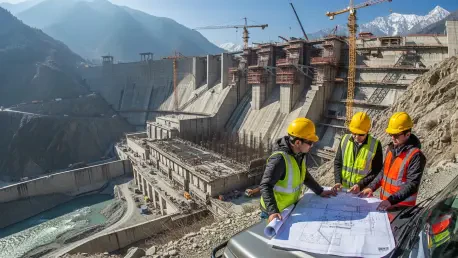
The Kamala Hydroelectric Project is set to be an engineering marvel, strategically located on the Kamala River, a major tributary of the Subansiri River flowing through the Kamle district of Arunachal Pradesh. At the heart of the project is the construction of a towering 216-meter-high concrete gravity dam, a structure designed to use its own weight and the force of gravity to hold back the immense volume of water, creating a vast reservoir. This impressive dam will feed an underground powerhouse, a design choice often made in challenging terrain to minimize surface-level environmental impact and enhance security. With an installed capacity of 1,720 megawatts (MW), the project is engineered to be a powerhouse in the truest sense, contributing a substantial amount of clean energy to the national grid. The scale of this undertaking is immense, involving complex geological assessments, sophisticated construction techniques, and meticulous environmental planning to ensure the long-term stability and efficiency of both the dam and its associated infrastructure in this remote and rugged Himalayan region.
This ambitious project is projected to generate an astonishing 6,869.92 million units (MU) of green energy annually, a significant contribution that will bolster the nation’s renewable energy portfolio and reduce its reliance on fossil fuels. This output is crucial in the context of India’s commitment to achieving its climate goals and transitioning towards a more sustainable energy future. The development of hydropower in Arunachal Pradesh is particularly strategic, as the state holds a vast, largely untapped potential for clean energy generation due to its numerous perennial rivers. By harnessing this potential, the Kamala project not only addresses regional power deficits but also strengthens the stability of the national grid by providing a reliable source of baseload power. This consistent energy supply is vital for supporting industrial growth, electrifying remote communities, and ensuring energy security for millions, thereby acting as a catalyst for socio-economic development across the northeastern states and beyond.
Beyond Power Generation
A defining feature of the Kamala Hydroelectric Project is its innovative dual-purpose design, which extends its benefits far beyond the realm of electricity generation. It is conceived as a storage-based scheme with a fully integrated flood moderation component, a critical feature aimed at taming the destructive annual floods in the downstream Brahmaputra valley. For decades, communities in Assam and other downstream regions have faced immense hardship due to the monsoon-swelled rivers, which cause widespread displacement, agricultural loss, and damage to infrastructure. The project’s large reservoir is specifically engineered to absorb and regulate peak water flows during the monsoon season, effectively acting as a buffer that can release water in a controlled manner. This flood moderation capability is not an afterthought but a core objective, directly addressing one of the most pressing environmental and humanitarian challenges in the region and offering a long-term solution to a recurring natural disaster.
The implementation of this integrated flood control mechanism promises to deliver profound socio-economic and environmental benefits that will ripple throughout the Brahmaputra basin. By stabilizing river flows, the project will help protect vulnerable downstream communities, safeguard agricultural lands from inundation, and secure critical infrastructure such as roads, bridges, and settlements from water-related damage. This newfound stability is expected to foster greater economic resilience, allowing for more predictable agricultural cycles and creating a safer environment for investment and development. Moreover, this holistic approach, which combines large-scale infrastructure for energy with proactive environmental management, sets a powerful precedent for future projects. It demonstrates a sophisticated understanding of the interconnectedness of energy, water, and community well-being, positioning the Kamala project as a model for sustainable and responsible development in ecologically complex and climate-vulnerable regions.
Implementation and Financial Framework
A Collaborative Public Private Partnership
The execution of the Kamala Hydroelectric Project will be managed through a robust Build-Own-Operate-Transfer (BOOT) model, a framework well-suited for large-scale, capital-intensive infrastructure ventures. This approach will be overseen by a specially formed joint venture company, ensuring a blend of public oversight and operational expertise. The equity in this joint venture is strategically divided, with NHPC Limited, a premier hydropower company in India, holding a majority stake of 74%. This leverages NHPC’s extensive experience and technical proficiency in constructing and managing complex hydroelectric projects across the country. The remaining 26% equity is held by the Government of Arunachal Pradesh, ensuring that the state’s interests are represented and that local communities and stakeholders have a voice in the project’s development. This public-private partnership structure is designed to optimize efficiency, mitigate risks, and align the objectives of the central technical agency with the developmental aspirations of the host state.
The BOOT framework provides a clear lifecycle for the project, ensuring accountability and long-term sustainability. Under this model, the joint venture company will be responsible for financing, designing, constructing, and operating the facility for a predetermined concession period. During this operational phase, the company will generate revenue by selling the electricity produced, allowing it to recover its investment and earn a return. At the end of the concession period, the ownership and operational control of the entire project—the dam, powerhouse, and all associated assets—will be transferred to the government, likely the state of Arunachal Pradesh. This model not only attracts the necessary private sector efficiency and investment for a project of this magnitude but also ensures that this critical piece of national infrastructure ultimately becomes a public asset. It provides a structured pathway for building state capacity in managing vital resources while delivering reliable power and flood protection for decades to come.
Securing a Robust Financial Foundation
The financial architecture of the Kamala project is built on a solid foundation, utilizing a standard 70:30 debt-to-equity ratio to fund its substantial completion cost of Rs 26,070 crore. This financing structure means that 70% of the required capital will be raised through debt from financial institutions, while the remaining 30% will be injected as equity by the joint venture partners, NHPC and the Government of Arunachal Pradesh. The project’s viability and attractiveness to lenders are significantly enhanced by the strong backing of the Central government, which has committed to providing substantial financial support in the form of grants. This includes a grant of Rs 1,340 crore specifically earmarked for the development of enabling infrastructure, such as access roads, bridges, and construction facilities, which are essential for a project of this scale in a remote location. This direct financial infusion helps de-risk the initial and most challenging phases of development.
Furthermore, recognizing the project’s critical role in regional climate resilience, the Central government has allocated an additional, and even more significant, grant of Rs 4,743.98 crore to cover the costs associated with its flood moderation component. This funding explicitly acknowledges the project’s value as a public good that extends beyond commercial power generation, justifying public investment in its disaster mitigation capabilities. The financial support structure is further strengthened by a key commitment from the Government of Arunachal Pradesh, which has pledged to provide a 100 percent reimbursement of the State Goods and Services Tax (SGST) applicable to the project. This tax incentive further improves the project’s financial metrics and demonstrates a strong, collaborative effort between the central and state governments to ensure this nationally significant initiative is successfully realized.
A Blueprint for Integrated Development
The final approval from the Public Investment Board represented a watershed moment, cementing a comprehensive financial and operational strategy for the Kamala Hydroelectric Project. The carefully structured blend of public-sector leadership through NHPC, state government partnership, and substantial central government grants created a powerful and de-risked investment model. This financial framework had been instrumental in moving the project from a long-held vision to a tangible reality. The commitment of funds, not just for power generation but specifically for flood moderation, underscored a progressive policy shift towards integrated multipurpose river valley projects. This decision had effectively set a new benchmark for how India could approach the development of its vast hydropower potential, ensuring that such projects delivered holistic benefits, including climate adaptation and regional security, alongside clean energy. The project’s approval had not only paved the way for construction but also established a replicable blueprint for future large-scale infrastructure initiatives designed to foster sustainable and resilient growth in the nation’s most vital regions.