
I’m thrilled to sit down with Christopher Hailstone, a renowned expert in energy management and renewable energy, whose deep insights into electricity delivery and grid reliability have shaped conversations around sustainable fuels. With a focus on bioethanol, Christopher offers a unique perspective on how alternative fuels can transform transportation, support agriculture, and drive environmental progress. In this engaging discussion, we explore the practical advantages of ethanol as a cost-effective fuel, its role in empowering farmers through agricultural byproducts, the measurable impact on air quality and fuel independence, and the innovative strides in vehicle technology and infrastructure to bring ethanol to the masses.
How did your recent experience with a flex-fuel vehicle running on 100% ethanol highlight its potential for everyday drivers, and what stood out to you personally during that ride? Can you also explain the technology that allows it to generate its own electricity?
I was genuinely impressed riding in a flex-fuel vehicle powered entirely by ethanol through the bustling streets of Delhi. The smoothness of the ride was striking—there was no noticeable difference from a petrol car, yet I knew we were running on a fuel costing just ₹65 per litre compared to petrol at ₹120. What hit me personally was the quiet hum of the engine, almost like a whisper of a cleaner future, and realizing that this could be an everyday reality for millions of drivers. The technology behind it is fascinating; the vehicle uses a system that captures energy from the engine’s operation to generate part of its own electricity, effectively slashing the running cost down to around ₹25 per litre. It’s a hybrid approach that maximizes efficiency, reduces reliance on external power sources, and shows how innovative engineering can make sustainable fuel practical for the average person.
In what ways do you see ethanol production, derived from agricultural byproducts, creating large-scale benefits for farmers, and could you walk us through the transformation process from raw material to fuel?
Ethanol production is a game-changer for farmers, turning what was once considered waste into a valuable resource. Materials like broken rice, corn, sugarcane juice, and even stubble are now feedstock for fuel, creating a new revenue stream for rural communities. I recall speaking with a farmer in a sugarcane belt who was thrilled to sell his excess cane juice for ethanol production—it not only boosted his income but also gave him a sense of pride in contributing to national energy goals. The process itself starts with collecting these byproducts, fermenting them to convert sugars into alcohol, and then distilling the mixture to produce pure ethanol. After dehydration to remove water, it’s ready to be blended or used as 100% fuel. This cycle doesn’t just support farmers financially; it ties agriculture directly to energy security, fostering a sustainable loop that benefits both the land and the economy.
Ethanol is often praised for cutting pollution and reducing reliance on imported fossil fuels. What tangible improvements have you observed in air quality or energy independence, and what are the next steps to amplify these effects?
The impact of ethanol on pollution reduction is something I’ve seen firsthand in regions where blends like E20 are widely used—there’s a noticeable drop in the acrid smell of exhaust fumes in urban pockets. While I don’t have specific air quality data at hand, the principle is clear: ethanol burns cleaner than petrol, producing fewer harmful emissions. On the energy independence front, with India running 550 ethanol plants and rolling out fuel with a 20% blend, we’re already cutting down on imported fossil fuels, which is a huge step toward self-reliance. I remember visiting a small town where local ethanol production meant fuel didn’t have to be trucked in from afar—saving costs and reducing carbon footprints. The next steps involve scaling up to more 100% ethanol vehicles, increasing public awareness through campaigns about cost savings, and incentivizing manufacturers to prioritize flex-fuel tech. We also need to fast-track infrastructure for more dispensing stations to ensure no driver is left without access.
With a strong foundation of 550 ethanol plants and a 20% blend already in use, how do you plan to expand access to vehicles running on pure ethanol, and what challenges do you anticipate in scaling up infrastructure?
Expanding access to 100% ethanol vehicles is about building on the solid base we have with those 550 plants and the existing E20 blend availability. The vision is to make pure ethanol a norm by collaborating with automakers to produce more flex-fuel models and ensuring fuel stations are equipped to dispense it widely. One challenge is the uneven distribution of infrastructure—urban areas might get priority, leaving rural drivers with fewer options, which is ironic given farmers are key to ethanol production. I envision a phased approach: first, targeting high-density areas for new dispensing stations, then using government subsidies to extend to remote regions. We also need to train mechanics on flex-fuel tech to build consumer confidence. Picture a future where a rural gas station, once just a petrol stop, becomes a hub of clean fuel—stocked with ethanol, bustling with informed staff, ready to power the next generation of vehicles.
How are innovations like ethanol-powered two-wheelers and upcoming ethanol-CNG tractors reshaping transportation in both rural and urban settings, and what can you tell us about the timeline for these developments?
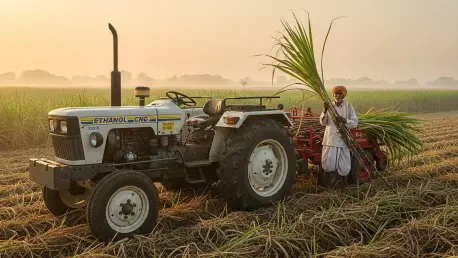
These innovations are revolutionizing transportation by making sustainable fuel accessible across diverse landscapes. Ethanol-powered two-wheelers are a lifeline in urban areas, where commuters can zip through traffic on cleaner, cheaper fuel, cutting both costs and smog. In rural settings, an ethanol-CNG tractor is a dream come true for farmers—imagine a machine that runs on fuel made from their own crop residues, slashing operational expenses. I’ve heard the excitement in farmers’ voices when they talk about not just growing food but powering their tools with it. While exact timelines aren’t set in stone, I can say major two-wheeler manufacturers have already rolled out models, and the tractor launch is on the near horizon, likely within the next year or so. Partnerships with leading automakers are driving this, ensuring these vehicles aren’t just concepts but soon part of everyday life.
There’ve been concerns among drivers about engine wear or mileage issues with E20 fuel, despite studies showing no major problems. How do you address these worries, and can you share insights from those studies or a real-world success story?
I completely understand why drivers might be hesitant about E20—changing fuel feels like a gamble with your vehicle’s health. But government-backed studies have been thorough, testing everything from engine components to performance metrics, and the results consistently show no significant wear or mileage drops with a 20% ethanol blend. These studies ran vehicles over thousands of miles under varying conditions, and the data backs up that modern engines handle E20 just fine. I met a taxi driver in a metro city who switched to E20 months ago; he was skeptical at first but now swears by it—his car runs smoothly, maintenance costs haven’t spiked, and he’s saving money on fuel. My message to worried drivers is to trust the research but also start small—test the blend, monitor your vehicle, and see the cost benefits for yourself. We’re not just asking for blind faith; the proof is in the driving.
What’s your forecast for the future of ethanol as a mainstream fuel in transportation over the next decade?
I’m incredibly optimistic about ethanol’s trajectory over the next ten years—it’s poised to become a cornerstone of transportation fuel, not just a niche alternative. With infrastructure expanding beyond the current 400 dispensing stations and automakers ramping up flex-fuel vehicle production, I foresee ethanol blends, and even 100% ethanol, becoming as common as petrol at the pump. The ripple effects will be massive: cleaner air in cities where smog is a daily battle, stronger rural economies as farmers become fuel producers, and a significant dent in fuel import bills. There will be hurdles, like ensuring supply chains keep pace with demand, but the momentum is unstoppable. I believe by the end of the decade, we’ll look back and wonder why we didn’t embrace ethanol sooner—it’s not just fuel; it’s a movement toward sustainability and independence.