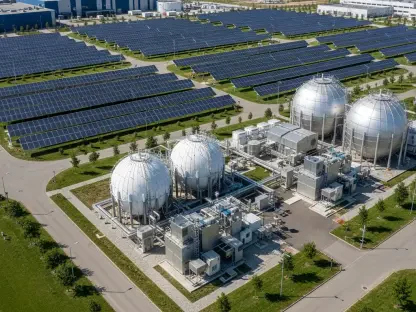

Christopher Hailstone brings a grid-and-plant-operator’s mindset to a project that sits at the crossroads of urban waste, energy security, and climate action. Speaking about Bhandewadi’s 30-acre build, he emphasizes disciplined commissioning, precision automation, and market-backed offtake as the pillars that make a zero-tipping-fee, zero-discharge model work. Key themes we explore include why dry anaerobic digestion fits Nagpur’s mixed waste, how a December 2024 mobile pilot de-risked scale-up, what three-phase hot commissioning will prove, and how royalty revenues to the municipal body align incentives. We also dive into tunnel sequencing for 550–600 tonnes of organics a day, quality control for 400 tonnes of RDF, cutting landfill-bound inerts to under 10%, and the Dutch-Indian collaboration linking Vrinda Thakur, Keva Group, and WTT to local realities.
To start, how would you describe the Bhandewadi project’s scale and goals, given it spans 30 acres and targets March 2026 commissioning? What milestones have you already hit during cold commissioning, and can you share specific anecdotes or metrics that show readiness for hot commissioning?
The scale is city-defining: 30 acres designed to process all of Nagpur’s daily waste and deliver India’s largest dry anaerobic MSW-to-CBG plant by March 2026. During cold commissioning we verified mechanical completion, power-up of control systems, and dry runs of conveyors, sorting lines, and tunnel auxiliaries without load. One moment that sticks with me was the first synchronized start of the preprocessing line and tunnel ventilation—watching airflows track setpoints and interlocks hand off flawlessly gave us confidence for hot runs. We’ve also completed functional checks aligned to the commissioner’s December 7 oversight, so the transition to hot commissioning has a clean handrail.
The NMC granted a four-month extension due to the long monsoon. What exactly did the rain disrupt on-site, and how did your team adapt day-to-day? Walk me through the contingency steps you used and the metrics you track to prevent future weather delays.
The extended monsoon primarily disrupted earthworks, civil foundations, and exterior equipment installation—anything exposed was at risk. We shifted sequencing indoors, accelerated shop testing, and front-loaded automation configuration so the workforce stayed productive. Day-to-day, crews moved under cover, while we staged materials to avoid rehandling and water damage. To stay ahead of weather risk, we now track weather windows against critical-path activities, validate drainage readiness before each pour, and build float into tasks that can’t be shielded—those practices underpinned the four-month extension and kept quality intact.
This is billed as India’s largest dry anaerobic MSW-to-CBG plant. What made dry fermentation the right fit for Nagpur’s mixed, high-moisture waste? Explain, step by step, how the process handles impurities, and share performance metrics that guided your design choices.
Dry digestion tolerates unsegregated inputs without demanding energy-intensive dilution or high liquid handling, which is a major win for mixed waste. Step-by-step, we sort incoming loads, remove inerts and recyclables, feed the organic fraction into enclosed fermentation tunnels, and manage moisture via recirculation rather than water-heavy processes. The December 2024 mobile pilot on actual mixed waste showed that impurities didn’t derail stable gas generation and that moisture could be managed within tunnel operations. Those results, plus the projected ability to convert 550–600 tonnes of organics daily, guided the tunnel count and controls philosophy.
You built for 1,500 tonnes per day even though the tender asked for 1,000. What data led to that decision, and how did you model future waste growth? Describe the capacity buffers, redundancy features, and any anecdotes from load tests that validated the scaling.
The city’s waste trajectory and the mandate to process all daily municipal waste argued for 1,500 tonnes per day. We planned for organic throughput of 550–600 tonnes into 30 tunnels, leaving headroom for variability in composition. Capacity buffers are baked into preprocessing and tunnel scheduling, so spikes don’t push us into outages. In dry runs, we intentionally stacked start-ups across lines to stress the interlocks; the system absorbed the sequence smoothly, which reassured us the 1,500-tonne design was the right call.
The December 2024 mobile pilot proved the tech on actual mixed waste. What did the pilot reveal about contamination, moisture, and biogas yields? Walk me through the pilot setup, the daily operating routine, and specific metrics that changed your full-scale design.
The mobile pilot was decisive. Running real Nagpur waste confirmed that contamination could be managed with front-end sorting and that high moisture could be balanced within the tunnels without excessive external water. Daily operations focused on controlled loading, leachate recirculation, and steady ventilation to keep the biology happy. The clear takeaway—validated performance on mixed waste—justified the 30-tunnel configuration and the move to full-scale dry fermentation with automation tuned to that moisture profile.
Hot commissioning will roll out in three phases. Can you break down each phase, the criteria to greenlight the next, and the instrumentation you rely on? Share examples of test scripts, acceptance thresholds, and how you’ll capture learning between phases.
Phase one proves mechanical and control stability with limited organic feed, Phase two ramps feed and integrates more tunnels and energy recovery, and Phase three validates full-route operation to CBG, RDF, and minimal inerts. We greenlight each phase when subsystems run to spec under sustained operation and handoffs between units are clean. Instrumentation spans airflow, moisture management, and tunnel environment data tied into dashboards. Our test scripts walk through interlocks, alarms, and run/hold logic; we log results and adjust setpoints before scaling to the next phase.
You’re converting 550–600 tonnes of organic waste daily into CBG across 30 tunnels. How do you sequence feedstock, retention time, and moisture control across tunnels? Describe the control philosophy, key setpoints, and any early tunnel-to-tunnel performance differences.
We stagger tunnel loading to create a steady-state plant rather than a sawtooth profile, using batch offsets across the 30 tunnels. Moisture is managed through recirculation loops and ventilation so each tunnel stays in its sweet spot. The control philosophy is conservative at first—tight alarms, gradual ramping—then we open the envelope as data builds confidence. Early tunnel differences usually trace back to feed variability; sequencing and sorting smooth that out.
The plant will also generate 400 tonnes of RDF per day. Where will that RDF go, and how do you ensure consistent calorific value? Walk me through sorting, quality checks, and contracts or trials that confirm stable offtake and logistics.
The 400 tonnes of RDF per day are targeted for energy users that can handle consistent alternative fuel. Quality starts with sorting to remove organics and inerts; then we apply checks to keep a stable fuel profile. Trial runs with prospective offtakers validate handling and combustion performance before contracts lock in logistics. Because the model is zero tipping fee, reliable RDF offtake is both an environmental and a cash-flow lever.
Less than 10% of inert material will go to a scientific landfill. What steps reduce that fraction, and how do you verify material classification? Share sampling methods, lab metrics, and any changes you made after early contamination audits.
Cutting landfill-bound inerts below 10% starts with disciplined preprocessing and targeted recovery of recyclables. We confirm classifications through routine sampling and lab checks so inerts don’t creep into energy streams. Early audits led us to tighten sorting protocols and operator training, which immediately reduced misclassification. The result is a smaller, cleaner stream to a scientific landfill and more value captured upstream.
The model is zero tipping fee and zero discharge, with NMC earning royalty revenue. How does the revenue stack work across CBG, RDF, and byproducts? Give numbers where you can, describe the payment triggers, and explain how cash flow supports operations and maintenance.
Most Indian projects charge around ₹800 per tonne, but here the tipping fee is zero and NMC earns a royalty—an industry first. Revenue comes from CBG, 400 tonnes per day of RDF, and byproducts like compost and soil conditioners. Payment triggers align to delivered energy and qualified offtake, which keeps incentives tied to performance. That stack, plus disciplined O&M, underwrites the zero-discharge promise and steady municipal revenues.
You’ve emphasized automation and precision engineering. What are the top control loops, sensors, and analytics dashboards you rely on daily? Describe failure modes you planned for, the alarms you tuned most, and examples where automation prevented downtime.
Our top loops manage tunnel environment, moisture recirculation, and air handling, all visible through dashboards that track stability and trends. We engineered for failure modes like feed variability and sensor drift by layering interlocks and sanity checks. The most-tuned alarms are those that balance responsiveness with nuisance avoidance so operators act on signals that matter. In cold runs, automation caught an airflow anomaly, corrected it, and kept the sequence intact without manual intervention.
The project stems from a Dutch-Indian collaboration involving Vrinda Thakur, Keva Group, and WTT. What did each partner uniquely contribute, and how did you align standards? Share a story about bridging different engineering practices and the metrics that defined success.
Vrinda Thakur brought the vision grounded in Swachh Bharat and bio-energy priorities, Keva Group committed fully private funding and project drive, and WTT supplied deep dry-digestion know-how. Aligning standards meant translating European dry fermentation experience to Indian mixed waste and operating conditions. The December 2024 pilot was our bridge: it took European practice and tested it on-site, on real waste, with local crews. Success was defined by stable operation, manageable impurities, and a clear path to 30 tunnels and March 2026 commissioning.
Community response around Bhandewadi, including Symbiosis and nearby neighborhoods, has been positive. How did you build trust around a former dump site? Walk me through your engagement steps, odor and noise controls, and the before-and-after indicators residents care about.
Trust starts with transparency and shows up in everyday details—clean access roads, responsive helplines, and visible housekeeping. Odor is tackled through enclosed processing and controlled air handling; noise is managed by equipment selection and layout. We share before-and-after indicators residents notice: fewer open dumps, better site aesthetics, and predictable operations. The shift from a neglected dumping ground to a modern, scientific complex has been tangible to the community.
Commissioner Abhijeet Chaudhari is overseeing cold commissioning. How do you coordinate with NMC on approvals, audits, and reporting? Outline the documentation trail, the KPIs you submit, and any lessons from recent inspections that changed your procedures.
We keep a tight documentation trail—method statements, checklists, and commissioning logs—so approvals move efficiently. KPIs include readiness of subsystems, safety compliance, and stepwise performance in cold tests leading into hot commissioning. Recent inspections pushed us to sharpen our evidence packs and standardize operator sign-offs, which strengthened our change control. That rigor supports the March 2026 finish line.
What are the main methane emission reductions you expect versus open dumping or landfilling? Share the baseline you used, the calculation method, and how you’ll monitor fugitive emissions on-site, including any third-party verification you plan to use.
The core reduction comes from diverting organic fractions into controlled dry digestion rather than open dumps or unmanaged landfills. We baseline against typical open-dump behavior and then account for captured gas routed to CBG instead of venting. On-site, we monitor for fugitive emissions and verify the integrity of enclosed systems; third-party checks add credibility. It’s a practical climate win aligned to the plant’s zero-discharge ethos.
Looking beyond Nagpur, what parts of this model can be replicated in other Indian cities with mixed waste? Describe the must-have preconditions, the step-by-step rollout playbook, and any pitfalls from your pilot and commissioning that others should avoid.
The replicable core is dry digestion matched to unsegregated waste, a zero-tipping-fee business model, and automation that tames variability. Preconditions include access to a site with community buy-in, a pathway to offtake CBG and 400-tonne-scale RDF equivalents, and a municipal partner ready for royalty-aligned contracts. The rollout playbook mirrors Nagpur: pilot on actual mixed waste, then scale with tunnel-based batches and staged commissioning. The biggest pitfall to avoid is skipping the pilot—our December 2024 run de-risked everything from moisture management to impurities and made March 2026 a realistic target.
Do you have any advice for our readers?
Start with the waste you actually have, not the waste you wish you had—Nagpur’s success is built on designing for mixed, high-moisture realities. Insist on a real-world pilot like the December 2024 unit before you pour concrete, and carry those lessons into automation and operating envelopes. Align economics with performance—zero tipping fee and municipal royalty created the right behaviors here. Finally, treat commissioning as a learning journey; three disciplined phases will save you months and help you keep promises to the city.