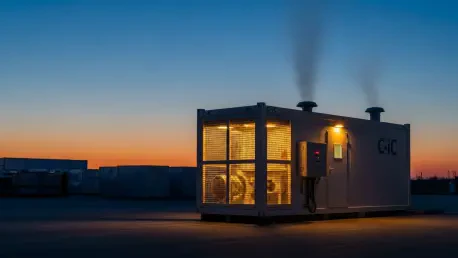

The push toward decentralized renewable energy generation has frequently been constrained by the substantial financial investment and prolonged construction schedules associated with traditional biofuel facilities. This review explores the development of modular production units through the lens of Haffner Energy’s C-iC platform, examining its key features, performance metrics, and the impact it has on project viability. The purpose of this analysis is to provide a thorough understanding of the technology, its current capabilities, and its potential for future development in making renewable energy more accessible and economically feasible.
The Emergence of C-iC Modular Technology
Haffner Energy’s C-iC modular units represent a strategic response to the primary financial and logistical barriers that have traditionally hindered medium-sized biofuel projects. Based on the company’s foundational H6 technology introduced in late 2025, these units employ a standardized, factory-built approach designed to streamline deployment and reduce upfront capital expenditure.
This methodology is particularly relevant in today’s market, where project profitability is a key driver of adoption. By engineering a solution that can achieve financial viability without depending on government subsidies, the C-iC platform accelerates the adoption of localized renewable energy solutions. This shift toward economic self-sufficiency marks a significant step forward in the decentralized energy sector.
Core Features and System Architecture
Standardized, Pre-Assembled Modular Design
The core innovation of the C-iC platform lies in its aggressive standardization and pre-assembly. Each unit is fully constructed and equipped in a controlled factory environment before being shipped as a standard, transportable module. This manufacturing process dramatically simplifies on-site requirements, reducing them to basic connection work and minimizing the need for extensive civil engineering.
Consequently, the benefits are substantial, with installation and startup achievable in under two weeks. This leads to a significant reduction in total project costs, estimated at 30% to 40%, and a condensed project timeline of three to four months. Moreover, the modular nature makes the units relocatable, an attribute that enhances their asset value and opens up more flexible financing and leasing options for project developers.
Versatile Multi-Fuel Configurations
The platform’s versatility is demonstrated through three distinct product configurations built upon a common industrial framework. Each model is tailored to meet specific market demands for renewable energy. The SYNOCA® C-iC unit is engineered to produce renewable syngas, serving as a direct, low-carbon replacement for fossil fuels in industrial heating applications.
For biofuel production, the SYNOCA®+ C-iC model generates a syngas stream optimized for efficient conversion into advanced biofuels like biomethane and biomethanol. Finally, the HYNOCA® C-iC configuration is dedicated to the production of renewable hydrogen, targeting both industrial processes and the growing clean transportation sector with projected competitive costs.
Operational Flexibility and Production Capacity
A key operational advantage of the C-iC system is its ability to process a wide variety of locally sourced biomass, including feedstocks with moisture levels as high as 55%. This flexibility significantly reduces constraints related to the supply chain and allows projects to leverage available regional resources, thereby lowering operational costs and environmental impact.
In terms of performance, a single C-iC unit demonstrates considerable output. It can generate 1,700 kilowatts of syngas from approximately 3,200 tonnes of dry biomass annually. Alternatively, when configured for hydrogen, it can produce up to 50 kilograms per hour, which equates to an annual production capacity of around 400 tonnes.
Summary and Final Assessment
This review of Haffner Energy’s C-iC platform reveals a technology with paradigm-shifting potential for the decentralized biofuel and hydrogen industries. Its modular, pre-assembled design directly confronts and mitigates the long-standing challenges of high capital costs and extended project timelines that have limited the scalability of smaller renewable energy initiatives.
The platform’s core advantages—cost efficiency, rapid deployment, and operational versatility—position it as a powerful enabler for a new wave of localized energy projects. By making biofuel and hydrogen production more accessible and economically self-sufficient, the C-iC technology represents a significant and practical step forward in the global transition away from fossil fuels.