
The colossal energy appetite of the digital age is quietly redrawing the map of American power generation, with technology giants now standing as the primary architects of a new, greener energy grid. The recent expansion of the partnership between Meta and global developer Zelestra is not merely another corporate transaction; it is a clear signal of a fundamental shift in how the nation’s insatiable demand for data is being met. This collaboration, centered on powering artificial intelligence and data center operations with solar energy, provides a compelling blueprint for the future intersection of technology, energy, and climate policy.
The New Energy Nexus: How Big Tech is Reshaping the U.S. Power Grid
The Symbiotic Relationship Between Hyperscalers and Renewable Developers
A powerful symbiosis has emerged between the world’s largest technology companies, known as hyperscalers, and renewable energy developers. Hyperscalers like Meta require vast, reliable, and increasingly clean sources of electricity to power their sprawling data center campuses. This demand, driven by the exponential growth of cloud computing and AI, has created a new class of energy consumers with the financial scale to underwrite massive new infrastructure projects.
In this relationship, developers like Zelestra gain a crucial partner. By signing long-term Power Purchase Agreements (PPAs), hyperscalers provide the financial certainty that developers need to secure investment and move projects from the drawing board to construction. This de-risking of new solar and wind farms effectively makes Big Tech a primary catalyst for the expansion of the U.S. renewable energy portfolio, ensuring that their own growth directly fuels the green transition.
Key Players and Market Dynamics in Corporate Clean Energy
While Meta is a prominent leader, it is part of a larger cohort of technology titans, including Google and Microsoft, that dominate the corporate clean energy market. These companies have become the largest buyers of renewable energy globally, collectively contracting tens of gigawatts of power. Their procurement strategies are increasingly sophisticated, moving beyond simple energy credits to direct investments and long-term contracts that guarantee “additionality”—the principle that their investment results in new clean energy capacity being added to the grid.
The market dynamics are consequently shaped by this concentrated demand. Renewable developers now tailor projects specifically to meet the needs of these large corporate offtakers, influencing the location, scale, and technology of new power plants. This has created intense competition among developers and has also spurred innovation in contract structures and financing models designed to accommodate the unique risk profiles and sustainability goals of the tech industry.
The Strategic Importance of Powering the Digital Economy Sustainably
For hyperscalers, securing a sustainable energy supply is no longer just a matter of corporate social responsibility; it is a core business strategy. With data centers projected to consume an ever-larger share of the nation’s electricity, managing energy costs and mitigating price volatility through long-term, fixed-price renewable contracts is a critical financial imperative. Stable energy pricing protects against market fluctuations and provides a competitive advantage in a power-hungry industry.
Moreover, these companies face immense pressure from investors, customers, and regulators to decarbonize their operations. Demonstrating a clear path to running on 100% renewable energy is essential for maintaining brand reputation and meeting increasingly stringent environmental, social, and governance (ESG) standards. Powering the digital economy sustainably has thus become integral to the long-term viability and social license to operate for the biggest names in technology.
Decoding the Drivers: AI’s Thirst for Power and the Solar Surge
The Hyperscaler Effect: How Corporate PPAs Catalyze New Energy Projects
The direct impact of hyperscaler demand on the energy landscape is most evident in the proliferation of corporate PPAs. These agreements serve as the financial bedrock for new utility-scale solar projects. When a company like Meta commits to purchasing the electricity from a proposed solar farm for a period of 10 to 20 years, it guarantees a revenue stream for the developer. This guarantee is often the key that unlocks project financing from banks and investors who might otherwise be hesitant to fund a project with uncertain returns.
This “hyperscaler effect” is accelerating the deployment of renewables at a scale and speed that would be difficult to achieve through traditional utility procurement alone. It represents a market-driven approach to decarbonization, where corporate climate goals and operational needs align perfectly with the need to build out new clean energy infrastructure. The result is a faster, more dynamic expansion of the nation’s solar capacity, directly tied to the growth of the digital economy.
By the Numbers: Quantifying Data Center Demand and Solar Market Growth
The statistics behind data center energy consumption are staggering. Global demand is projected to require an additional 219 GW of new power capacity over the next five years, an amount sufficient to power roughly 180 million American homes. A U.S. Department of Energy report further forecasts that data centers could consume as much as 12% of the nation’s total electricity by 2030, underscoring the urgency of finding sustainable power sources.
In response, the U.S. solar market continues its robust expansion, with solar power’s relatively short development timeline of 18-24 months making it the fastest utility-scale generation source to deploy. While growth has seen some sequential declines in recent quarters, the underlying trend remains strong. Texas has cemented its position as the market leader, representing 21.7% of total U.S. solar capacity and contributing 43% of all new capacity added in the third quarter of last year.
A Closer Look: The Meta-Zelestra Partnership Structure and Scale
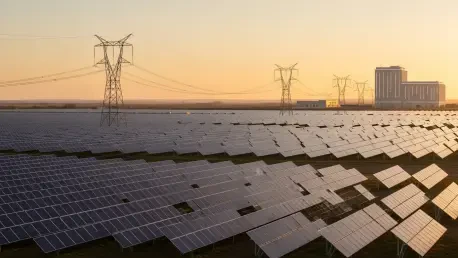
The expanded partnership between Meta and Zelestra offers a tangible example of these trends at work. The collaboration includes a PPA for the 176 MWdc Skull Creek Solar Plant in Texas, which is part of a larger portfolio of seven U.S. projects totaling 1.2 GWdc of capacity. These projects are on a firm timeline, with all expected to be operational by 2028, and construction on several has already commenced.
In a parallel and complementary strategy, the two companies have established Environmental Attribute Purchase Agreements (EAPAs) for four additional solar projects in Texas, set to add another 720 MWdc of capacity to the grid. Collectively, these agreements will enable the construction of over 1 GWdc of new solar projects, directly supporting Meta’s Texas-based data centers and significantly bolstering Zelestra’s growing 6.6 GWdc U.S. development portfolio.
Navigating Headwinds in the Renewable Energy Transition
Overcoming Market Saturation and Declining Capture Prices
Despite the positive momentum, the renewable energy sector faces significant economic challenges. In markets with high solar penetration, such as California, developers are grappling with market saturation. When solar generation peaks in the middle of the day, the oversupply of electricity can drive wholesale power prices down, sometimes even into negative territory. This phenomenon, known as declining capture prices, reduces the revenue and profitability of solar projects.
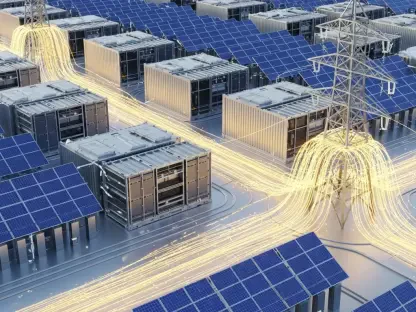
To counteract this, developers and offtakers are exploring more sophisticated strategies, including the co-location of battery storage systems to save cheap midday power for later use and geographic diversification of projects into less-saturated grids. These headwinds are forcing the industry to innovate beyond simply building more panels, pushing it toward creating a more resilient and financially stable clean energy ecosystem.
The Challenge of Intermittency and Grid Integration
The inherent intermittency of solar power—the fact that it only generates electricity when the sun is shining—remains a fundamental technical hurdle. Integrating large volumes of variable renewable energy onto a grid designed for consistent, dispatchable power sources requires substantial upgrades to transmission infrastructure and grid management systems. Without these upgrades, curtailment—the deliberate reduction of output from a generator—becomes more frequent, wasting clean energy and hurting project economics.
Addressing this challenge is critical for the long-term success of the tech-solar alliance. Solutions involve massive investment in new high-voltage transmission lines to move power from solar-rich regions to demand centers, as well as the deployment of grid-scale energy storage and advanced software to better manage the flow of intermittent power. These are complex, long-term endeavors that require coordination between developers, utilities, and policymakers.
Addressing the Phase-Out of Tax Credits and Policy Uncertainty
The U.S. solar industry has benefited immensely from federal tax credits, such as the Investment Tax Credit (ITC), which have been instrumental in lowering costs and spurring development. However, these incentives are designed to phase out over time, creating a looming financial cliff for projects that are not completed before the deadlines. This policy uncertainty can make it difficult for developers to plan long-term and secure financing.
The industry is now navigating a transition toward a future with reduced or eliminated federal subsidies. While the falling cost of solar technology itself helps to mitigate the impact, the phase-out of tax credits adds a layer of risk and urgency to project development. Future growth will depend more heavily on market fundamentals, state-level policies, and the continued strength of corporate demand to drive the economic viability of new projects.
The Policy Power-Up: How Regulations Shape the Tech-Solar Alliance
The Impact of Federal Incentives on Solar Project Viability
Federal policies have long been a cornerstone of the U.S. solar industry’s growth, and their influence on the viability of partnerships like the one between Meta and Zelestra cannot be overstated. Incentives like the ITC directly reduce the upfront capital costs of building a solar farm, making the projects more financially attractive to investors and enabling developers to offer more competitive PPA prices to corporate buyers.
These incentives effectively act as a national catalyst, creating a more favorable economic environment for the entire renewable energy ecosystem. The certainty provided by long-term federal support encourages investment not only in generation projects but also in the domestic manufacturing and supply chains needed to support the industry’s expansion, creating a ripple effect that strengthens the entire tech-solar alliance.
State-Level Dynamics: Why Texas is a Hotspot for Development
While federal policy sets the national stage, state-level dynamics often determine where development actually occurs. Texas has emerged as the epicenter of solar and data center growth due to a unique confluence of factors. The state boasts abundant solar resources, vast tracts of available land, and a streamlined permitting process that reduces development timelines.
Crucially, Texas operates its own independent grid, ERCOT, with a competitive, deregulated energy market. This market structure allows for more direct and flexible contracting between power generators and large consumers like Meta, making it an ideal environment for corporate PPAs. This favorable regulatory landscape, combined with strong energy demand, has made Texas the go-to destination for hyperscalers looking to power their operations with clean energy.
The Role of EAPAs and EACs in Meeting Compliance and Climate Goals
Beyond direct power procurement through PPAs, companies rely on instruments like Environmental Attribute Purchase Agreements (EAPAs) and Energy Attribute Certificates (EACs) to meet their climate goals. An EAC represents the “green” quality of one megawatt-hour of electricity generated from a renewable source. By purchasing and retiring these certificates, a company can claim the environmental benefits of that clean energy, even if it is not the direct consumer of the physical electrons.
This mechanism is vital for companies like Meta to achieve their 100% renewable energy targets and reduce their reported carbon footprint. As seen in 2024, Meta’s procurement of these instruments reduced its reported emissions by 48%, abating 6 million metric tonnes of operational emissions and another 1.4 million metric tonnes from its value chain. EAPAs and EACs provide a flexible and verifiable way to support renewable generation across the grid, helping companies meet both compliance obligations and voluntary climate commitments.
The Road Ahead: Charting the Future of AI-Powered Energy Procurement
Emerging Trends in Corporate Decarbonization Strategies
As corporate sustainability goals mature, decarbonization strategies are becoming more sophisticated. The initial focus on purchasing enough renewable energy credits to match annual consumption is evolving toward a more ambitious goal: 24/7 carbon-free energy. This means ensuring that every kilowatt-hour of electricity consumed is matched with clean energy production in real time, every hour of every day.
This trend is driving corporations to procure a diversified portfolio of renewable resources, including solar, wind, and geothermal, often paired with energy storage. It also necessitates more advanced data tracking and grid-aware procurement to align energy consumption with clean energy generation on an hourly basis. This shift represents the next frontier in corporate climate leadership, pushing the entire energy system toward deeper decarbonization.
Projections for Data Center Energy Consumption Through 2035
Looking ahead, the energy footprint of data centers is set to continue its steep upward trajectory. Projections through 2035 indicate that while overall consumption will grow, the sourcing of that energy will undergo a dramatic transformation. In scenarios with supportive clean energy policies and continued corporate leadership, renewables are expected to supply between 60% and 90% of all electricity consumed by data centers.
This forecast highlights the indispensable role that the tech industry will play in driving the energy transition over the next decade. Their sustained demand will be a primary engine of growth for the solar and wind industries, shaping investment decisions and accelerating the retirement of fossil fuel generation. The future of the digital economy and the future of the clean energy grid have become inextricably linked.
The Evolving Role of Solar in the U.S. Energy Mix
Solar power’s role in the U.S. energy mix is evolving from a niche alternative to a foundational component of the nation’s electricity supply. Driven by falling costs and massive corporate and utility-scale deployment, solar is on track to become one of the largest sources of new generation capacity added to the grid each year. Its rapid deployment speed makes it uniquely suited to meet the urgent and escalating power demands of the AI boom.
As solar capacity grows, its integration with energy storage will become increasingly standard, transforming intermittent solar farms into dispatchable energy assets that can provide reliable power even after the sun sets. This evolution is critical for ensuring grid stability and will solidify solar’s position as a mainstream, reliable, and indispensable part of America’s energy future.
A New Blueprint for Growth: The Lasting Impact of the Meta-Zelestra Partnership
Key Takeaways on Corporate-Driven Renewable Expansion
The expanded partnership between Meta and Zelestra provided a clear and powerful illustration of how corporate demand had become a primary driver of renewable energy development in the United States. It demonstrated that large-scale, long-term procurement agreements from financially stable technology companies could effectively underwrite the construction of new clean energy infrastructure, accelerating the green transition through market-based mechanisms.
This model showed that the goals of corporate growth and decarbonization were not mutually exclusive but could, in fact, be mutually reinforcing. The need to power a growing digital economy sustainably created a virtuous cycle, where increased data demand led directly to increased investment in and deployment of solar and other renewable resources.
The Broader Implications for the U.S. Energy Grid and Climate Targets
The implications of this trend extended far beyond the balance sheets of the companies involved. This corporate-led build-out of renewables had a tangible impact on the composition of the U.S. energy grid, increasing the share of clean energy and helping to displace fossil fuel generation. Each gigawatt of new solar capacity added through deals like the Meta-Zelestra partnership contributed directly to meeting national and global climate targets.
Furthermore, this dynamic reshaped regional energy markets, particularly in states like Texas, creating new economic opportunities in clean energy development, construction, and operation. It proved that private sector leadership, when aligned with favorable policy and market conditions, could serve as a potent force in achieving a cleaner and more resilient national power grid.
Future Prospects for Investment and Innovation in the Sector
The success of partnerships like this one signaled a bright future for investment and innovation in the renewable energy sector. It solidified the role of corporate PPAs as a bankable and scalable model for financing new projects, giving investors confidence in the long-term growth trajectory of the industry. This stable demand was expected to continue driving down costs and encouraging further technological advancements in solar efficiency and energy storage.
Looking back, the alliance between Big Tech and clean energy developers was not just about buying green power. It was about forging a new industrial paradigm where the architects of the digital future also became the builders of the clean energy future, creating a lasting blueprint for sustainable growth.