
A Bold Departure from Business as Usual
The global aviation industry, a cornerstone of modern connectivity, stands at a critical crossroads, grappling with the immense challenge of decarbonization. While ambitions for “green flying” have long been discussed, tangible, scalable solutions have remained elusive. Now, Singapore is charting a new course with a pioneering levy on air travel, directly funding the transition to sustainable aviation fuel (SAF). This article explores the mechanics of Singapore’s innovative policy, examining its potential to serve as a global blueprint for sustainable air travel. We will delve into how this levy is designed to cultivate a regional SAF ecosystem, analyze the broader industry trends shaping its success, and ultimately ask whether this government-led financial model represents the future of environmentally responsible aviation.
The Long and Winding Runway to Net-Zero
For decades, the aviation sector has faced scrutiny over its significant carbon footprint. The industry’s global commitment to achieving net-zero carbon emissions by 2050 has intensified the search for viable alternatives to conventional jet fuel. Among the leading contenders, sustainable aviation fuel has emerged as the most promising short-to-medium-term solution. Produced from sources like used cooking oil, agricultural waste, and forestry residues, SAF can reduce lifecycle emissions by up to 65% and can be used in existing aircraft engines without modification. However, its widespread adoption has been severely hampered by a persistent challenge: cost. SAF is currently several times more expensive than its fossil-fuel counterpart, creating a financial barrier that airlines and consumers have been hesitant to cross, leaving the industry in a holding pattern of ambition without action.
Dissecting Singapore’s Green Aviation Blueprint
The Levy in Detail a User-Pays Model for Decarbonization
At the heart of Singapore’s strategy is a transparent and structured passenger levy, a direct mechanism to bridge the SAF cost gap. Beginning in 2026, a surcharge will be applied to tickets for flights departing from Changi International Airport, with the funds earmarked exclusively for purchasing SAF. The levy is tiered to promote equity, with economy passengers on short-haul flights paying a modest US$0.75, while premium-cabin travelers on long-haul routes contribute up to US$32. This “polluter pays” principle extends to air cargo, which will face a similar charge based on weight and distance. By creating a dedicated and predictable revenue stream, Singapore is tackling the industry’s chicken-and-egg problem: the levy generates the demand and capital needed to make SAF a commercially viable reality, moving it from a niche product to a mainstream fuel source.
Beyond the Ticket Cultivating a Regional Saf Ecosystem
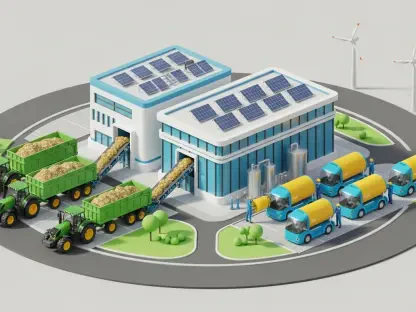
Singapore’s initiative is more than just a consumer tax; it is a strategic investment in its future as a global aviation hub. By mandating the use of SAF and providing a mechanism to pay for it, Singapore is signaling a long-term commitment that encourages large-scale investment in production. This vision is already taking shape, with the city-state hosting the region’s largest SAF production facility and planning a new next-generation plant. This government-backed demand de-risks the massive capital expenditure required for SAF infrastructure, attracting producers and innovators. The levy, therefore, acts as the financial engine driving a broader industrial strategy to not only green its own flights but also to position Singapore as the central node in Southeast Asia’s burgeoning sustainable fuel supply chain.
A Regional Ripple Effect Southeast Asia’s Biofuel Boom
Singapore’s bold move is catalyzing a green awakening across Southeast Asia, a region uniquely positioned to lead in SAF production. Blessed with an abundance of agricultural and forestry waste—the raw feedstocks for next-generation biofuels—the region is rapidly transforming its potential into reality. Thailand recently opened a new SAF plant from used cooking oil, Malaysia and Vietnam have achieved significant production milestones, and both Indonesia and the Philippines are advancing their own national initiatives. This regional momentum is creating a powerful synergy, with experts projecting that Southeast Asia could produce up to 8.5 million barrels of SAF per day by 2050. Singapore’s levy acts as a powerful demand signal, assuring these emerging producers of a stable market for their product and accelerating the entire region’s transition to sustainable aviation.
Navigating Global Headwinds on the Path to Sustainability
Despite the optimism radiating from Southeast Asia, the global path to SAF adoption is not without turbulence. Recent projections indicate that the worldwide growth in SAF production is set to slow for the first time, a concerning trend attributed partly to policy uncertainty in key markets like the United States. This highlights a critical consensus among industry leaders: consistent and unwavering government support is the essential ingredient for scaling the SAF industry. Private investment will only flow where there is regulatory certainty and clear, long-term demand. Singapore’s model stands in stark contrast to this wavering global picture, offering a decisive policy framework that provides the stability needed to attract capital and ensure sustained growth.
From Policy to Practice Actionable Insights for a Greener Sky
The analysis of Singapore’s SAF levy offered several crucial takeaways for the global aviation ecosystem. First, it demonstrated that direct, government-led funding mechanisms could effectively overcome the prohibitive cost of sustainable fuels. Second, it proved that when a major hub created guaranteed demand, it could stimulate an entire regional supply chain. For other governments, the key lesson was to move beyond targets and implement concrete financial policies to drive adoption. For airlines, the implication was a need to proactively engage with these emerging regulatory landscapes and secure long-term SAF supplies. Finally, for travelers, it signaled a new reality where the environmental cost of flying became an integrated part of the ticket price, making sustainability a shared responsibility.
A Replicable Blueprint for the Future of Flight
Singapore’s SAF levy is more than just a regional policy; it is a courageous and pragmatic answer to one of the most pressing questions in climate action. By directly linking the cost of sustainability to the act of flying, it transforms an abstract goal into a tangible, funded reality. While not a one-size-fits-all solution, its core principles—shared responsibility, dedicated funding, and strategic industrial policy—offer a powerful and replicable blueprint for other nations. As the world watches, Singapore’s experiment will determine whether this flight path can lead the global aviation industry toward a genuinely sustainable future, proving that with bold policy, green flying can finally take off.