
From Import Dependency to Domestic Strength: A New Dawn for Indian Coal
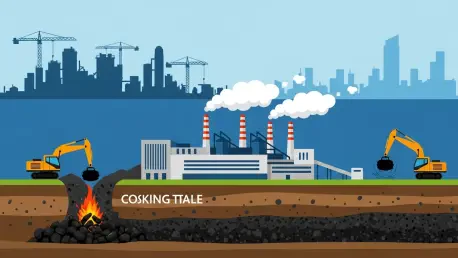
In a landmark policy shift, the Indian government has officially reclassified coking coal as a “Critical and Strategic Mineral,” fundamentally altering its approach to this vital industrial resource. This decision, embedded in an amendment to the Mines and Minerals (Development and Regulation) Act of 1957, is more than a bureaucratic re-labeling; it is a strategic maneuver aimed at weaning the nation off its heavy reliance on foreign imports. As India charts its course toward becoming a developed economy, the ability to secure its own raw materials for foundational industries like steel is paramount. This article explores whether this pivotal reform can truly unlock India’s domestic potential, strengthen its industrial base, and pave the way for genuine self-reliance.
The Paradox of Plenty: India’s Longstanding Coking Coal Conundrum
For decades, India has faced a perplexing economic contradiction. Despite sitting on one of the world’s largest reserves of coal, estimated at a massive 37.37 billion tonnes, the nation imports approximately 95% of the coking coal required by its burgeoning steel industry. This staggering import dependency has created a significant drain on foreign exchange reserves and left a critical sector vulnerable to global price volatility and supply chain disruptions. This historical context is crucial for understanding the urgency behind the recent policy overhaul. The government’s push, backed by recommendations from a high-level committee and the NITI Aayog, is a direct response to this long-standing vulnerability, aligning perfectly with the national ambitions of “Atmanirbhar Bharat” (Self-Reliant India) and “Viksit Bharat” (Developed India).
Decoding the Strategic Pivot: Policy, Economics, and Governance
Unlocking Domestic Potential: The Mechanics of a Strategic Reclassification
The designation of coking coal as a critical and strategic mineral is designed to dismantle the regulatory roadblocks that have historically stifled domestic production. By its very definition, this status streamlines the entire mining lifecycle, from exploration to extraction. The primary impact is the expedition of approvals and simplification of administrative procedures, creating a more attractive environment for investment. A key provision under this classification, for instance, is that mining for critical minerals does not require the lengthy process of public consultations. This is expected to significantly reduce project timelines and encourage private sector participation, particularly in tapping deeper, more challenging deposits that require substantial capital and advanced technology.
Fueling ‘Atmanirbhar Bharat’: The Economic Ripple Effect
The ultimate goal of this reform extends far beyond the mine pit; it aims to catalyze a powerful economic ripple effect. By attracting significant private investment, the government anticipates a surge in job creation and the widespread adoption of modern mining technologies. Securing a domestic supply chain for coking coal is indispensable for the steel sector, which forms the backbone of India’s infrastructure, manufacturing, and defense industries. A stable, domestic source of this raw material will not only reduce production costs for steelmakers but also enhance their global competitiveness. This move is a cornerstone of the ‘Atmanirbhar Bharat’ mission, designed to transform India from a passive importer into a self-sufficient industrial powerhouse.
Balancing Power and Progress: The Federal Framework for Mining Reform
A critical and often overlooked aspect of this policy is its careful navigation of India’s federal structure. While the central government gains the authority to auction coking coal blocks, the reform explicitly ensures that state governments will continue to receive all royalties, auction premiums, and other statutory payments. This provision is vital for securing state-level cooperation and ensuring that the economic benefits of increased mining activity are shared equitably. This model attempts to balance the need for centralized, strategic oversight with the constitutional rights and revenue streams of the states, creating a collaborative framework for national progress.
Charting the Course Ahead: Future Trajectories for India’s Coal Sector
Looking forward, this policy amendment is set to trigger a significant transformation in India’s mining landscape. The primary trend will be a concerted push toward deep-seated mining operations, which have been largely unexplored due to technological and financial barriers. The new, more permissive regulatory environment is expected to attract global mining giants and specialized technology providers, leading to an infusion of capital and expertise. In the long term, a successful ramp-up of domestic coking coal production could dramatically alter India’s trade balance, reduce inflationary pressures tied to import costs, and provide the steel industry with the stability needed to scale its output for both domestic consumption and export markets.
From Policy to Practice: A Blueprint for Implementation
The analysis reveals a clear strategy: leverage India’s vast natural resources to achieve economic self-sufficiency. The key takeaway is that the reclassification of coking coal is a foundational step, but its success hinges on effective execution. For businesses, this presents a clear opportunity to invest in a previously constrained sector, particularly in mining technology and logistics. For policymakers, the recommendation is to create a transparent and predictable auction process that inspires investor confidence. Professionals in the sector should focus on upskilling to meet the demands of modern, technology-driven mining operations. The ultimate lesson is that turning policy into tangible output requires a coordinated effort between the government, private industry, and state authorities.
The Bedrock of a Self-Reliant Nation
In conclusion, the strategic reclassification of coking coal is a decisive and necessary step toward securing India’s industrial future. The article has traced the rationale behind this move, from overcoming the paradox of import dependency to its potential economic and federal implications. While the path from policy pronouncement to full-scale production will be challenging, the intent is clear: to build a resilient and self-reliant economy from the ground up. This reform is not merely about mining more coal; it is about forging the bedrock of a nation that controls its own economic destiny. The question is no longer if India should pursue this path, but how effectively it can execute this bold vision.