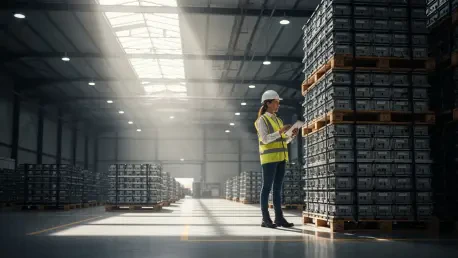

An Unprecedented Surge The Core of India’s EV Transition
India stands at the precipice of an automotive revolution, poised to become one of the world’s largest electric vehicle markets in a shift that hinges entirely on its ability to scale its battery supply chain at an unprecedented rate. A new report forecasting a more than 14-fold increase in the nation’s demand for electric vehicle batteries by 2032 frames the monumental task ahead. This analysis examines the central challenge facing the country: how to develop the industrial capacity, technological prowess, and resilient supply chains required to meet this explosive growth.
This projected surge is not merely a forecast but a critical benchmark for India’s energy and transportation future. Successfully navigating this transition will determine the country’s ability to achieve its decarbonization goals, reduce reliance on fossil fuels, and establish itself as a global manufacturing hub. The stakes are immense, touching every facet of the national economy from raw material sourcing to consumer mobility.
The Confluence of Policy and Market Forces
This research is situated within the dynamic context of India’s rapid economic development and its firm commitment to mitigating carbon emissions. The study’s importance lies in its timing, highlighting a pivotal moment where industrial ambition and environmental strategy converge. The transition is propelled by a powerful combination of supportive government policies, including Corporate Average Fuel Efficiency norms, alongside market pressures such as persistently high fuel costs and a burgeoning consumer appetite for electric vehicles.
The findings carry significant weight for a diverse audience, including investors seeking opportunities in a high-growth sector, policymakers responsible for crafting a sustainable industrial framework, and manufacturers navigating the complexities of the clean energy transition. Its relevance is underscored by the urgent need for a cohesive national strategy to capitalize on the opportunities while mitigating the inherent risks of such a rapid industrial transformation.
Research Methodology Findings and Implications
Methodology
The analysis is grounded in a comprehensive report by Customised Energy Solutions, which employed sophisticated market forecasting models to project future battery requirements. These models integrated a wide array of data points, including current EV adoption rates, projected vehicle sales across different segments, and the impact of government regulations. Crucially, the methodology also accounted for ongoing technological advancements in battery chemistry, providing a nuanced and forward-looking assessment of demand.
Findings
The central finding of the research is the staggering scale of anticipated growth: India’s annual EV battery demand is projected to climb from 17.7 GWh in 2025 to 256.3 GWh by 2032. This represents a compound annual growth rate of 35%, a pace that will fundamentally reshape the country’s industrial landscape. Key technological trends are fueling this expansion, particularly advancements in lithium iron phosphate and nickel cobalt manganese batteries, which now deliver higher energy densities and lower costs. Furthermore, the potential of emerging technologies like sodium-ion batteries promises to further accelerate affordability and adoption.
Implications
These findings signal a necessary and dramatic expansion of India’s battery manufacturing ecosystem. The projected demand has profound implications for domestic companies like Tata Agratas and Ola Electric, which are already in the process of scaling up gigafactory production to meet future needs. Moreover, this surge underscores the urgent imperative to secure stable raw material supply chains, much of which are currently imported. Attracting substantial foreign and domestic investment will be paramount to building a self-reliant and sustainable EV industry capable of powering the nation’s mobility needs.
Reflection and Future Directions
Reflection
The study reflects on the considerable challenges India must overcome to realize this potential. Key among these are significant supply chain vulnerabilities, stemming from a heavy reliance on imported critical minerals and processed battery components. The high capital investment required to establish gigafactories presents another major hurdle, as does the pressing need to cultivate a skilled workforce capable of operating and innovating within this advanced manufacturing sector.
Successfully addressing these obstacles is not merely an option but a prerequisite for the success of India’s EV ambitions. Failure to build a resilient domestic supply chain could leave the nation’s clean energy goals susceptible to global market volatility and geopolitical tensions. Therefore, a strategic and coordinated effort between government and industry is crucial to de-risk this transition.
Future Directions
Looking ahead, future research should concentrate on actionable strategies to de-risk the supply chain, including a thorough evaluation of domestic mining and processing capabilities for critical minerals like lithium and cobalt. Further investigation is also needed to determine the commercial viability and scalability of emerging battery technologies, such as solid-state and sodium-ion, specifically within the Indian context. Additionally, dedicated studies on effective recycling and second-life applications for used EV batteries are essential for creating a circular economy and ensuring long-term sustainability.
Conclusion Charting the Course for a Battery Powered Nation
In summary, India is on the brink of a massive expansion in EV battery demand, a transformation driven by powerful market catalysts and deliberate policy actions. The report’s findings serve as both a roadmap and a warning, highlighting the immense opportunities for economic growth and industrial leadership while underscoring the critical challenges of supply chain security, capital investment, and workforce development. The coming decade will be decisive in determining whether India can successfully build a robust and self-reliant domestic ecosystem to power its clean transportation revolution, ultimately shaping its economic and environmental legacy.