
Beneath the bustling surface of India’s rapidly modernizing economy, a quiet revolution is taking place, transforming millions of tons of agricultural, municipal, and industrial waste from a liability into a cornerstone of the nation’s energy future. This is not a story of high-tech solar panels or towering wind turbines, but a more grounded narrative of alchemy at a national scale: converting the very refuse of society into clean, reliable fuel. As India charts a course toward greater energy independence and environmental sustainability, this burgeoning biogas sector is emerging as a critical, homegrown solution to some of its most pressing challenges, offering a pathway to power its growth using a resource it has in endless supply.
The Twin Challenge of Fueling a Nation and Tackling Waste
India stands at a critical juncture, navigating the dual pressures of powering a billion-plus population and managing the monumental waste generated by its agricultural heartlands and sprawling urban centers. The country’s escalating energy demand, driven by industrial growth and rising living standards, has historically deepened its reliance on imported fossil fuels, creating economic and environmental vulnerabilities. Simultaneously, mountains of organic waste—from crop stubble in Punjab to municipal solid waste in Mumbai—pose significant environmental and public health risks, polluting air, water, and soil.
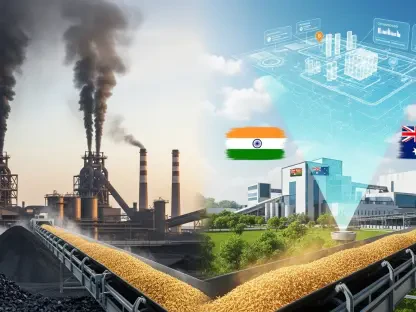
This complex scenario has catalyzed a paradigm shift away from a linear model of consumption and disposal toward one of resource valorization. Instead of viewing waste as an end-of-life problem requiring costly management, policymakers and entrepreneurs are repositioning it as a primary raw material for energy generation. In this context, biogas presents a uniquely integrated solution. Unlike intermittent renewables like solar and wind, which address only the energy side of the equation, biogas production directly tackles the waste management crisis, creating a closed-loop system where one problem becomes the solution to another.
The Anatomy of the Biogas Revolution
At the heart of this transformation is anaerobic digestion, a natural biological process where microorganisms break down organic matter in an oxygen-deprived environment. This process yields two valuable outputs: a methane-rich biogas and a nutrient-dense slurry known as digestate. The raw biogas can be used directly for cooking and heating in rural households or converted into electricity and heat using Combined Heat and Power (CHP) systems, offering a decentralized energy source for communities and industries.
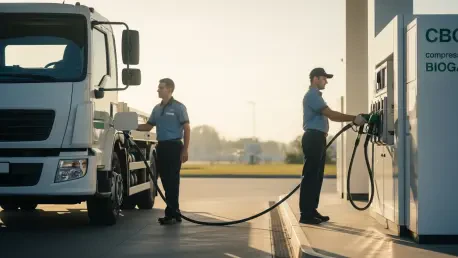
The real game-changer, however, has been the focus on upgrading this raw gas into high-purity Compressed Biogas (CBG). By removing impurities like carbon dioxide and hydrogen sulfide, CBG becomes chemically indistinguishable from conventional natural gas. This allows it to be used as a clean transportation fuel for vehicles or injected directly into the national gas grid, effectively decarbonizing sectors where electrification is challenging. This versatility turns waste into a fungible energy commodity, capable of serving diverse markets from transportation to industrial heating.
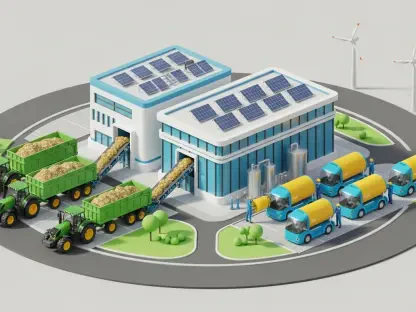
India’s key advantage lies in its unparalleled feedstock diversity. While many countries rely on a narrow set of inputs, India’s biogas plants can process a vast and year-round stream of organic materials. This includes agricultural residues like paddy straw and sugarcane press mud, waste from the nation’s massive dairy sector, food scraps from urban centers, and sludge from municipal wastewater treatment plants. This abundance not only ensures operational continuity but also creates localized solutions for specific waste challenges, such as mitigating the air pollution caused by seasonal crop burning. Moreover, the process completes a vital ecological cycle: the digestate byproduct serves as a potent organic fertilizer, returning essential nutrients to the soil, reducing the need for chemical fertilizers, and enhancing agricultural productivity, thus creating a truly circular economy.
Policy Partnerships and Financial Momentum
The rapid expansion of India’s biogas sector is not happening in a vacuum; it is being driven by strategic government intervention and a thriving collaborative ecosystem. The cornerstone of this policy push is the Sustainable Alternative Towards Affordable Transportation (SATAT) initiative. By guaranteeing the offtake of CBG by state-owned oil and gas marketing companies at a fixed price, SATAT provides a crucial market anchor, significantly de-risking private investment and creating a bankable business model for entrepreneurs looking to enter the sector.
This policy framework has cultivated a dynamic marketplace where public-sector giants and agile startups work in tandem. Large state-owned enterprises like GAIL and Indian Oil Corporation are providing the essential downstream infrastructure—pipelines, distribution networks, and retail outlets—that connects producers to end-users. In parallel, a wave of private companies and technology startups is driving innovation on the ground. These firms are developing modular and efficient plant designs, deploying IoT-based monitoring systems to optimize gas yields, and pioneering sophisticated supply chain models to aggregate diverse feedstocks. This public-private synergy has created a robust foundation for scalable growth.
The financial outlook for the sector reflects this growing confidence. The global waste-derived biogas market is on a steep upward trajectory, with its value projected to grow substantially between 2026 and 2033. This growth is fueled by a global push for sustainable energy, stricter environmental regulations, and increasing government incentives. India, with its vast feedstock potential and supportive policy landscape, is positioned to capture a significant share of this expanding market, attracting both domestic and international investment into a sector that promises environmental benefits and strong economic returns.
Overcoming Hurdles on the Path to Self Reliance
Despite the significant progress, the road to realizing the full potential of biogas is not without its challenges. One of the most significant operational hurdles is the creation of efficient and reliable feedstock supply chains. Aggregating disparate sources of organic waste—from small farms to city markets—while ensuring consistent quality and volume requires sophisticated logistical planning and robust infrastructure. Solving this “first-mile” problem is critical for the economic viability of large-scale CBG plants.
Furthermore, scaling the sector requires bridging both financial and human capital gaps. While government schemes have improved the investment climate, many small and medium-sized developers still face challenges in accessing affordable financing for capital-intensive biogas projects. Concurrently, there is a growing need to develop a skilled workforce capable of designing, building, and operating these increasingly sophisticated plants. This includes training technicians, engineers, and supply chain managers to support the industry’s expansion, particularly in rural and semi-urban areas where these facilities are most needed.
The path forward involves moving from a model of standalone projects to one of integrated, interconnected regional biogas clusters. By strategically locating multiple production plants near feedstock sources and consumption centers, these clusters can create economies of scale, share infrastructure, and build a resilient, decentralized energy network. Fully integrating these clusters with national gas grids and city gas distribution networks will be the final step in cementing biogas as a mainstream component of India’s energy mix, transforming a distributed waste problem into a cornerstone of national energy self-reliance. This strategic evolution was crucial in establishing organic waste not as a discarded byproduct, but as a foundational element of a new value chain that powered communities, fueled transport, and strengthened the national economy.