
The volatile geopolitical landscape of the mid-2020s has forced a significant recalculation of regional alliances, pushing the world’s two most populous nations toward a cautious but essential economic rapprochement centered on the green energy transition. As global energy markets continue to grapple with supply chain disruptions originating in the Middle East, the strategic vulnerability of fossil-fuel routes through the Strait of Hormuz has become a primary catalyst for India’s renewed diplomatic engagement with Beijing. This shift represents more than just a cooling of border tensions; it is a calculated effort to secure the technological components necessary for a decarbonized future. After years of strained relations following the 2020 Galwan Valley conflict, the arrival of the first Indian business delegation on the Chinese mainland in over half a decade signals that economic necessity is now overriding long-standing territorial grievances. This movement is not driven by a sudden surge in political warmth, but by the cold reality that India’s ambitious climate goals are largely unattainable without leveraging China’s established industrial dominance in renewable sectors.
Pragmatic Realism in the Green Energy Sector
Bridging the Infrastructure Gap: Charging and Storage Solutions
The Indian government has set an ambitious target for electric vehicles to comprise thirty percent of all domestic automobile sales by 2030, a goal that requires a massive and rapid expansion of charging infrastructure and battery storage capacity. Currently, the local manufacturing ecosystem lacks the specialized expertise to scale these systems at the pace required by consumer demand and regulatory mandates. Consequently, a group of eight prominent Indian startups and established firms recently conducted an intensive tour of industrial hubs in Shanghai and Wuxi to identify potential partners for joint ventures. These interactions focused on high-efficiency lithium-iron-phosphate battery chemistries and advanced grid-balancing technologies that Chinese firms have perfected over the last decade of state-supported development. By facilitating direct technology transfers, Indian businesses aim to bypass several years of internal research and development, effectively jump-starting a localized supply chain that can support millions of new electric two-wheelers and commercial buses.
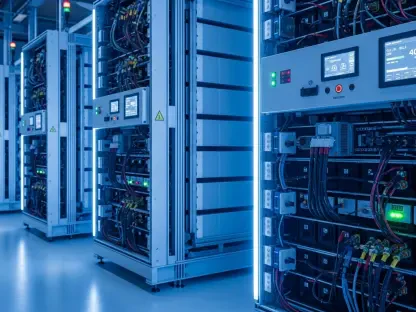
Furthermore, the integration of large-scale battery energy storage systems into India’s national power grid has become a critical priority as the country incorporates more intermittent solar and wind energy into its mix. Chinese manufacturers currently maintain a significant lead in the cost-competitiveness of these utility-scale storage solutions, offering price points that are nearly forty percent lower than Western alternatives. This price disparity makes the involvement of Chinese tech providers nearly indispensable for Indian power developers who are operating on razor-thin margins. The recent business delegation explored specific modular storage architectures that could be deployed in rural provinces, where grid stability is often compromised by fluctuating renewable inputs. Such collaboration provides a blueprint for a pragmatic “China plus one” strategy, where Indian firms utilize Chinese technical foundations to build independent domestic capacity. This approach ensures that the transition to clean energy remains economically viable while addressing the immediate technical hurdles of grid modernization.
Securing the Supply Chain: Rare Earths and Components
A fundamental challenge for India’s industrial strategy is the heavy reliance on rare earth elements and specialized components where China holds a near-monopoly on processing and refinement. To remain competitive in the global manufacturing landscape, Indian industries must secure consistent access to magnets, anodes, and cathode materials that are essential for high-performance electric motors and solar photovoltaic cells. Recognizing this interdependence, the Indian government began easing investment restrictions in March 2026, allowing for more streamlined approval processes for Chinese entities in specific high-tech sectors. This policy shift acknowledges that total decoupling is an unrealistic objective if India intends to maintain its status as the world’s fastest-growing major economy. By allowing Chinese firms to invest in Indian manufacturing facilities, the government is encouraging the relocation of production lines, which not only secures the supply chain but also creates high-skilled jobs for the domestic workforce.
The normalization of these commercial ties is also visible in the logistical sphere, with the restarting of direct commercial flights and the phased disengagement of military forces along disputed border regions. These tactical de-escalations have created a more stable environment for corporate executives to negotiate long-term supply agreements that were previously frozen by political risk. In the renewable energy sector, this has translated into a surge of inquiries regarding Chinese-made specialized machinery used in the production of high-efficiency monocrystalline solar wafers. As Indian firms look to build their own gigafactories, they are finding that the most efficient route to operational readiness involves purchasing equipment and training from the very neighbors they previously sought to exclude. This evolving relationship suggests that while geopolitical competition remains a reality, the urgency of the climate crisis and the necessity of energy security are forcing a move toward a more integrated Asian industrial ecosystem.
Navigating the Geopolitical and Economic Landscape
Mutual Incentives: Market Access and Trade Barriers
While India seeks technology and infrastructure, China is motivated by the need to find new outlets for its industrial overcapacity in the face of increasingly hostile trade environments in the West. With the United States and several European nations imposing tariffs of fifty percent or higher on Chinese-made electric vehicles and solar panels, Beijing views the massive Indian market as a vital safety valve for its manufacturing sector. The sheer scale of India’s developing economy offers a level of demand that few other regions can match, particularly as the Indian middle class increasingly adopts green technologies. This alignment of interests has led to a series of incremental but significant steps toward commercial normalization. Chinese firms are now more willing to share intellectual property through licensing agreements with Indian partners to gain a foothold in a market that was previously becoming inaccessible due to regulatory hurdles and nationalist sentiment.
Moreover, the diplomatic efforts spearheaded by Prime Minister Narendra Modi and Chinese Premier Li Qiang during recent international summits have underscored a shift toward economic stability. By focusing on areas of mutual benefit, such as energy resilience and technological innovation, both leaders have signaled a desire to prevent border disputes from completely derailing the broader economic trajectory of the region. This has allowed for a “cautious and incremental” improvement in relations, where progress is measured by signed contracts and technological benchmarks rather than grand political declarations. For China, maintaining a functional trade relationship with India is a strategic necessity to counter Western efforts at economic isolation. For India, leveraging Chinese expertise is the most efficient way to achieve energy independence and reduce the long-term trade deficit caused by fossil-fuel imports. This interdependence creates a stabilizing effect, as both nations now have more to lose from renewed hostility than they do from cooperation.
Strategic Resilience: Future Proofing Energy Security
The recent engagement between these two Asian powers demonstrated that technological collaboration is the most viable path toward long-term energy resilience in an increasingly unpredictable world. By diversifying the sources of their energy technology and fostering regional joint ventures, Indian firms laid the groundwork for a more robust industrial base that is less susceptible to external shocks from the Middle East. The delegation focused on establishing durable partnerships that prioritized local assembly and the gradual localization of high-value components, ensuring that the domestic industry gained more than just finished products. This strategy was designed to mitigate the risks of over-reliance while simultaneously accelerating the adoption of sustainable transport and power solutions. The move toward Chinese tech was a calculated decision to prioritize the immediate needs of the population and the environment over ideological purity, reflecting a sophisticated understanding of modern statecraft.
In the final analysis, the pragmatic shift in Indo-Chinese relations provided a necessary bridge for India to meet its 2030 sustainability targets while maintaining economic momentum. The collaboration fostered a new environment where technical expertise and market scale were traded to benefit both sides of the border, regardless of historical friction. Moving forward, the focus remained on refining these partnerships to ensure that technology transfers resulted in genuine capacity building within the Indian manufacturing sector. Analysts observed that the successful integration of these technologies required ongoing diplomatic maintenance to prevent minor incidents from escalating into major economic disruptions. By focusing on actionable industrial goals and shared energy challenges, both nations established a framework for a more stable and prosperous regional economy. This era of commercial engagement proved that even the most complex geopolitical rivalries could be managed through the lens of mutual economic survival and environmental necessity.