
What does it mean for a nation of over 1.4 billion to flip the switch on half its power generation to clean sources, years ahead of schedule? India has stunned the world by achieving over 50% non-fossil fuel capacity in its electricity mix as of October 31 this year, a target initially set for 2030 under the Paris Agreement. This isn’t just a statistic—it’s a seismic shift in how one of the largest energy markets on the planet powers its future. The implications ripple far beyond borders, challenging global perceptions of what’s possible in the fight against climate change.
A Defining Moment for Energy Transition
This milestone is more than a number on a spreadsheet; it’s a testament to ambition matched by action. With energy demands soaring due to rapid urbanization and industrial growth, India faced the daunting task of balancing economic progress with environmental stewardship. Surpassing the 50% clean energy mark signals a pivotal turn, positioning the country as a leader among developing nations grappling with similar pressures. It’s a story of resilience, proving that massive scale doesn’t have to mean massive emissions.
The significance lies in the timing. As global calls for climate action grow louder, India’s early achievement offers a blueprint for others. It shows that aligning policy, innovation, and collaboration can accelerate progress, even in complex economies. This breakthrough isn’t just about meeting a goal—it’s about redefining what sustainable growth looks like on a grand stage.
The Power Behind the Numbers
Dive into the data, and the scale of this achievement becomes clear. India added a staggering 31.2 GW of non-fossil capacity in the financial year alone, pushing the total to around 259 GW. Renewable Energy Implementing Agencies like SECI and NTPC have been instrumental, awarding an impressive 67,554 MW in Letters of Award since April two years ago, with zero cancellations. This relentless pace reflects a system firing on all cylinders, from planning to execution.
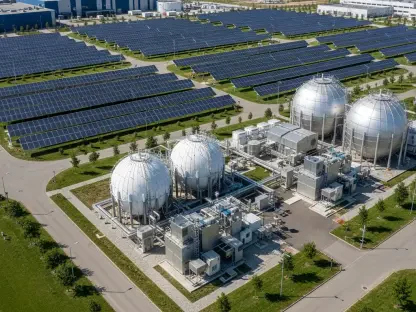
Beyond raw capacity, there’s a deeper shift at play. The focus has pivoted from standalone solar or wind farms to storage-backed systems, driven by falling costs of solar-plus-storage solutions. Distribution companies now prioritize firm, dispatchable power to meet peak-hour demand, ensuring that clean energy isn’t just abundant but reliable. This strategic evolution is reshaping the grid, making it more adaptable to the needs of a modern economy.
Voices from the Frontlines
Union Minister of New and Renewable Energy Pralhad Joshi highlighted this landmark achievement during a recent Rajya Sabha session, emphasizing the country’s swift move toward a sustainable energy ecosystem. Industry experts echo this optimism, pointing to the integration of 47.2 GW of Battery Energy Storage System capacity in transmission plans through 2032 as a critical step for grid stability. Their insights reveal a shared belief that storage is the linchpin for scaling renewables without sacrificing reliability.
On the ground, the impact is palpable. Renewable sector leaders share accounts of storage-backed projects lighting up remote regions during crucial evening hours. These stories paint a vivid picture of transformation, where policy decisions translate into tangible benefits for millions. It’s a reminder that behind every gigawatt added, there are communities gaining access to a cleaner, steadier future.
Strategies Driving the Green Surge
Policy has played a starring role in this journey. The government is pressing states to meet Renewable Consumption Obligations under the Energy Conservation Act, speeding up power purchase agreements. Meanwhile, agencies are aggregating demand from distribution companies before issuing tenders, streamlining the process to maximize impact. These targeted measures ensure that momentum doesn’t falter at critical junctures.
Infrastructure is keeping pace with ambition. The Central Electricity Authority is aligning transmission plans with renewable potential identified by the Ministry of New and Renewable Energy. New regulations, like the CERC Connectivity and General Network Access amendments introduced this year, ease grid integration for storage-backed renewables, optimizing connectivity across varying production hours. Such innovations are crucial for weaving clean energy into the national fabric without overloading existing systems.
Collaboration is the final piece of the puzzle. Regional workshops are tackling coordination challenges between states, agencies, and distribution companies, smoothing out operational hiccups. This multi-stakeholder approach, paired with contributions from commercial and industrial sectors via green open access and captive projects, creates a robust network of support. It’s a collective push that ensures no single entity carries the burden alone.
Reflecting on a Historic Leap
Looking back, India’s surpassing of the 50% non-fossil fuel capacity goal stood as a defining chapter in its energy history. The rapid addition of capacity, the strategic embrace of storage solutions, and the seamless alignment of policy with infrastructure marked a bold departure from traditional energy models. This achievement wasn’t just a win for sustainability—it was a signal that even the most populous nations could pivot toward cleaner futures without stalling progress.
The path ahead demanded continued innovation and resolve. Scaling up storage, refining grid systems, and fostering global partnerships emerged as essential next steps to sustain this trajectory. As the world watched, India’s journey offered a compelling lesson: with coordinated effort and forward-thinking strategies, ambitious climate goals transformed from distant dreams into achievable realities.