
A Landmark Achievement in India’s Energy Transition
India has successfully achieved its ambitious goal of 20% ethanol blending in gasoline, marking a pivotal moment in its journey toward energy self-reliance and a greener economy. This milestone, reached in December 2025, is not merely a statistical victory but a testament to a concerted national effort to reshape the country’s energy landscape. By integrating biofuels more deeply into its transportation sector, India is simultaneously tackling its massive crude oil import bill, reducing carbon emissions, and creating new economic opportunities for its agricultural sector. This article explores the strategic importance of this achievement, delves into the key drivers behind its success, and examines the future trajectory of India’s Ethanol Blended Gasoline (EBG) Program.
The Strategic Path to a Biofuel-Powered Economy
The EBG Program’s success was not an overnight phenomenon but the culmination of years of strategic policymaking and industry adaptation. Initially launched with modest single-digit blending targets, the program gained significant momentum through proactive government interventions, including price rationalization for ethanol from different feedstocks and streamlined procurement processes by Oil Marketing Companies (OMCs). The primary drivers were twofold: insulating the Indian economy from volatile global oil prices and fulfilling its climate commitments. By creating a robust policy framework, the government incentivized private investment in distillery capacity, transforming the biofuel sector from a peripheral industry into a cornerstone of the nation’s energy strategy. This foundational work was crucial for building the supply-side confidence needed to meet and exceed ambitious targets.
Analyzing the Multifaceted Impact of E20 Success
Fortifying Energy Security and Economic Resilience
Achieving the 20% blending target delivers profound economic and strategic benefits. Primarily, it directly reduces India’s dependence on imported crude oil, a major drain on its foreign exchange reserves. The sustained blending of 1.798 billion liters of ethanol between November and December 2025 alone translates into significant import substitution. This shift not only strengthens the nation’s energy security but also redirects capital inward, bolstering the rural economy. Farmers growing sugarcane, maize, and rice now have a stable, alternative market for their produce, mitigating price volatility and enhancing farm incomes, thereby creating a virtuous cycle of economic growth.
The Diversified Feedstock Strategy Fueling Growth
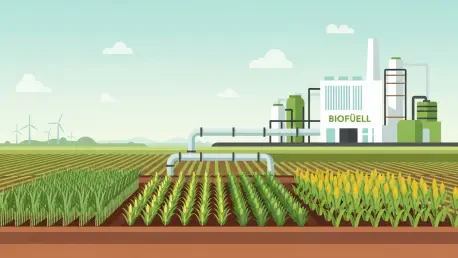
A critical factor in this success has been India’s strategic move away from a single-source feedstock model. For the current supply cycle, the 10.48 billion liters of ethanol allocated by OMCs are sourced from a diverse basket. Maize has emerged as the leading contributor, accounting for 45.68% of the supply, followed by rice from the Food Corporation of India (22.25%), sugarcane juice (15.82%), and B-heavy molasses (10.54%). This diversification is a game-changer, reducing the program’s reliance on the sugar industry and mitigating the “food versus fuel” debate. By promoting grain-based ethanol, India is ensuring the program’s sustainability while creating broad-based agricultural prosperity.
Production Capacity and the Next Frontier Beyond 20%
India’s ethanol production capabilities have expanded at an unprecedented rate, reaching an installed capacity of approximately 19.90 billion liters as of November 2025. This rapid scale-up has created a new challenge: the existing capacity is now significantly underutilized even with the 20% mandate fully met. Consequently, industry stakeholders are advocating for a clear policy roadmap to increase the blending mandate to 25% or even 30%. While the production infrastructure appears ready for the next leap, this push raises important questions about logistical readiness, consumer vehicle compatibility, and the ability to ensure a stable feedstock supply chain without disrupting food security.
The Future Roadmap: Flex-Fuels and Second-Generation Ethanol
With the E20 target now a reality, India is setting its sights on the next phase of its biofuel revolution. The emerging trend is a dual focus on increasing the blending percentage and promoting the adoption of Flex-Fuel Vehicles (FFVs) capable of running on higher ethanol blends (up to E85). Furthermore, the government is pushing for investment in second-generation (2G) ethanol technologies, which utilize non-food biomass like agricultural residue. This innovation holds the key to unlocking massive feedstock potential without impacting the food supply, making the biofuel program even more sustainable. The evolution of India’s EBG program is predicted to follow a path of higher mandates, advanced fuel technologies, and deeper integration with the agricultural economy.
Key Takeaways and Strategic Imperatives
The successful implementation of 20% ethanol blending offers several crucial lessons. First, a clear, long-term policy vision is essential for driving private investment and building supply-side capacity. Second, feedstock diversification is critical for sustainability and de-risking the program from over-reliance on a single crop. Finally, public-private collaboration between the government, OMCs, and the biofuel industry is the engine of progress. For stakeholders, the path forward is clear. Automakers must accelerate the rollout of FFVs to create demand for higher blends. The government should provide a predictable policy for targets beyond E20, and the agricultural sector must continue to innovate to improve crop yields and supply chain efficiency.
A Green Blueprint for India’s Energy Future
India’s achievement of the 20% ethanol blending milestone was more than a policy success; it was a green blueprint for sustainable development. It demonstrated that a large, developing economy can effectively decouple economic growth from carbon-intensive energy sources. By converting agricultural surplus into high-value fuel, India has addressed its energy, economic, and environmental challenges simultaneously. This accomplishment sets a powerful precedent and reinforces the long-term significance of biofuels in the national energy mix. The journey ahead will involve scaling new technologies and overcoming logistical hurdles, but the E20 milestone has firmly established India’s position as a global leader in the bio-energy transition.