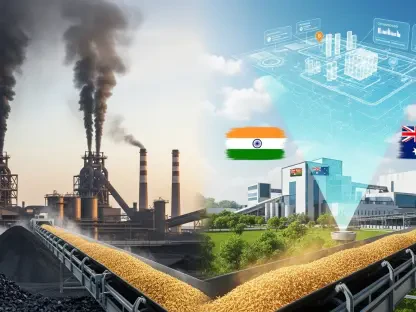

Facing one of the world’s most rapidly expanding energy appetites, India has architected a formidable, dual-pronged strategy designed to secure its energy future and drastically reduce foreign dependency. This ambitious national mission moves beyond a singular focus on either renewables or traditional hydrocarbons, instead embracing a pragmatic and concurrent approach. As articulated by Union Minister for Petroleum and Natural Gas, Hardeep Singh Puri, the government is simultaneously fostering a robust ecosystem for bio-gas production while aggressively liberalizing its domestic exploration policies to attract significant investment in oil and gas. This balanced strategy aims to create a resilient and self-sufficient energy sector capable of powering the nation’s economic growth, by transforming agricultural waste into clean fuel and unlocking the country’s vast untapped subterranean resources. The parallel initiatives represent a comprehensive vision for energy security that addresses both long-term sustainability and immediate supply-side imperatives.
The Green Revolution in Energy
Pioneering the Waste to Wealth Model
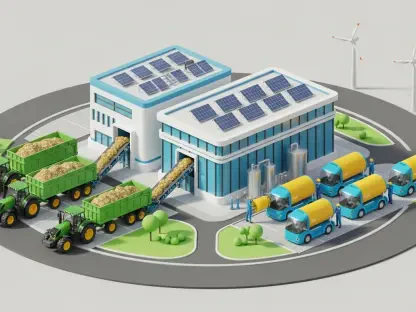
A cornerstone of India’s renewable energy push is the remarkable expansion of its Compressed Bio Gas (CBG) infrastructure under the Sustainable Alternative Towards Affordable Transportation (SATAT) initiative. Since its inception in 2018, the program has catalyzed the establishment of 132 CBG plants, which now possess a combined production capacity of 920 metric tons per day. This “waste-to-wealth” model is fundamentally reshaping the rural economy by creating a structured value chain for agricultural residue and organic waste. Instead of being a disposal problem, this biomass is now a valuable commodity, providing an additional and stable income stream for farmers. The initiative is engineered to achieve multiple national objectives simultaneously: it directly reduces greenhouse gas emissions by capturing methane, provides a cleaner and more affordable alternative to conventional transportation fuels, and fosters entrepreneurship in rural areas, thereby promoting localized economic development and energy independence from the ground up.
Cultivating a Sustainable Market
The success of the CBG sector is not solely a result of production incentives but is also driven by the creation of a supportive and integrated market ecosystem. To guarantee offtake and ensure financial viability for producers, major state-owned oil and gas marketing companies have been mandated to procure CBG from entrepreneurs operating under the SATAT scheme. This guaranteed demand de-risks the investment for plant operators and establishes a clear route to market, integrating this green fuel directly into the national energy distribution network. By creating this symbiotic relationship between large-scale distributors and local producers, the government has built a self-sustaining cycle of investment, production, and consumption. This framework not only accelerates the adoption of bio-gas as a mainstream transportation fuel but also ensures that the benefits of this green transition are broadly distributed, empowering small-scale entrepreneurs and contributing to a more diversified and resilient national energy portfolio.
Revitalizing Domestic Hydrocarbon Production
Unlocking New Exploration Frontiers
In parallel with its green energy initiatives, India is making a decisive push to invigorate its domestic hydrocarbon sector by offering 50 new exploration and production (E&P) blocks to a global pool of investors. This offering is strategically segmented across three distinct programs to maximize interest and participation. The Open Acreage Licensing Policy (OALP-X) presents 25 blocks spanning a wide range of geologies, including onland, shallow water, deepwater, and ultra-deepwater terrains, inviting companies with diverse technical expertise. Simultaneously, the Discovered Small Field (DSF-IV) round includes 55 existing discoveries across nine contract areas, designed to fast-track production by minimizing exploratory risk. Furthermore, dedicated Special Coal Bed Methane (CBM) Bid Rounds are being conducted, with three blocks offered in 2025 in West Bengal and Gujarat, and an additional 13 blocks slated for auction in 2026. This multi-faceted approach is meticulously designed to tap into the full spectrum of India’s hydrocarbon potential.
Crafting an Investor-Friendly Climate
Underpinning the offering of new exploration blocks is a profound overhaul of the nation’s E&P policy framework, aimed at creating one of the most attractive investment climates globally. The government has introduced a host of liberalized fiscal and contractual terms to entice both domestic and international capital. Key incentives include a flexible revenue-sharing model with significantly lower rates in the initial years of production to ease front-end financial burdens. Royalties for offshore areas have also been reduced to encourage investment in more challenging and capital-intensive projects. Crucially, investors now have complete marketing and pricing freedom for the oil and gas they produce, allowing them to capitalize on market dynamics. Eligibility criteria have also been relaxed, most notably removing the requirement for prior E&P experience in certain bidding rounds, thereby opening the door to new entrants and fostering greater competition within the sector.
A Unified Path Forward
Streamlining the Regulatory Landscape
To complement the attractive fiscal incentives, the government has undertaken significant legislative reforms to enhance the ease of doing business and provide long-term regulatory certainty. The recent passage of the Oilfields (Regulation and Development) Amendment Act, 2025, and the notification of new PNG Rules in 2025 have created a unified and streamlined legal framework. A pivotal change is the introduction of a single license for the exploration and production of both conventional and unconventional hydrocarbons, such as shale gas and CBM, within a single block. This eliminates bureaucratic hurdles and allows operators to exploit all available resources efficiently under one contract. Furthermore, the new rules permit exploration activities throughout the entire duration of the contract period and include robust stabilization provisions that protect investors from arbitrary changes in law or policy, thereby securing their long-term investments against political and regulatory risks.
A Legacy of Strategic Balance
The government’s dual-pronged energy policy ultimately forged a path toward greater national self-reliance by skillfully managing both present needs and future imperatives. The simultaneous and aggressive promotion of Compressed Bio Gas and the liberalization of the hydrocarbon exploration sector represented a masterclass in strategic balancing. By championing the SATAT scheme, the nation successfully cultivated a circular economy that transformed waste into wealth, empowered rural communities, and made tangible progress on its climate goals. Concurrently, the overhaul of the E&P regime, characterized by investor-friendly fiscal terms and a simplified regulatory system, unlocked significant domestic oil and gas resources that had previously been inaccessible. This holistic approach ensured that India did not have to choose between energy security and environmental responsibility; instead, it built a resilient and diversified energy portfolio that fortified its economic sovereignty for years to come.