
Imagine a nation with one of the world’s largest populations and economies, historically tied to vast coal reserves, now sprinting ahead to redefine the global energy landscape with clean, sustainable power. That’s the remarkable story unfolding in India today. This country, often seen through the lens of its industrial might and resource challenges, has emerged as a powerhouse in renewable energy, shattering records and setting benchmarks for the rest of the world. With an unprecedented push toward non-fossil fuel capacity, particularly in solar power, India’s journey offers a compelling narrative of ambition and transformation. Driven by strategic policies and a vision for sustainability, the nation is not just keeping pace with global trends but actively shaping them. This surge reflects a delicate balance—managing traditional energy dependencies while embracing a cleaner future—and it’s a story worth exploring in depth.
Solar Power: A Beacon of Progress
The sheer scale of India’s achievements in renewable energy, especially solar, is nothing short of staggering. In the financial year spanning 2025-26, the country added a historic 31.25 GW of non-fossil fuel capacity, with a whopping 24.28 GW attributed to solar power alone. This isn’t just a number; it’s a testament to a dramatic shift over the past decade, where solar capacity skyrocketed from a modest base to around 130 GW—a growth rate that defies expectations. Globally, between 2022 and 2024, India contributed 46 GW to the world’s solar capacity, securing a spot as the third-largest player in this arena. What’s driving this? A robust policy framework, investor-friendly conditions, and a relentless focus on infrastructure have turned India into a magnet for clean energy innovation. Moreover, while the world took seven decades to reach its first terawatt of renewable energy by 2022, it doubled that figure in just two years, with India playing a pivotal role. This isn’t merely progress; it’s a bold redefinition of what’s possible in the energy sector.
Community Empowerment Through Localized Initiatives
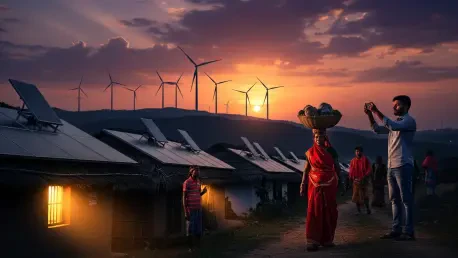
While national milestones grab headlines, the real impact of India’s renewable energy push often shines brightest at the grassroots level, particularly in states like Odisha. Here, the government has rolled out transformative programs that bring clean power directly to households, especially those in economically weaker sections. Under the PM Surya Ghar initiative, a Utility-Led Aggregation model was approved to install 1.5 lakh rooftop solar systems, each with a 1 kW capacity, aiming to benefit 7–8 lakh residents. Already, Odisha boasts over 3.1 GW of renewable capacity, making up more than a third of its total installed power. Additionally, over 1.6 lakh households have applied for rooftop solar setups through related schemes, with thousands already reaping the benefits of completed installations and substantial subsidies. This localized approach, backed by strong state leadership, mirrors the national ethos of inclusivity. It demonstrates how renewable energy isn’t just about megawatts—it’s about empowering communities, reducing energy costs, and building a sustainable future from the ground up.