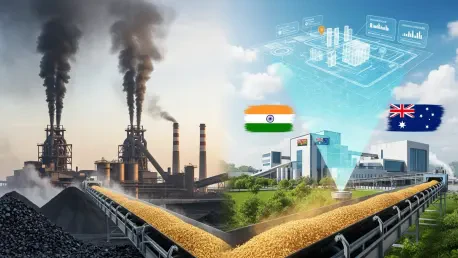

Transforming Heavy Industry Through Bilateral Innovation
The transformation of the global steel sector hinges on the ability of emerging economies to decouple industrial expansion from the catastrophic environmental footprints associated with traditional coal-fired metallurgy. This collaboration marks a pivotal shift in sustainable manufacturing. By harnessing the India–Australia Green Steel Research Partnership, these nations demonstrate that a cleaner future involves repurposing agricultural residues. Trials using rice husk pellets are setting a new precedent for green steel through technical breakthroughs.
The Historical Burden of Carbon-Intensive Metallurgy
For decades, the steel industry relied on coking coal for iron ore reduction. In India, this reliance is pronounced; the sector emits approximately 2.55 tonnes of CO2 per tonne of steel produced. With production goals reaching 300 million tonnes by 2030, the environmental cost of the status quo remains untenable. Finding a carbon-neutral alternative that withstands extreme thermal requirements without compromising quality was the primary historical challenge for metallurgical engineers.
Navigating the Technical and Ecological Shift to Biomass Integration
Validating Rice Husk Pellets in Commercial-Scale Operations
A recent trial in Odisha proved biomass functions effectively within industrial frameworks. The project integrated rice husk pellets into gasifiers at blends of up to 10%. Data confirmed these levels could be introduced without performance degradation. This proved to stakeholders that decarbonization does not come at the expense of efficiency. This technical viability is a critical hurdle cleared for future industrial investments.
Addressing the Agricultural Waste Crisis Through Industrial Circularity
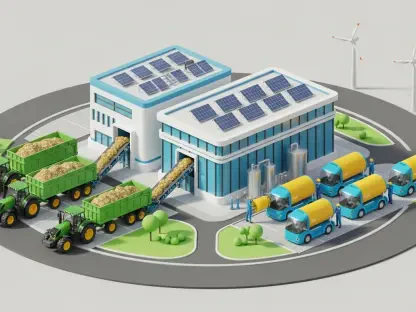
India generates 228 million tonnes of surplus agricultural waste annually. Diverting this into steelmaking creates a circular economy. This strategy transforms a liability into fuel, lowering the carbon footprint while providing a solution to rural pollution. This dual-purpose strategy aligns industrial growth with public health interests, creating value from what was once considered refuse.
Overcoming Logistics and Infrastructure Barriers in Green Steel
Scaling requires stable supply chains. Researchers introduced a mapping tool to align plant locations with biomass availability. Addressing supply instability allows managers to secure inputs with precision, mitigating risks associated with seasonal harvests. This digital innovation ensures that factories have a reliable, localized source of fuel, reducing the need for imported coal.
Scaling Toward 300 Million Tonnes of Sustainable Capacity
Experts predict biomass processes could slash emissions by 50%, removing 357 million tonnes of CO2 annually. Regulatory shifts will likely make green steel certifications a market requirement rather than a choice. This evolution should drive investment into specialized pelletization plants and green corridors. As the partnership moves to increase biomass ratios, the potential for massive emission reduction grows.
Strategic Blueprints for Decarbonizing Global Steel Markets
The trial offers a roadmap for industrial transition. Localizing energy using regional resources reduces reliance on volatile coal markets. Professionals should use mapping tools to identify biomass opportunities within their specific footprints. This model serves as a best practice for other heavy sectors meeting net-zero targets. The strategy emphasizes the importance of using resources that are already abundant in the region.
A New Chapter for Indo-Australian Environmental Diplomacy
The integration of crop waste into steelmaking reimagined how industry interacted with the environment. By proving rice husks could replace coal, the project solved emissions and pollution issues simultaneously. It underscored the significance of international partnerships in solving global crises. Industrial strength was not measured by carbon output, but by the ability to harmonize economic ambition with ecological responsibility. This initiative provided the actionable steps needed to secure a more resilient industrial future.