
The promise of harnessing the sun’s power from your own rooftop has long been accompanied by the steep financial barrier of a five-figure upfront investment, placing it out of reach for the average American household. This reality, however, is rapidly changing as the residential solar industry undergoes a fundamental transformation away from a model of direct ownership toward one of widespread accessibility. A strategic shift in financial mechanisms, spurred by evolving federal policies, is now breaking down long-standing economic hurdles. This new approach, centered on solar leasing, is not just a minor adjustment but a seismic change that is democratizing clean energy and making it a practical and affordable option for a much broader spectrum of homeowners, particularly those in low- and moderate-income communities who stand to benefit the most.
The Financial Pivot Driven by Policy Evolution
For many years, the primary pathway to installing solar panels on a residential property was through direct purchase, a model heavily incentivized by a generous 30% federal tax credit available directly to homeowners. While this policy successfully spurred initial growth in the sector, it inherently favored households with significant disposable income to cover the initial installation costs and a substantial tax liability to fully capitalize on the credit. This created an accessibility gap, leaving many families who could benefit most from lower utility bills on the sidelines. As this specific homeowner tax credit approaches its expiration, the solar industry has been compelled to innovate. The resulting evolution is a pivot toward a more inclusive model that leverages a different, but equally powerful, financial tool: a separate 30% commercial solar tax credit, which remains in effect until the end of 2027, creating a stable foundation for the growth of residential solar leasing for years to come.
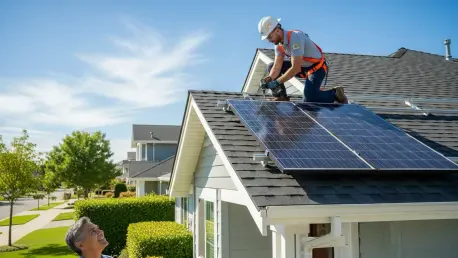
The mechanics behind this new leasing model are both simple and transformative for the consumer. Instead of the homeowner purchasing the system, a third-party company—often a specialized solar financier or installer—retains ownership of the panels installed on the residence. By owning the hardware, this company qualifies as a commercial entity and can claim the 30% investment tax credit from the federal government. The true innovation lies in how this financial benefit is then channeled to the consumer. According to Maryrose Myrtetus, executive director of the Philadelphia Green Capital Corporation, the full value of this tax credit is “baked into the pricing of the lease.” This allows the leasing company to offer homeowners a significantly lower monthly payment than they would otherwise be able to, effectively passing the savings from the commercial tax credit directly to the family. This structure removes the prohibitive upfront cost and makes the long-term financial benefits of solar energy immediately accessible through a manageable, predictable monthly expense.
Fostering Energy Equity Through Strategic Partnerships
This innovative financing model is being actively deployed through strategic partnerships designed to advance energy equity and bring clean power to communities that have historically been underserved. A landmark $3.2 million investment from the Candide Group’s Afterglow Climate Justice Fund into the Philadelphia Green Capital Corporation (PGCC) serves as a powerful catalyst for this movement. This capital infusion is specifically earmarked to expand a crucial collaboration between PGCC and the Capital Good Fund’s Pennsylvania BRIGHT solar leasing program. The immediate goal of this expanded partnership is to bring approximately 150 additional households in southeastern Pennsylvania into the solar fold. However, the long-term vision extends far beyond numbers; it is about fundamentally reorienting the solar market toward inclusivity and ensuring that the economic and environmental rewards of renewable energy are distributed justly across all socioeconomic strata.
The Pennsylvania BRIGHT program is meticulously designed to dismantle the most common barriers that prevent lower-income families from adopting solar technology. By establishing an eligibility criterion for households with gross annual incomes below $165,000, the program targets the demographic that often faces the highest energy burden. More importantly, it removes the financial gatekeepers that have traditionally excluded many, requiring no money down for installation and having no minimum credit score for qualification. Anika Wistar-Jones of the Capital Good Fund emphasizes that this approach ensures that the substantial savings generated by solar power are not “reserved just for the richer people.” By making solar a viable option for those most impacted by fluctuating and expensive utility bills, the program reframes renewable energy from a luxury commodity into an essential tool for building financial stability and community resilience.
The Tangible Benefits and Long-Term Outlook
For homeowners participating in programs like Pennsylvania BRIGHT, the advantages are not abstract concepts but concrete, month-to-month realities. The average monthly lease payment is approximately $88, a figure that typically results in an immediate savings of around $30 per month, or a 15% reduction in their customary utility bill. The 25-year leasing agreements are structured to provide lasting financial security. They feature a modest 2% annual increase in the lease payment, a rate intentionally set well below the often steep and unpredictable rate hikes imposed by traditional utility companies. This predictable cost structure provides families with invaluable long-term budget stability, shielding them from the volatility of the conventional energy market and empowering them with control over one of their most significant household expenses. The program’s design also anticipates future life events, offering flexibility that enhances the home’s value without creating a burden.
The real-world application of this model showcases benefits that transcend simple cost savings, encompassing energy independence and peace of mind. Mark Gorman, a Pittsburgh resident and participant in the program, had 12 solar panels and a battery storage system installed on his home. While his combined monthly lease payment of $155 and a $13 utility infrastructure fee can sometimes be slightly higher than his pre-solar bills due to the added cost of the battery, he underscores the profound non-monetary value. During a recent severe wind storm that caused widespread power outages, his home remained fully powered while his neighbors were left in the dark. This experience of resilience and security, coupled with the personal satisfaction of actively contributing to climate solutions, highlights the multifaceted appeal of accessible solar. Furthermore, the program offers him the option to purchase his system outright after seven years, providing another layer of flexibility and control over his energy future.
A Resilient Path Forward for Residential Solar
The transition to a lease-centric solar market was not without its challenges, as evidenced by the real-world impacts of shifting policies on some industry players. The bankruptcy of PosiGen, a major solar installer in Philadelphia, was attributed in part to the disruption caused by the changing tax credit landscape, a stark reminder of the complexities of market adaptation. Despite such setbacks, the overall outlook for residential solar remained overwhelmingly positive, bolstered by a fundamental economic truth: solar energy is now the most affordable form of electricity ever developed. The industry’s strategic adaptation demonstrated a crucial resilience, proving that the growth of residential solar could be successfully decoupled from a single, expiring homeowner tax credit. The pivotal insight was the recognition that as one policy door closed, another, more inclusive one, opened. This nuanced understanding allowed the benefits of federal incentives to flow not just to large-scale solar farms but also to individual row homes, transforming the landscape of energy accessibility and ensuring the economic and environmental rewards of solar power were more equitably distributed across all communities.