
A groundbreaking collaboration is set to transform the skies above the Hawaiian Islands, charting a new course for sustainable air travel fueled by locally sourced renewable energy. This initiative represents more than just a technological advancement; it is a strategic realignment of the state’s aviation, energy, and agricultural sectors toward a shared vision of environmental stewardship and economic resilience. As the aviation industry grapples with its significant carbon footprint, Hawaiʻi is positioning itself not as a follower but as a pioneer, developing a self-sufficient ecosystem that could serve as a model for island economies worldwide. The convergence of corporate leadership, government support, and agricultural innovation marks a pivotal moment in the state’s journey toward a decarbonized future.
Charting a Greener Course for Hawaiian Skies
At the heart of this transformative effort is a landmark alliance uniting key stakeholders from across the state’s economic landscape. Hawaiian Airlines and Alaska Airlines, the dominant air carriers in the region, have joined forces with Par Hawaii, the islands’ largest energy producer, and Pono Pacific, a leader in land and resource management. This strategic partnership formalizes a shared commitment to developing a viable, long-term solution to the aviation industry’s environmental impact. By pooling their expertise and resources, these organizations are creating a powerful engine for change, moving beyond individual corporate goals to address a systemic challenge.
The mission is clear and ambitious: to establish a fully integrated, local supply chain for sustainable aviation fuel (SAF). This initiative aims to decarbonize island air travel, which is a lifeline for residents and the cornerstone of the state’s tourism-driven economy. By cultivating, refining, and utilizing SAF within Hawaiʻi, the partnership seeks to break the state’s heavy dependence on imported fossil fuels. This move not only enhances energy security but also insulates the local economy from the volatility of global oil markets, creating a more stable and predictable operational environment for all involved.
Endorsing this private-sector initiative is the Hawaiʻi Department of Transportation, which recognizes the project’s critical role in meeting the state’s aggressive clean energy targets. This government validation provides a crucial layer of support, helping to de-risk the venture for investors and signal a favorable regulatory environment. The synergy between the private partners and state agencies illustrates a unified approach, where shared environmental and economic goals align to foster innovation and drive progress toward a more sustainable and independent energy future for Hawaiʻi.
Sowing the Seeds of a Renewable Future
The Rise of Camelina Hawaiʻi’s Homegrown Fuel Solution
Central to this endeavor is the selection of camelina as the primary feedstock for Hawaiʻi-produced SAF. This fast-growing, pest-resistant oilseed crop has been identified as an ideal solution for the islands’ agricultural landscape. Its resilience and relatively low input requirements make it a practical and efficient choice for local farmers. Extensive field trials conducted by Pono Pacific, with backing from Alaska Star Ventures and Par Hawaii, have confirmed the viability of specific camelina varieties that are well-suited to Hawaiʻi’s unique climate and soil conditions, setting the stage for large-scale cultivation.
A key innovation in the agricultural model is the use of inter-cycle planting. Camelina will be grown on existing agricultural lands between the harvest and planting of primary food crops, a practice that maximizes land use without competing with food production. This approach addresses a common criticism of biofuel initiatives and ensures that the project contributes to the state’s food security rather than undermining it. This thoughtful integration of fuel and food production demonstrates a holistic approach to sustainable land management.
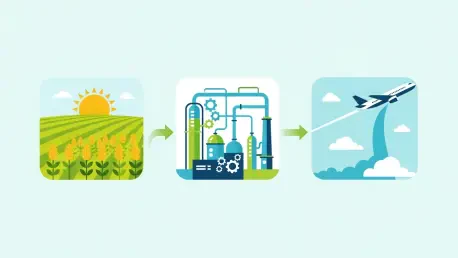
The project envisions a completely circular, waste-free system. After harvesting, camelina seeds are pressed to extract oil, which serves as the base for renewable fuel. The remaining high-protein meal is then processed into a valuable animal feed supplement for local cattle and poultry industries. This integrated model ensures that every part of the crop is utilized, creating a closed-loop system that generates multiple revenue streams, supports local agriculture, and keeps economic benefits circulating within the state.
Projecting Hawaiʻi’s SAF Market and Economic Impact
The economic ripple effects of this initiative are projected to be significant and widespread. By creating a new market for a non-food crop, the project offers a new revenue stream for local farmers, strengthening the agricultural sector. Simultaneously, the production of high-quality animal feed from camelina meal will bolster the local livestock industry, reducing its reliance on costly imported feed. Furthermore, the development of this new green industry is expected to generate a range of skilled jobs in agriculture, logistics, and refinery operations.
Underpinning this vision is a substantial capital investment from Par Hawaii, which is committing $100 million to upgrade its refinery. This modernization will equip the facility to process renewable feedstocks like plant-based oils, a critical step in translating agricultural output into aviation-grade fuel. This investment serves as a tangible signal of the project’s commercial viability and the long-term commitment of its industrial partners.
With the necessary infrastructure and agricultural groundwork in place, the partnership is on track for a major milestone. The first delivery of locally produced SAF to Hawaiian Airlines and Alaska Airlines is anticipated in the first quarter of 2026. This initial production run will be a crucial proof of concept, demonstrating the feasibility of the entire supply chain. The performance goal for this fuel is ambitious, targeting a reduction in carbon emissions of up to 80% compared to its conventional fossil-fuel-based counterpart.
Navigating the Headwinds to a Sustainable Transition
Despite the project’s strong momentum, significant challenges remain on the path to full-scale implementation. The most formidable of these is the economic hurdle posed by the cost of SAF, which remains considerably higher than traditional jet fuel. This price disparity presents a major obstacle for airlines operating on thin margins and highlights the economic realities that must be addressed for widespread adoption. Bridging this cost gap is essential for the long-term sustainability of the initiative.
Another critical challenge is the issue of scale. While the initial production goals are achievable, meeting the vast fuel demands of the entire aviation industry in Hawaiʻi will require a massive expansion of both agricultural cultivation and refinery capacity. The current supply of SAF, both globally and locally, is a fraction of what is needed to achieve industry-wide decarbonization goals. Overcoming this limitation will require sustained investment and innovation over many years.
Forging a path forward through these headwinds demands unwavering cooperation among all stakeholders. Continued collaboration between the airlines, energy producers, agricultural experts, government agencies, and investors is non-negotiable. This coalition must work in lockstep to develop strategic solutions, from optimizing crop yields to streamlining refining processes. To accelerate the transition and ensure the project’s success, implementing supportive public policies that incentivize production and help close the price gap with conventional fuel will be paramount.
The Policy Framework Fueling Hawaiʻi’s SAF Ambitions
The local SAF initiative aligns directly with Hawaiʻi’s established state mandates for clean energy and decarbonization. The project provides a tangible pathway for the aviation sector to contribute to these ambitious goals, which aim to transition the state to 100% renewable energy. By creating a homegrown fuel source, the partnership not only reduces carbon emissions but also strengthens the state’s progress toward its legislated environmental targets.
Official endorsement from the Hawaiʻi Department of Transportation has played a vital role in validating the project and building confidence among stakeholders and potential investors. This government support signals a stable and encouraging policy environment, which is crucial for de-risking long-term capital investments in new energy infrastructure. Such endorsements are essential for attracting the private capital needed to bring innovative green technologies from the pilot phase to commercial scale.
The long-term viability of Hawaiʻi’s SAF market will heavily depend on a supportive policy landscape at both the state and federal levels. Incentives such as tax credits, grants, and loan guarantees can stimulate investment in SAF production and help make it economically competitive with fossil fuels. A favorable regulatory framework that streamlines permitting and recognizes the environmental benefits of locally sourced biofuels is essential for fostering a market where green aviation can thrive and achieve the necessary scale for meaningful impact.
The Horizon for Hawaiʻi’s Green Aviation
A successful local SAF supply chain stands to fundamentally disrupt Hawaiʻi’s long-standing dependence on imported fossil fuels, marking a significant step toward energy independence. For an isolated island state, this transition is not just an environmental imperative but a matter of economic security. By localizing fuel production, Hawaiʻi can create a more resilient energy system, less susceptible to global supply chain disruptions and price shocks, while retaining economic value within its own communities.
The current focus on camelina establishes a strong foundation, but the potential for future growth and innovation is vast. The integrated agricultural-energy model being developed could be expanded to include other non-food feedstocks, further diversifying the state’s renewable energy portfolio. As technologies advance and cultivation methods are perfected, the scale of production can grow, solidifying Hawaiʻi’s capacity to fuel its aviation sector sustainably.
By pioneering this comprehensive SAF ecosystem, Hawaiʻi is positioning itself as a leader in the global transition to green aviation. This initiative is already attracting attention from green investors who see the state not just as a testbed but as a prime destination for investment in the renewable energy sector. A successful outcome will serve as a powerful case study, demonstrating that sustainable innovation can flourish even in geographically challenging environments. This, in turn, will draw further capital and expertise to the islands.
A Blueprint for a Sustainable Island Economy
The partnership’s comprehensive approach demonstrates a unified vision where environmental goals and economic prosperity are not mutually exclusive but are, in fact, deeply intertwined. This initiative is a working model of how cross-sector collaboration can address complex challenges, creating a system that reduces carbon emissions while simultaneously generating local jobs and strengthening key industries.
Key takeaways from this effort highlighted the innovative application of camelina as a rotational crop and the immense power of a circular economy. By transforming an agricultural byproduct into a valuable commodity, the project created a self-reinforcing cycle of value that benefited farmers, the livestock industry, and the energy sector. This model showcased a path away from linear, extractive systems toward a more regenerative and sustainable economic framework.
Ultimately, the initiative’s potential extended far beyond Hawaiʻi’s shores, establishing a replicable blueprint that other island and remote economies could adapt to their own unique circumstances. It proved that with strategic planning and committed partnerships, geographic isolation could be transformed from a vulnerability into a catalyst for self-sufficiency and innovation. Though the journey was not without its challenges, the collaborative commitment of all involved charted a powerful and promising path toward a more sustainable future.