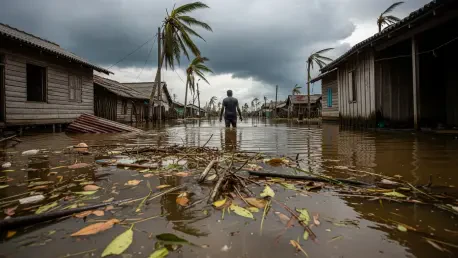

As rising global temperatures redraw the world’s weather maps, a growing body of scientific evidence now confirms a devastating new reality for Asiclimate change is actively supercharging seasonal storms, turning them into unprecedented catastrophic events.
The Intensifying Link Between Climate Change and Extreme Weather
This analysis explores the central conclusion that rising global temperatures are demonstrably increasing the destructive power of storms across Asia. The core of the issue lies in how a warmer climate infuses weather systems with additional heat and moisture, effectively “supercharging” cyclones. This process transforms what might have been severe storms into disasters of historic proportions, raising urgent questions about regional vulnerability and preparedness.
The research moves beyond general correlation to address how climate change amplifies these weather events. By examining the mechanics of storm formation in a warmer world, scientists are establishing a direct causal link between human-caused warming and storm intensity. Understanding this intensification is crucial for improving forecasting and developing effective adaptation strategies for the millions in the path of these dangerous systems.
A World in Crisis: The Scientific, Political, and Economic Context
The escalating intensity of these storms is a direct consequence of relentless global warming. Data from the European Union’s Copernicus Climate Change Service confirms that 2025 is on track to be one of the warmest years ever recorded, continuing a dangerous trend of shattered temperature records. This persistent heating provides the fundamental fuel for more extreme weather, framing the regional crisis within an undeniable global pattern.
Unfortunately, the international policy response lags dangerously behind this scientific reality. The recent COP30 climate summit concluded without substantial new commitments to curb emissions, reflecting a world hampered by geopolitical friction. This inaction is compounded by a rollback of climate initiatives in the United States and efforts by other major economies to dilute their reduction targets, creating a perilous gap between what science demands and what political will delivers.
Research Methodology, Findings, and Implications
Methodology
To establish a clear link between climate change and specific storms, researchers from the World Weather Attribution group employed an attribution study approach. This scientific method is designed to determine the extent to which human-induced warming alters the likelihood and intensity of extreme weather, providing clear data on the human fingerprint on natural disasters.
The methodology involved a detailed analysis of abnormally high sea surface temperatures in the regions affected by recent deadly cyclones. By comparing real-world observations with climate models simulating a world without anthropogenic warming, scientists could isolate and quantify the direct impact of elevated ocean temperatures on the increased rainfall and destructive force of these storms.
Findings
The primary discovery is that climate change makes storms significantly more powerful, even if not more frequent. Evidence from Cyclone Ditwah in Sri Lanka showed that North Indian Ocean temperatures were 0.2°C higher than the recent average during its peak rainfall. This anomaly was directly attributed to the 1.3°C rise in global mean temperatures since the pre-industrial era.
Further compounding the disaster, the study identified rapid deforestation as a critical secondary factor. The widespread loss of forests severely worsened the impacts of the torrential downpours by degrading the landscape’s natural ability to absorb water, which led to devastating floods and landslides. This demonstrates how environmental mismanagement can tragically amplify the effects of climate change.
Implications
The societal implications of these intensified storms are catastrophic, resulting in mass casualties and immense economic devastation. Cyclone Ditwah alone was responsible for over 600 fatalities and an estimated $7 billion in damages, wiping out critical infrastructure. These events represent a profound and growing threat to human security and economic stability in one of the world’s most vulnerable regions.
This crisis is magnified by stalled global climate policy and shifting economic pressures. While developing nations face greater climate threats, developed economies grapple with record electricity consumption driven by the demands of AI data centers. Targeted financial actions, like the Asian Development Bank’s $500 million loan to the Philippines to support its blue economy, are emerging as vital tools for building resilience.
Reflection and Future Directions
Reflection
This research casts a harsh light on the dangerous disconnect between the scientific certainty of climate change and the inadequacy of the global response. The evidence clearly shows that the climate is changing with deadly consequences. Yet, the collective action required to address the root cause remains fragmented, creating a perilous gap between knowledge and meaningful action.
Geopolitical strains and competing national interests have emerged as formidable barriers to progress. The prioritization of short-term economic goals over long-term planetary health has led to a fractured international response. This dynamic undermines the cooperative spirit necessary for a global challenge, leaving the most vulnerable to bear the brunt of a crisis they did little to create.
Future Directions
Looking ahead, there is a clear need for more attribution studies that can quickly and accurately link extreme weather events to climate change. Furthermore, detailed economic modeling is required to quantify the staggering costs of policy inaction, providing policymakers with a clearer financial case for decisive intervention.
Beyond research, future action must focus on tangible solutions. This includes accelerating the modernization of energy grids to accommodate renewables and expanding investments in climate resilience infrastructure. Supporting the growth of blue economies in coastal nations also presents a vital opportunity to turn climate vulnerability into a source of sustainable economic strength.
A Conclusive Warning: The Urgent Need to Bridge Science and Policy
In summary, the evidence offers an unequivocal conclusion that global warming is directly fueling more powerful and destructive storms in Asia. The link is no longer speculative but a scientifically demonstrated reality, with warmer oceans providing the excess energy that turns seasonal weather into humanitarian disasters. This intensification is one of the most dangerous manifestations of the global climate crisis.
The critical contribution of this research is to underscore the urgent need for global leaders to align policy with scientific reality. The continued disparity between what is known and what is being done has already resulted in preventable catastrophes. Bridging this gap through decisive, cooperative, and science-informed action is not merely an option but a necessity to prevent an even more destructive future.