
The sheer volume of industrial carbon emissions concentrated within the Humber estuary has long presented a formidable barrier to the United Kingdom’s environmental aspirations, yet a new collaborative blueprint suggests this challenge is now the region’s greatest opportunity. As the nation pivots from its historic reliance on fossil fuels, the focus has shifted toward high-capacity, low-carbon alternatives that can sustain heavy industry without compromising climate targets. The Humber region, traditionally the carbon-heavy engine room of British manufacturing, is now positioned as the foundational stone for a national decarbonization strategy.
At the heart of this transition is the Humber Hydrogen consortium, a strategic alliance between Centrica, Equinor, National Gas, and SSE Thermal. This group has moved beyond theoretical modeling to propose a tangible, integrated network capable of fueling the next generation of British industry. Their vision aligns with the Hydrogen Transport and Storage Business Model competition, a government-led initiative designed to bridge the gap between experimental pilot projects and full-scale commercial viability. By leveraging a projected £500 million public investment, the consortium intends to de-risk the sector, effectively unlocking billions in private capital to build an infrastructure that does not yet exist on this scale anywhere else in the world.
Decarbonizing the Industrial Heartland: A New Era for British Energy
The evolution of the British energy sector is entering a decisive phase where the focus has moved from renewable electricity generation toward the more complex task of cleaning up industrial heat and chemical processes. In the past, the intermittency of wind and solar made them difficult to apply to the constant, high-energy demands of steelworks or chemical refineries. Hydrogen offers the missing link, providing a high-density energy carrier that can be stored and transported much like natural gas, but with a significantly lower carbon footprint.
The strategic selection of the Humber for this inaugural network is no coincidence. As the most energy-intensive cluster in the UK, the area provides a ready-made market of large-scale emitters desperate for a viable path to net zero. This geographical concentration allows for a more efficient rollout of infrastructure, as a single pipeline network can serve dozens of major industrial sites. Consequently, the project acts as a catalyst for a broader economic shift, ensuring that the transition to green energy preserves the UK’s manufacturing base rather than forcing it overseas.
Accelerating the Hydrogen Economy Through Strategic Infrastructure
Scaling Production and Distribution Across Northeast England
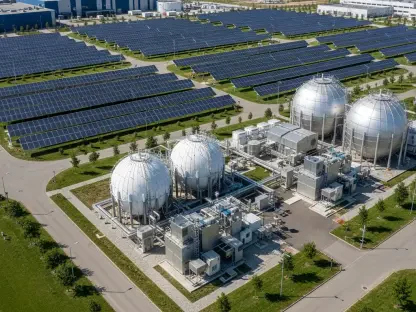
Scaling up from small-scale demonstrations to a massive 3GW production capacity is the primary technical objective of the ##H Easington and Saltend facilities. These sites are designed to serve as the primary engines of the regional hydrogen economy, generating enough volume to replace natural gas in some of the country’s most demanding thermal processes. This leap in scale is essential for driving down the unit cost of hydrogen, making it a competitive alternative for businesses that currently operate on tight margins.
The physical connectivity of this system relies on the Humber Hydrogen Pipeline, a high-pressure transmission line that will traverse Yorkshire and Lincolnshire. This is not merely a local utility project; it is designed to be the first leg of a National Gas hydrogen backbone. By integrating regional hubs into a wider national grid, the consortium ensures that the surplus energy produced in the Humber can eventually be exported to other industrial centers across the country. This connectivity is expected to trigger a fundamental shift in how sectors like heavy haulage and glass manufacturing perceive their future fuel security.
Market Projections and the Economic Value of Hydrogen Clusters
Data-driven forecasts suggest that hydrogen will be indispensable if the UK is to meet its 2050 targets, particularly for sectors where electrification remains technically unfeasible. The economic value of these clusters extends far beyond simple emission reductions. By establishing a reliable hydrogen supply, the Humber can attract a new wave of downstream industries, such as the production of green ammonia for shipping and the manufacturing of sustainable aviation fuel. These sectors represent the high-growth markets of the next decade, offering a path to diversify the regional economy.
Beyond the immediate environmental gains, the project is a vital safeguard for regional employment. It is estimated that thousands of existing jobs in the traditional energy sector can be transitioned into the hydrogen economy, preventing the industrial “rusting” often seen during major economic shifts. By maintaining a robust supply chain, the Humber ensures that it remains an attractive destination for global investment. This proactive approach to infrastructure development turns a potential liability—high carbon intensity—into a competitive advantage in a decarbonizing global market.
Navigating Technical and Financial Barriers to Scalability
The path to a hydrogen-ready future is fraught with technical hurdles, particularly regarding the retrofitting of legacy industrial sites. Many existing furnaces and turbines were not designed to handle the unique properties of hydrogen, which burns at a different temperature and speed than natural gas. Overcoming these challenges requires a high degree of technical readiness and bespoke engineering solutions. The consortium is addressing this by focusing on gradual blending and dedicated equipment upgrades that allow for a smooth transition without interrupting critical production cycles.
Financial barriers are equally significant, as the capital expenditure required for first-of-a-kind infrastructure is immense. To manage the inherent risks of a fluctuating market, the project incorporates the Aldbrough Storage Facility. This underground storage capability acts as a giant battery for the hydrogen network, absorbing excess production when demand is low and releasing it during peak periods. This stabilization mechanism is crucial for ensuring cost-efficiency, as it prevents price volatility and provides the long-term certainty that industrial consumers need to sign multi-year supply contracts.
Establishing a Robust Framework for Hydrogen Governance
A successful hydrogen economy requires more than just pipes and plants; it demands a sophisticated regulatory framework that ensures safety and cross-border compatibility. The UK Hydrogen Transport and Storage Business Model is setting the pace for these industry standards, defining how hydrogen is priced, taxed, and insured. This governance is essential for fostering trust among investors and ensuring that the infrastructure operates with the same level of reliability as the existing natural gas network.
Regulatory alignment is also a matter of international trade. As global markets for low-carbon fuels expand, the Humber network must comply with international standards to facilitate future energy exports. This involves rigorous monitoring of carbon intensity and the implementation of certification systems that verify the “green” credentials of the hydrogen produced. Strong political backing at both the local and national levels remains a prerequisite for navigating the complex planning and environmental approvals required to break ground by the end of this decade.
The Future Landscape of Integrated Low-Carbon Networks
The Humber model is increasingly viewed as a global blueprint for how legacy industrial zones can be reinvented for a low-carbon age. Emerging technologies, particularly in high-efficiency electrolysis and integrated carbon capture, are expected to further enhance the viability of the network. As these technologies mature, the cost of production will continue to fall, potentially allowing the UK to move from a position of energy vulnerability toward a state of greater independence.
Looking ahead, the success of the initial Humber cluster will likely trigger a wave of secondary developments across other UK regions, such as Teesside and South Wales. This expansion will be influenced by shifting global economic conditions and the pace of international decarbonization. As the initial regional clusters begin to link up, the vision of a truly national hydrogen grid will move from a strategic ambition to a functional reality, fundamentally altering the country’s energy landscape.
Strategic stakeholders and private investors identified the Humber Hydrogen project as the most viable path toward a decentralized yet highly integrated energy system. The initiative shifted the focus from purely theoretical environmental goals toward the practical necessity of maintaining industrial productivity through a period of intense technological change. Analysts suggested that the next phase of development should prioritize the standardization of hydrogen hardware to allow for more rapid expansion into smaller industrial sites. This forward-looking approach ensured that the UK did not merely participate in the green energy transition but actively defined the infrastructure required to sustain it.