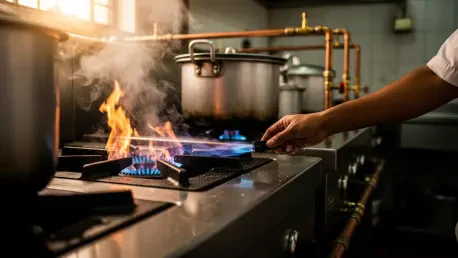

A transformative initiative is recalibrating the role of Chennai’s school cafeterias, turning them from simple meal providers into centers of sustainable energy where yesterday’s leftover food becomes the very fuel for today’s lunch. This program, spearheaded by the Greater Chennai Corporation, represents a practical leap toward a circular economy within an urban educational setting. By installing on-site biogas plants, schools are not only addressing their own waste challenges but are also creating a closed-loop system that enhances environmental and financial resilience.
A Vision for Self Sufficient Campuses
Cities like Chennai grapple with the dual pressures of managing ever-growing mountains of organic waste and the fluctuating costs of commercial fuels. School kitchens, in particular, contribute significantly to the city’s wet waste stream, placing a continuous burden on municipal landfills and sanitation systems.
Simultaneously, educational institutions face tight operational budgets, where expenses for cooking fuel, like Liquefied Petroleum Gas (LPG), represent a recurring and significant cost. The search for a solution that could address both environmental responsibilities and economic constraints became a critical priority for city administrators, paving the way for this innovative approach.
A Blueprint for Turning Kitchen Scraps into Clean Energy
The core mission of the Greater Chennai Corporation’s project is the installation of on-campus biogas plants designed to convert food and vegetable scraps directly into usable cooking gas. The implementation is strategically focused on schools with large, centralized “cloud kitchens,” which prepare meals for numerous institutions and therefore generate substantial waste volumes and have high energy demands.
To ensure the project’s success and community integration, the civic body is collaborating with non-governmental organizations and residents’ welfare associations. A phased rollout is already underway, beginning with a trial of combined composting and biogas units in four key kitchens to demonstrate the model’s effectiveness and low-maintenance operation before wider expansion.
From Pilot Programs to Proven Success
Early results from the program are already validating its potential. A recently installed 75-kg capacity plant at one school now processes up to 20 kg of food waste daily. This small-scale operation yields significant savings, reducing the school’s reliance on commercial LPG by the equivalent of one full cylinder every two months.
This success builds on an earlier ten-month pilot project at another institution that produced even more compelling data. Over that period, the school saved seven LPG cylinders, diverted nearly 3,200 kg of wet waste from city landfills, and generated close to 270 hours of clean-burning gas for its kitchen, providing concrete proof of the concept’s long-term viability.
The Ripple Effect Is More Than Just Cooking Gas
The benefits of this initiative extend far beyond the kitchen. Economically, the direct reduction in LPG consumption eases financial pressures on school budgets, allowing funds to be reallocated to educational priorities. Environmentally, the program provides a decentralized, sustainable solution for organic waste management, lessening the strain on municipal infrastructure.
Furthermore, the biogas process creates a self-sustaining ecological cycle. The nutrient-rich slurry produced as a byproduct is repurposed as natural manure for school gardens, enriching the soil and supporting local food cultivation. These plants also serve as living classrooms, offering students tangible, hands-on lessons in resource conservation, clean energy, and ecological stewardship. The project demonstrated that innovative, localized solutions could effectively tackle widespread urban challenges. This model of converting waste to wealth within educational institutions established a powerful precedent for other cities looking to foster sustainability from the ground up.