
Amid fluctuating petroleum prices and a global push toward sustainability, the search for a cost-effective alternative has turned a renewed focus toward the humble remains of the harvest, like corn stalks and cobs. The central question is no longer just about whether biofuels can be produced, but whether they can ever be produced cheaply enough to rival traditional gasoline at the pump.
The Gas Pump Problem and a Farm Field Solution
The persistent volatility of gas prices poses a significant challenge for consumers and industries alike. This economic uncertainty has intensified the search for stable, domestically produced energy sources. A promising answer may not lie miles underground in oil reserves, but rather in the agricultural waste left in farm fields after harvest, presenting an opportunity to turn plant matter into a reliable fuel.
The High Stakes Race for a Greener Gallon
Historically, biofuels have struggled to break the cost barrier, often remaining more expensive to produce than their fossil fuel counterparts. This economic hurdle has been the primary obstacle to widespread adoption, limiting their role in the national energy portfolio. The quest for affordable biofuels is intertwined with national objectives, including enhancing U.S. energy independence and fostering the growth of the domestic bioeconomy. Recognizing this, the U.S. Department of Energy has committed to funding strategic partnerships designed to dismantle these long-standing cost barriers.
Deconstructing Biomass with a Divide and Conquer Innovation
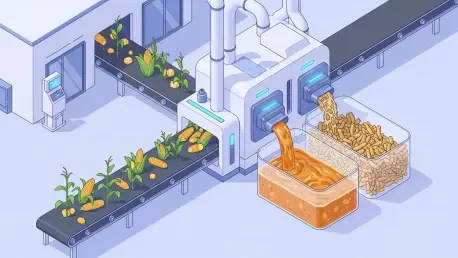
A significant inefficiency in traditional biofuel production stems from processing whole-plant biomass monolithically. This approach treats tough stalks and softer cobs with the same method, leading to wasted energy and suboptimal yields. A new collaboration between Idaho National Laboratory (INL) and Terragia Biofuel Inc. introduces a more intelligent process built on a “divide and conquer” strategy. By separating raw biomass into its distinct components before conversion, each part receives a tailored, highly efficient treatment. This sophisticated preprocessing is made possible by the advanced equipment at INL’s Biomass Feedstock National User Facility (BFNUF).
From the Lab to the Market Through a Validated Breakthrough
For a startup like Terragia, collaborating with a national laboratory provides indispensable validation and credibility needed for a commercial-scale rollout. The primary metric for success is a measurable increase in sugar yields—the fundamental building blocks for biofuels and other biomanufactured products. This efficiency has a powerful economic ripple effect. By increasing the output of valuable sugars from a given amount of feedstock, the overall cost of production decreases, making the entire biotechnology supply chain more competitive.
Charting a Roadmap Toward Cost Competitive Biofuel
The initial phase of the partnership focuses on proving the technology’s performance at INL, confirming its ability to enhance conversion efficiency. The subsequent phase translates these higher yields directly into lower production costs for ethanol and other valuable bioproducts. The ultimate application for this technology extends beyond personal vehicles. This project has charted a clear path for producing cost-competitive synthetic biofuels specifically for sectors where electrification remains a significant challenge, including aviation, rail, and maritime shipping. This breakthrough provided a foundation for powering heavy-duty transportation with a sustainable fuel that could finally compete with petroleum.