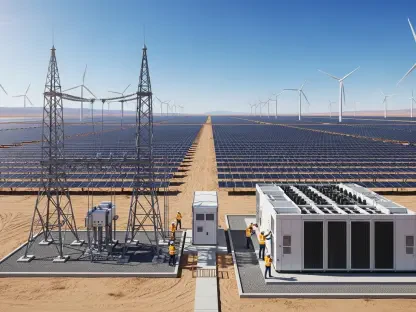

After years of contentious debate, legal battles, and extensive construction, a new era of energy is dawning for New England as a monumental $1 billion transmission line prepares to deliver a massive influx of clean power from Canada. The New England Clean Energy Connect (NECEC) project, a high-voltage direct current line stretching from the U.S.-Canada border to the regional grid in Maine, is poised to begin operations in January. This initiative represents one of the most significant shifts in the region’s energy portfolio in a generation, promising to address long-standing challenges of price volatility, grid reliability, and ambitious climate goals. As the final tests are completed and the system readies for its official launch, the project stands as a testament to a persistent, nearly decade-long effort to reshape how millions of residents power their homes and businesses.
A Landmark Energy Corridor Nears Completion
Navigating a Contentious Path
The journey to bring the New England Clean Energy Connect to life has been anything but smooth, marking a protracted effort that began in 2017. Developed by Avangrid, the project has navigated a labyrinth of regulatory hurdles, legal challenges, and construction delays that tested its viability at nearly every turn. Despite facing significant opposition, the initiative systematically cleared its final legal and permitting obstacles in recent months, setting the stage for its long-awaited operational debut. In preparation for the January launch, teams from both Avangrid and its Canadian partner, Hydro Québec, have been diligently conducting comprehensive tests on the newly installed transformers and transmission infrastructure on both sides of the border. This final phase of commissioning ensures that the system is fully prepared to handle the substantial flow of electricity it was designed for. The activation of this power corridor culminates a complex and often-controversial development process, finally transforming years of planning and construction into a tangible source of energy for the region.
The Québec Connection
At the heart of the NECEC project is a foundational partnership with Hydro Québec, the public utility that will supply the 1,200 megawatts of clean electricity. This massive volume of power, secured under a 20-year contract, will be transmitted directly into the New England power grid, establishing hydropower as one of the region’s largest sources of baseload power. Unlike intermittent renewable sources such as wind and solar, which generate electricity only when conditions are favorable, the hydropower from Québec provides a consistent and reliable flow of energy around the clock. This characteristic is crucial for maintaining grid stability and meeting constant electricity demand. The project itself is a significant feat of engineering, involving the construction of a high-voltage direct current (HVDC) transmission line specifically designed to move large amounts of power over long distances with minimal energy loss. This direct link ensures that the clean energy generated in Canada can efficiently serve consumers hundreds of miles away in states like Massachusetts.
Reshaping the Regional Energy Landscape
Economic Relief and Grid Stability
The introduction of such a substantial new power source is projected to deliver significant economic benefits and bolster energy security across New England. The NECEC is expected to supply approximately 20% of Massachusetts’ total electricity needs, diversifying the state’s energy mix and reducing its heavy reliance on natural gas. This shift is particularly critical during the winter months, when high demand for heating often causes natural gas prices to spike, leading to volatile and expensive electricity bills. By providing a stable, competitively priced alternative, the hydropower line is anticipated to help stabilize evening energy prices and enhance overall grid reliability. For consumers, the project is estimated to generate about $3 billion in net benefits over its lifetime. Annually, it is projected to reduce ratepayer bills by around $50 million, translating to an average savings of approximately $18 to $20 for each resident per year, offering tangible relief in a region known for its high energy costs.
A Leap Forward for Climate Goals
The completion of the NECEC project represented a pivotal moment for New England’s environmental ambitions, offering one of the most impactful decarbonization initiatives the region had seen. The infusion of 1,200 megawatts of hydropower was calculated to displace fossil fuel-based generation, resulting in a substantial reduction of carbon emissions by an estimated 3.6 million metric tons annually. This environmental benefit was comparable to removing nearly 700,000 gasoline-powered cars from the road each year, marking a significant stride toward achieving state-mandated climate targets. For Massachusetts and its neighbors, the project provided a crucial tool for accelerating the transition to a cleaner energy grid. The consistent, large-scale clean power from the NECEC complemented existing renewable sources, creating a more robust and resilient energy system that was less dependent on carbon-emitting power plants and better equipped to meet the environmental challenges of the future.