
Christopher Hailstone is a seasoned expert in energy management and utility infrastructure, renowned for his strategic insights into grid reliability and the complex mechanics of renewable integration. With years of experience navigating the intersection of policy and industrial application, he has become a pivotal voice in the conversation surrounding India’s ambitious journey toward a low-carbon future. In this discussion, we explore the shift from intent to implementation, examining how emerging technologies like green hydrogen and carbon markets are reshaping the industrial landscape while ensuring that economic growth remains tethered to sustainable practices.
India’s energy transition is shifting from initial execution toward full-scale integration. How are policy frameworks and coordination between central and local governments evolving to support this? What specific steps are needed to ensure that technological deployment remains synchronized with the pace of investment flows?
The transition has moved definitively from a phase of intent to one of active implementation, requiring a much tighter alignment between central policy and state-level execution. We are seeing a push for cohesive policy directions and collaborative governance where states must move faster to implement the frameworks announced at the national level to avoid bottlenecks. To keep technology deployment synchronized with investment, we must focus on deepening international partnerships and ensuring that global engagement translates into local scalability. This structured approach is vital because while intent sets the stage, it is the integration of these policies across different levels of government that sustains the confidence of investors and maintains steady economic growth.
Hard-to-abate industries like steel and fertilizers cannot easily use direct electrification. Why is green hydrogen considered the essential solution for these specific sectors? Could you describe the pilot deployments and viability gap support required to lower costs enough for this technology to become a transformative industrial force?
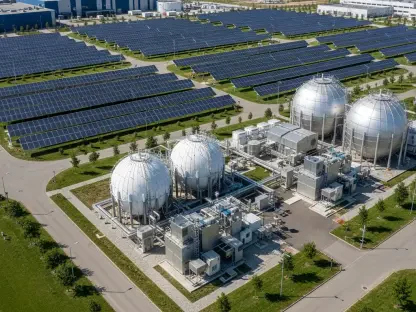
Green hydrogen is a cornerstone of decarbonization because it provides a high-energy density fuel and chemical feedstock that electricity simply cannot replace in sectors like refining, fertilizers, and heavy transport. In these hard-to-abate industries, the chemical properties of hydrogen are necessary for the industrial processes themselves, making it more than just an energy source. To make this technology commercially viable, we are focusing on demand aggregation and specific pilot deployments that test real-world application. Targeted viability gap support is essential during these early stages to cushion the high initial costs, ensuring that as we scale up, the expenses decline and green hydrogen becomes a transformative force across the industrial landscape.
Decarbonization is transitioning from a policy-led initiative to a market-driven one. How can a well-designed carbon trading framework mobilize private investment to bridge the financing gap for net-zero goals? In what ways does this system turn environmental necessity into a tangible competitive advantage for modern businesses?
A robust carbon market serves as the backbone of a transition strategy by creating strong economic signals that make low-carbon choices commercially attractive. By putting a price on emissions, we transform climate ambition into measurable economic action, which helps bridge the massive financing gap by mobilizing private investment at a scale that government funding alone cannot reach. This system allows businesses to turn their emission reductions into tradeable assets, effectively rewarding efficiency and innovation. When decarbonization is integrated into the market logic, it stops being a regulatory burden and becomes a competitive advantage that enhances a company’s standing in an increasingly green global economy.
Economic growth depends on efficiency, renewables, and smart fuel switching rather than just increasing supply. How do we close the gap between energy consumption and GDP creation? What criteria should sectors use to choose between different renewable sources based on their specific infrastructure and national priorities?
The disconnect between energy supply and GDP creation is one of our primary barriers, and closing it requires a focus on three pillars: efficiency, renewables, and smart fuel switching. We shouldn’t just be looking to reduce consumption across the board; instead, we must ensure that each sector is matched with the “right” energy source that fits its specific needs. The criteria for choosing a renewable source must be based on a combination of economic feasibility, the existing infrastructure of the region, and broader national priorities. By optimizing the type of energy consumed based on these specific requirements, we ensure that the energy transition actually strengthens economic growth rather than acting as a drag on it.
Biogas offers a unique pathway for waste management and rural economic growth. How can regions effectively convert agricultural residue into reliable green fuel at scale? What specific policy certainties and clearance processes are necessary to move bioenergy from the pilot stage to a mainstream pillar of the transition?
Biogas represents a massive rural economic opportunity because it simultaneously addresses waste management, farmer income, and stubble management by converting agricultural residue into fuel. To move this from small-scale pilots to a mainstream energy pillar, we need to provide long-term price certainty and assured offtake agreements that give investors confidence. Streamlining the clearance processes is also critical to prevent projects from stalling in administrative loops. With stable policy frameworks and faster approvals, regions can successfully turn organic waste into a reliable green fuel, making bioenergy a fundamental component of the national energy mix.
Adding renewable capacity alone is insufficient without addressing grid congestion and transmission expansion. What are the primary hurdles in fast-tracking power purchase agreements and large-scale storage deployment? How can the energy sector ensure that infrastructure keeps pace with the rapidly rising demand of a growing economy?
The rapid rise in energy demand means that simply building wind or solar farms isn’t enough; we have to focus on the “plumbing” of the system, which includes grid congestion and transmission expansion. One of the biggest hurdles is the timely closure of pending power purchase agreements, which are necessary to de-risk projects and trigger the start of construction. Additionally, we need an urgent, large-scale deployment of energy storage to manage the variability of renewables and ensure grid stability. Infrastructure must be planned with a forward-looking perspective to ensure that the physical capacity to move and store power grows at the same rate as our generation capacity.
The path to net zero involves the structured coexistence of renewables, natural gas, and biofuels rather than a single replacement fuel. How does this multi-fuel approach protect jobs and industrial competitiveness? What role does electrification play in this transition alongside energy efficiency and renewable expansion?
Achieving net zero is not about one fuel instantly replacing another, but about a structured coexistence where renewables, natural gas, and biofuels grow together. This multi-fuel approach is vital for protecting jobs and maintaining industrial competitiveness because it allows for a gradual transition that doesn’t shock the system or leave existing infrastructure stranded. Electrification is a major part of this journey, but it must advance in tandem with energy efficiency and the expansion of renewable capacity to be truly effective. By fostering a diverse energy ecosystem, we prove that sustainability and economic development can advance hand-in-hand without sacrificing the industrial strength of the nation.
What is your forecast for green hydrogen?
I anticipate that green hydrogen will evolve from an expensive niche technology into a dominant industrial commodity that fundamentally reshapes our domestic manufacturing and heavy transport sectors. In the coming years, as we refine demand aggregation and move past the initial pilot phases, we will see a significant cost reduction that makes green hydrogen the primary tool for decarbonizing steel and refining. While it currently addresses the most difficult segments of our energy consumption, its integration will eventually provide a scalable, low-carbon foundation that secures our industrial future. Ultimately, green hydrogen will transition from a policy-supported experiment to a market-driven necessity that defines the next generation of global energy trade.