
A Strategic Jolt: Unpacking the Government’s Endorsement of Ola Electric
In a significant endorsement of domestic manufacturing, Ola Electric has secured a ₹366.78 crore incentive from the Indian government, a move poised to accelerate its ambitious growth plans. This financial infusion, granted under the Production Linked Incentive (PLI) scheme for the automotive sector, is more than just a capital boost; it is a clear signal of the government’s confidence in Ola’s vision to dominate India’s electric vehicle landscape. The payout, directly tied to the company’s sales performance, validates its aggressive market strategy and manufacturing scale. This article will explore the multifaceted impact of this government funding, analyzing whether this strategic partnership can truly supercharge Ola Electric’s journey from a disruptive startup to an undisputed industry leader, while examining the underlying opportunities and the persistent challenges that lie ahead.
The Road to Electrification: India’s Push for a Domestic EV Revolution
To fully appreciate the significance of Ola’s incentive, one must understand the broader national context. India has embarked on an ambitious mission to electrify its mobility sector, driven by the dual goals of reducing its massive oil import bill and combating urban air pollution. The government envisions India not just as a market for EVs but as a global manufacturing hub for them. The Production Linked Incentive Scheme for Automobile and Auto Components (PLI-Auto), with its substantial ₹25,938 crore budget, is the cornerstone of this strategy. Unlike earlier subsidies that focused on consumer demand, the PLI scheme targets the supply side, rewarding companies for increasing domestic production, achieving high levels of local value addition, and investing in advanced automotive technology. This policy shift is designed to build a self-reliant EV ecosystem, from component manufacturing to vehicle assembly, making government support a critical catalyst for companies like Ola Electric that are aligned with this national agenda.
Analyzing the Impact: Opportunities and Obstacles for Ola
Fueling Expansion and Innovation: The Direct Benefits of the PLI Payout
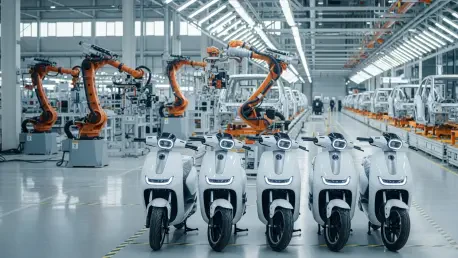
The ₹366.78 crore incentive acts as high-octane fuel for Ola Electric’s growth engine. This capital injection is expected to be channeled directly into key strategic areas, primarily the expansion of its product portfolio and the scaling of its manufacturing capabilities. The company has already announced plans to introduce a range of new electric two-wheelers, including more affordable scooters and a series of electric motorcycles, to capture a wider segment of the market. The funding will de-risk these new ventures, allowing for accelerated research and development and faster production timelines at its sprawling Futurefactory. Furthermore, it strengthens Ola’s commitment to deepening localization. By investing in the domestic supply chain, the company can reduce its dependence on imported components, thereby insulating itself from global supply chain volatility and improving its long-term cost structure.
Beyond the Balance Sheet: Navigating a Competitive and Complex Market
While the government funding provides a significant competitive advantage, capital alone does not guarantee market dominance. Ola Electric operates in a fiercely competitive environment, squaring off against established legacy automakers like Bajaj and TVS, which have their own formidable EV plans, and agile startups like Ather Energy, known for its premium products and robust engineering. Moreover, Ola has faced public scrutiny over product quality, software glitches, and inconsistent after-sales service—critical pain points that can erode consumer trust. The PLI incentive is awarded for past sales success, but future growth hinges on the company’s ability to address these fundamental operational challenges. Sustaining its leadership will require a relentless focus on improving product reliability and building a customer-centric service network, proving that its substance matches its scale.
The Localization Imperative: Strengthening the Supply Chain Ecosystem
A core objective of the PLI scheme is to foster a resilient domestic supply chain, and Ola’s role in this is pivotal. The incentive encourages the company to move beyond mere assembly and invest in the local manufacturing of critical components like battery packs, motors, and electronic control units. This strategic push toward vertical integration not only benefits Ola by giving it greater control over quality and cost but also creates a ripple effect across the entire Indian automotive sector. It stimulates growth for smaller component manufacturers, fosters skill development, and attracts further investment into the EV ecosystem. This symbiotic relationship is central to the government’s vision: as Ola strengthens its local sourcing, it helps build the very industrial foundation that India needs to become a global EV powerhouse, reducing its strategic vulnerability to international suppliers.
The Future Trajectory: What’s Next for Ola and India’s EV Market?
The PLI funding is not an endpoint but a milestone that sets the stage for Ola Electric’s next chapter. This government validation could significantly enhance the company’s attractiveness to private investors and may serve as a catalyst for its much-anticipated Initial Public Offering (IPO). Looking forward, the company’s ambition extends far beyond two-wheelers, with plans for an electric car and the establishment of a large-scale battery cell manufacturing Giga factory. The success of the PLI-Auto scheme may also influence future government policies, potentially leading to similar support for battery production and the expansion of a nationwide charging infrastructure. As Ola continues to scale, its journey will serve as a litmus test for India’s ability to create and sustain a globally competitive EV champion, shaping the trajectory of the entire industry for years to come.
Strategic Imperatives: Maximizing the Momentum from Government Support
The government’s financial backing has provided Ola Electric with powerful momentum, but translating this into sustainable leadership requires clear strategic execution. For Ola, the key takeaway is to deploy this capital not just for expansion but to fundamentally enhance its core operations. The focus must be on perfecting product quality, investing in a world-class customer service infrastructure, and fortifying its supply chain. For policymakers, the success of this incentive highlights the need for consistent, long-term support that encompasses the entire EV ecosystem, including charging networks and battery recycling. For competitors, Ola’s success raises the bar, demonstrating that scale, aggressive pricing, and deep domestic manufacturing are now essential ingredients for success in the Indian EV market.
The Final Verdict: A Supercharge with Conditions
Ultimately, the government’s funding is a definitive supercharge for Ola Electric, but one that comes with conditions attached to performance and execution. The incentive provides the financial firepower to accelerate expansion, deepen localization, and out-innovate competitors. It validates the company’s high-risk, high-reward strategy and aligns it with India’s national ambitions. However, this tailwind does not negate the persistent headwinds of intense competition and the operational imperative to deliver on quality and customer trust. The funding has unlocked the door to the next level of growth; it is now up to Ola Electric to navigate the road ahead with precision and resilience. How this partnership between public policy and private enterprise unfolds will likely define the future of electric mobility in India.