
Christopher Hailstone has spent decades at the forefront of energy management and grid reliability, navigating the complex intersection of traditional utility infrastructure and the aggressive shift toward renewable energy. As an expert in electricity delivery and grid security, he has monitored the evolution of the power system from its fossil-fuel origins to the current “Herculean task” of a nationwide rewiring project. With over £60 billion earmarked for the first stage of this transition, Hailstone provides a critical perspective on the technical, social, and economic hurdles of modernizing a system that was largely designed a century ago.
The following discussion explores the logistical complexities of installing high-voltage lines across rugged terrain, the friction between national infrastructure needs and local preservation, and the engineering risks of subsea “bootstrap” cables. We also delve into the financial impact of grid bottlenecks, the debate over centralized versus decentralized energy models, and the efficacy of community compensation schemes in securing public support for the transition.
Transitioning from centralized fossil fuel plants to remote renewable sources requires a $75 billion initial investment. How are engineers managing the logistical hurdles of installing 400,000-volt lines across rugged, mountainous terrain? What specific technical milestones must be met to ensure the grid can handle future electric vehicle and home heating demands?
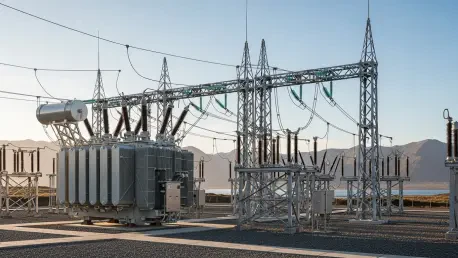
Managing a project of this magnitude across the Highlands and islands is what many are calling the biggest “plumbing and repurposing” of our energy system in generations. Engineers are currently tasked with erecting over 1,100 massive pylons across 460 kilometers of some of the most challenging landscapes in the north of Scotland. To handle 400,000 volts, we aren’t just looking at height, but at the sheer durability of the structures against extreme weather and rugged terrain. The first technical milestone is completing the £22 billion high-voltage rewiring of the north within the next five years to replace fossil fuel dependency. Beyond that, the grid must be reinforced to support a massive surge in demand as households ditch gas boilers and petrol cars for electric alternatives. This involves not just the “superhighway” of transmission lines, but also the “local roads” of the distribution network, where we are seeing companies like Scottish Power aiming to build one new substation every single month for the next six years.
Constructing over a thousand massive pylons across scenic landscapes often triggers significant local pushback and decades-long delays. How can planners better balance the need for national infrastructure with the preservation of tourism and local aesthetics? What specific design modifications or alternative routing strategies have proven most effective in reducing community friction?
The tension is palpable because we are talking about iconic landscapes, like the routes through Strath Halladale, which are regarded as some of the most scenic in the world. We’ve learned hard lessons from previous projects, such as the Beauly to Denny line, which was delayed for 14 years due to intense opposition. Planners are now using a robust system that deliberately forces routes away from the most precious and sensitive landscapes, though some impact remains unavoidable for critical infrastructure. Design modifications include “sensitive routing” and extensive mitigation strategies, even though these additions often increase the project’s cost, which is eventually passed to consumers. However, the most effective strategy is early and genuine community engagement to ensure locals don’t feel “railroaded” by a policy juggernaut, though many residents still feel their voices are being sidelined in favor of national objectives.
Subsea cables spanning hundreds of miles are being laid to connect northern power generation with southern industrial demand. What are the primary engineering risks associated with these underwater links compared to traditional overland pylons? How does the maintenance of these “bootstrap” cables impact the long-term reliability and cost-efficiency of the energy grid?
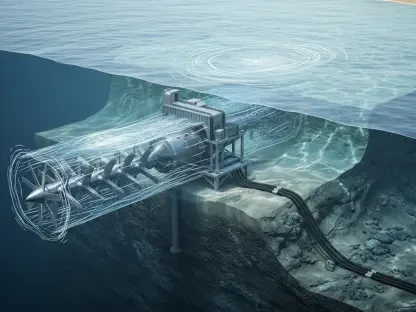
The subsea approach is a fascinating alternative to overland pylons, exemplified by the £4 billion project involving two 315-mile cables running from Peterhead to Yorkshire. These “bootstrap” cables are designed to bypass land-based bottlenecks, but they face unique risks such as anchor strikes, shifting seabeds, and the high cost of deep-sea repairs compared to simply driving a truck to a pylon. While these links can power up to 7.5 million homes, their maintenance is specialized and expensive, requiring dedicated vessels and favorable weather windows. Over the long term, these cables are essential for cost-efficiency because they help move vast amounts of renewable power directly to southern industrial hubs. Without them, we simply cannot meet the capacity requirements of a net-zero system, and their reliability is a cornerstone of the planned four-cable network along the east coast.
Bottlenecks currently force grid operators to pay billions to wind farm operators to stop generating power when the system is overloaded. How will the new infrastructure specifically eliminate these constraint payments and stabilize rising electricity bills for commercial users? What metrics are being used to determine if the investment will lower household costs?
It is a staggering inefficiency that we currently pay £2.1 billion annually in “constraint payments” to wind farm operators to essentially unplug because the grid can’t handle the load. These new high-voltage lines are specifically designed to widen those bottlenecks, allowing northern wind power to flow freely to the south instead of being wasted. By reducing these payments, we remove a hidden cost that currently accounts for one out of every £40 on a consumer’s bill. Success is measured by the reduction in these “system balancing” costs and the stability of transmission charges, which are currently volatile. While transmission costs for businesses are jumping by 60% this April, the long-term goal is to move away from expensive gas-fired backup generation, which protects families from the price shocks often caused by international conflicts.
Critics argue that building energy sources closer to where people live would be more efficient than constructing long-distance transmission lines. What are the practical trade-offs between a centralized high-voltage grid and a decentralized model featuring small nuclear plants or local wind farms? How does each approach affect national energy security?
This is the “point of need” debate, and it carries significant weight among community councils who question why we are building 400-mile lines instead of local generation. A decentralized model using small nuclear reactors or local wind farms could theoretically reduce the need for massive pylons and lower transmission losses. However, the practical trade-off is one of scale and speed; the current policy focuses on the massive, untapped wind potential in the north and offshore, which requires a centralized high-voltage backbone to be viable. From a security perspective, a centralized grid allows for a more resilient national balance, moving power where it’s needed during local outages. Conversely, a decentralized model offers “islanded” security, but lacks the sheer muscle needed to power heavy industry and massive urban centers without a massive, coordinated overhaul of local distribution.
New guidelines offer financial compensation and annual bill reductions for residents living within 500 meters of high-voltage lines. Are these incentives sufficient to gain local support for disruptive construction projects? Beyond direct payments, what community engagement strategies or shared ownership models could help residents feel like partners in the energy transition?
The current guidelines, which offer £250 a year off electricity bills for ten years to those living within 500 meters of a line, are often seen as a drop in the ocean compared to the perceived loss of property value or landscape beauty. We are also seeing “mandated benefits” where a 100km route could trigger £23 million in community payments, yet many argue this feels more like a payoff than a partnership. There is a growing movement, even within governing parties, to explore shared ownership models where communities actually own a stake in the infrastructure or the generation assets. Moving beyond direct payments toward a model where locals see a direct, tangible dividend from the energy produced on their doorstep is likely the only way to turn “affected residents” into “invested partners.”
From April, the transmission portion of electricity bills is expected to rise by over 60% for some business customers. How should industries prepare for these sudden price hikes while the grid is still under construction? What role do incentives for off-peak power usage play in balancing the system and reducing the need for expensive new cabling?
Industries are facing a significant pinch, with total bills likely rising by 5% to 10% just from the transmission hike. To prepare, businesses must look at demand-side response—shifting their most energy-intensive operations to times when the grid is less congested. We are entering an era of “incentivized usage,” where trials are allowing wind farms to offer cheaper power to nearby users instead of shutting down during bottlenecks. This is a crucial tool; if we can encourage data centers or heavy manufacturers to locate near northern power sources or use power during “green peaks,” we reduce the need to “over-engineer” the grid with even more expensive cabling. Balancing the system through these behavioral incentives is the only way to keep the “Herculean task” of rewiring from becoming an infinite drain on the economy.
What is your forecast for the future of the national power grid?
I see a grid that will eventually be defined by its intelligence rather than just its iron and copper. While we are currently in a “brute force” phase of building thousands of pylons and hundreds of substations, the long-term success will depend on a sophisticated, digitalized system that balances supply and demand in real-time. We will see a shift where energy-hungry industries migrate toward the north to take advantage of localized surpluses, fundamentally changing the industrial geography of the country. However, the path there will remain rocky; the “first phase” of this transition is already stretching our resources and public patience to their limits. If we can successfully integrate subsea “bootstraps” with smarter local incentives, we will have a world-class system, but the next decade will be a period of significant construction fatigue and economic adjustment for every bill-payer.