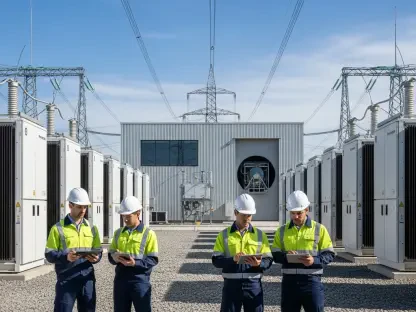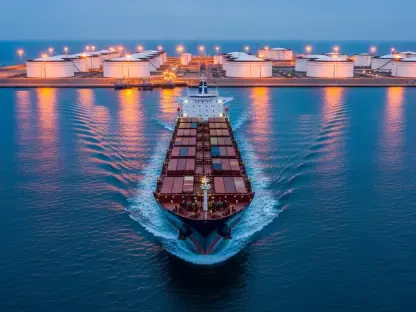

The global energy sector is currently navigating a precarious balancing act where the rapid adoption of renewable fuels often outpaces the structural resilience of the infrastructure designed to hold them. As the industry pivots from conventional petroleum toward renewable diesel and sustainable aviation fuel (SAF), the containers themselves have become a silent battleground for chemical stability. This review examines how recent innovations in storage technology are addressing the volatile nature of bio-based feedstocks, ensuring that the shift toward green energy does not result in catastrophic containment failures.
Evolution and Significance of Biofuel Storage Infrastructure
The transition to biofuels is not a simple matter of swapping liquids; it represents a fundamental change in the chemical environment of storage terminals. Unlike the relatively stable hydrocarbons found in fossil fuels, modern biofuel feedstocks are derived from organic materials such as recycled cooking oils, tallow, and plant-based lipids. These substances are inherently more reactive, requiring a storage infrastructure that can withstand biological and chemical degradation over extended periods.
This technological evolution is critical because the existing global network of steel tanks was largely designed for inert crude products. As the market expands significantly through 2028, the ability to repurpose this legacy infrastructure determines the economic feasibility of the energy transition. Without advanced protective barriers, the industry would face the prohibitive cost of building entirely new facilities, making the development of specialized coatings a cornerstone of sustainable logistics.
Chemical Dynamics and Material Compatibility
Chemical Vulnerability of Traditional Tank Linings
Traditional tank linings, often based on standard epoxy formulations, were engineered to repel water and simple hydrocarbons. However, biofuels are essentially “living substances” that contain complex fatty acids. When these lipids decompose, they release aggressive chemical agents that can permeate standard polymer matrices. This interaction leads to swelling, softening, and eventual delamination of the lining, leaving the underlying carbon steel vulnerable to rapid oxidation.
The challenge is exacerbated by the diverse nature of feedstocks. A tank might hold soy-based oil one month and used cooking oil the next, each possessing a unique chemical profile. This variability requires a lining with broad-spectrum resistance that can neutralize a wide array of organic acids. Modern research focuses on creating more densely cross-linked polymer structures that act as a microscopic sieve, preventing large fatty acid molecules from reaching the steel substrate while maintaining flexibility under thermal stress.
Vapor Phase Corrosion and Rancidification
One of the most insidious threats to storage integrity occurs not in the liquid itself, but in the space above it. When lipid-based feedstocks are exposed to air at high temperatures, they undergo rancidification, a process that generates volatile organic acids. These vapors, specifically acetic and formic acids, condense on the roof and upper walls of the tank. This “top-down” corrosion is often more severe than the damage seen on the tank floor because the acids are highly concentrated in the condensate.
Because traditional linings were often only applied to the bottom sections of tanks to save costs, the emergence of vapor phase corrosion has necessitated a “full-envelope” approach to protection. Engineers are now forced to consider the entire interior surface of the storage unit as a high-risk zone. The shift toward total-encapsulation linings reflects a deeper understanding of how biofuels interact with the atmosphere, moving beyond simple liquid immersion testing to a comprehensive analysis of the tank’s internal microclimate.
Advancements in Evaluation and Testing Methodologies
The methodology for certifying these technologies has undergone a radical transformation. For decades, the industry relied on six-month static exposure tests, where a material was submerged in a chemical and left undisturbed. Early results from these tests were alarming, suggesting that biofuels would destroy almost any lining within years. However, these results were misleading because they ignored the operational reality of modern refineries where product turnover is exceptionally high.
In actual industrial settings, biofuels rarely sit idle for more than three weeks. To reflect this, experts have pioneered “cyclic testing” protocols. These simulations involve draining and replenishing the storage environment, mirroring the high turnover rates of active terminals. This approach has revealed that many advanced coatings are far more durable than previously thought, as the periodic introduction of fresh product alters the chemical equilibrium and slows the accumulation of destructive decomposition byproducts.
Industrial Deployment and Infrastructure Adaptation
The real-world application of these high-performance linings is currently facilitating a massive wave of refinery conversions. By applying next-generation coatings to existing steel tanks, companies can transition from fossil fuels to renewable diesel without the capital expenditure of new construction. This adaptability is particularly vital for midstream operators who need to remain agile as market demands shift between different fuel types.
Moreover, the deployment of these materials provides a level of economic security. By extending the service life of a tank through better chemical resistance, facility owners reduce the frequency of maintenance shutdowns. In a high-demand market, the ability to keep a storage terminal operational for years without needing a relining project provides a significant competitive advantage, directly linking material science to the profitability of the green energy sector.
Operational Hurdles and Risk Mitigation
Despite these advances, significant hurdles remain, particularly regarding the risk of pitting corrosion. This localized form of damage can create pinhole leaks in a tank wall even if the rest of the lining appears intact. Detecting these failures in legacy materials is difficult, often requiring sophisticated ultrasonic testing. The technical limitation lies in the fact that many older tanks were not designed for the rigorous surface preparation required for modern, high-solid epoxies.
To mitigate these risks, development efforts are now focusing on “surface-tolerant” coatings that can bond effectively even to older, slightly degraded steel. There is also an ongoing push to refine our chemical understanding of how different feedstocks interact when blended. By creating resilient protective barriers that are less sensitive to application conditions, the industry is working to minimize human error during the critical phase of infrastructure upgrading.
Future Trajectory of Biofuel Containment Solutions
The horizon for biofuel storage involves the integration of smart materials and even more robust chemical-resistant polymers. We are likely to see the emergence of linings embedded with sensors that can detect chemical penetration in real-time, allowing operators to address issues before structural integrity is compromised. Such proactive monitoring would revolutionize energy security by virtually eliminating the risk of environmental contamination from storage leaks.
Furthermore, as global transport logistics continue to evolve, the demand for sustainable aviation fuel will drive the need for even higher purity standards. Future containment solutions will not only need to protect the tank from the fuel but also protect the fuel from the tank. This dual-requirement will lead to the development of ultra-inert surfaces that prevent any metallic contamination of the biofuel, ensuring that the energy reaching the engines is as clean as possible.
Summary and Final Assessment
The evolution of biofuel storage technology demonstrated that the primary obstacle to the green energy transition was not the fuel itself, but the lack of compatible containment systems. By moving toward cyclic testing protocols and full-envelope linings, the industry successfully bridged the gap between legacy infrastructure and modern chemical requirements. These advancements proved that with the right material science, the existing global network of storage terminals could be salvaged and repurposed for a sustainable future.
The final assessment of this technological shift indicated that the most effective strategy for long-term reliability involved a total departure from static testing in favor of operational realism. This change in perspective fostered a new level of confidence in biofuel logistics, allowing for a more aggressive expansion of renewable diesel and SAF programs. Ultimately, the development of specialized protective barriers provided the structural backbone necessary for the global shift toward sustainable energy, ensuring that the containers of the future were as innovative as the fuels they held.