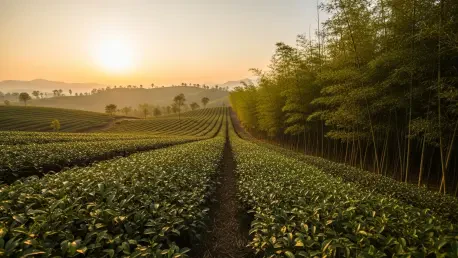

From Tea Leaves to Bamboo Shoots: A New Lifeline for an Old Industry
The sprawling, emerald-green landscapes of Assam, long synonymous with the world’s finest tea, are undergoing a quiet yet profound transformation as the familiar tea bushes begin to share their soil with the towering stalks of bamboo. This strategic shift is more than just agricultural diversification; it represents a critical lifeline for a legacy industry grappling with the converging pressures of a changing climate and an evolving global economy. For generations, tea has been the lifeblood of this region, but now, the rustle of bamboo leaves heralds a new economic chapter.
This pivot toward bamboo cultivation is a calculated response to mounting adversity, offering tea estates a chance to build resilience and secure their future. By integrating a fast-growing, in-demand resource, the industry is not merely supplementing its income but also aligning itself with a more sustainable model of land use and energy production. This move signals a deliberate effort to weave a new thread of innovation into the rich tapestry of Assam’s agricultural heritage, ensuring its continued relevance.
The Wilting Fortunes of Assams Tea Hegemony
For decades, Assam’s tea industry enjoyed a position of global dominance, but its reign has been increasingly challenged by a host of modern-day adversities. The economic foundations of the tea estates have been steadily eroded by spiraling production costs, which include rising wages and the expensive inputs required for cultivation. These financial strains are compounded by persistent labor shortages, as younger generations seek opportunities beyond the traditional confines of the tea gardens.
Furthermore, the very climate that once perfected Assam’s tea is now becoming one of its greatest threats. Erratic rainfall patterns, prolonged droughts, and increased pestilence—all symptoms of a changing climate—have led to unpredictable yields and diminished quality, striking at the heart of the industry’s profitability. Faced with this confluence of economic and environmental instability, the urgent need for diversification became undeniable, pushing the tea gardens to look beyond their traditional crop for survival.
The Catalysts for Change: Policy and Industrial Innovation
The transition from a tea monoculture to a more diversified agricultural model did not happen in a vacuum; it was spurred by a powerful combination of industrial demand and enabling government policy. These key drivers converged to create the perfect conditions for bamboo to emerge as a viable and attractive alternative for the region’s beleaguered tea estates.
The Numaligarh Bioethanol Plant: A Ready Market
The most significant catalyst has been the establishment of the Numaligarh bioethanol plant, a pioneering venture operated by Assam Bio Ethanol Private Limited (ABEPL). As India’s first commercial-scale facility to produce second-generation bioethanol from bamboo, it has created a massive, reliable, and localized demand for the raw material. The plant requires an astonishing 500,000 metric tonnes of green bamboo annually, offering a guaranteed market that simply did not exist before. This industrial anchor provides the economic incentive necessary for tea gardens to invest in a new crop.
A Landmark Legal Amendment
Industrial demand alone would have been insufficient without a corresponding change in regulation. The crucial breakthrough came in August 2022 with a landmark amendment to the Assam Fixation of Ceiling on Land Holding Act of 1956. This legislative change was a game-changer, permitting tea gardens to allocate up to five percent of their vast land holdings for non-tea activities. This freed up thousands of hectares of land, providing the legal framework for estates to officially and confidently begin planting bamboo without jeopardizing their core operations.
Forging a New Supply Chain
To ensure the success of this new ecosystem, ABEPL has actively worked to build a robust and supportive supply chain. The company established a network of local chipping centers to process the bamboo and implemented a system of prompt payments to suppliers, building trust and ensuring financial stability for cultivators. Moreover, to encourage widespread adoption, ABEPL initiated a program to distribute millions of free Bambusa tulda saplings, removing a significant barrier to entry for both smallholder farmers and large tea estates alike.
A Symbiotic Solution for a Sustainable Future
The partnership between the Numaligarh bioethanol plant and the Assam tea gardens represents a uniquely symbiotic relationship where the needs of one are perfectly met by the resources of the other. The plant’s immense appetite for bamboo created a supply gap that individual farmers, despite their best efforts, struggled to fill. This is where the tea estates, with their extensive, contiguous land holdings, stepped in as the ideal solution.
These historic estates possess not only the required land but also the established infrastructure and agricultural expertise to undertake large-scale cultivation. By converting underutilized or marginal lands to bamboo plantations, the tea gardens can meet the plant’s demand in a way that is both efficient and scalable. This arrangement allows the bioethanol facility to secure its feedstock while providing the tea industry with a much-needed, stable new revenue stream.
The Current State of Cultivation
Since the legal frameworks were put in place, adoption has been steadily gaining momentum across the tea estates located within the plant’s 300-kilometer sourcing radius. The initial wave of bamboo planted in the wake of the 2022 amendment is now reaching maturity, as the crop takes approximately four years to be ready for its first harvest. This marks a critical milestone, as the first returns on this long-term investment are beginning to be realized.
The ultimate ambition is to bring 12,500 hectares under bamboo cultivation to sustainably feed the bioethanol facility, a target that the tea gardens are well-positioned to help achieve, if not fulfill entirely. This ongoing cultivation represents a patient but deliberate investment in a greener, more economically diverse future for the entire region. The sight of young bamboo groves rising alongside legacy tea bushes is now becoming an increasingly common symbol of this agricultural evolution.
Reflection and Broader Impacts
This strategic shift toward bamboo cultivation is more than a simple business decision; it is a transformative movement with far-reaching implications for Assam’s economy, environment, and agricultural identity. As the project matures, its full impact is becoming clearer, revealing a complex picture of both tremendous opportunity and significant challenges that must be navigated.
Strengths and Challenges
The primary strength of this initiative lies in its ability to build economic resilience. By diversifying their income, tea estates can better withstand the volatility of the global tea market and the impacts of climate change. Simultaneously, the focus on bamboo for bioethanol production contributes to India’s sustainable energy goals. However, the four-year maturation period for bamboo requires significant upfront investment and patience, a potential hurdle for estates already facing financial strain. Ensuring widespread and consistent adoption across the industry remains a key challenge to meeting the plant’s massive demand.
Broader Impact
The broader impact of this pivot could be profound, potentially reshaping Assam’s entire agri-economy by creating a new, circular economic model centered on sustainable resources. This initiative serves as a powerful template for other agricultural regions in India facing similar pressures, demonstrating how a legacy industry can innovate to remain viable. By successfully integrating bamboo into its landscape, Assam is not only securing the future of its iconic gardens but also making a substantial contribution to India’s national biofuel objectives and its transition toward a greener economy.
Harvesting a New Era for Assam
The integration of bamboo farming into Assam’s tea estates marks the dawn of a new era, one defined by the fusion of a storied past with a sustainable, forward-looking enterprise. This pivot represents a pragmatic adaptation, where the deep-rooted agricultural wisdom of the tea industry is being applied to cultivate a resource that promises both economic stability and environmental benefits. What is unfolding in Assam is a powerful story of resilience, innovation, and foresight.
This strategic shift does more than just add a new revenue stream; it reimagines the purpose and potential of the land itself. By harvesting bamboo alongside tea, Assam is cultivating a future where its iconic gardens are not only preserved as cultural treasures but are also active participants in a modern, sustainable economy. This harmonious blend of tradition and innovation ensures that the region’s verdant landscapes will continue to thrive for generations to come.