
The sudden, crippling spike in global energy prices following Russia’s 2022 invasion of Ukraine was not an unforeseen anomaly but a predictable consequence of an economic system built upon the inherent volatility of fossil fuels. This event served as a stark demonstration of how decisions made in one capital can trigger economic instability thousands of miles away, turning household utility bills into a frontline of geopolitical conflict. The crisis forced a global reevaluation, moving the conversation about renewable energy from the realm of environmental policy squarely into the heart of national security strategy.
This reassessment is based on a fundamental truth revealed by recent history: when a nation’s economic health is tethered to the fluctuating price of internationally traded oil and gas, its prosperity and security are perpetually at risk. These vulnerabilities are not theoretical; they manifest as rampant inflation, industrial shutdowns, and immense pressure on governments to shield their populations from price shocks originating from distant conflicts or deliberate supply manipulation. Consequently, the transition toward clean energy is increasingly viewed not just as a climate imperative but as an essential doctrine for national defense, resilience, and sovereignty.
When War in Europe Inflates Global Power Bills
The 2022 invasion of Ukraine provided a definitive case study in the weaponization of energy. As Russia drastically curtailed natural gas flows to Europe, what began as a regional military conflict rapidly escalated into a continent-wide economic crisis. Energy prices skyrocketed, compelling governments to enact emergency measures and subsidies costing hundreds of billions of dollars. For ordinary citizens and industries, the consequences were direct and severe, arriving in the form of inflated power bills and runaway inflation that eroded savings and crippled businesses.
This turmoil underscored the interconnected nature of global fossil fuel markets, proving that no import-dependent nation is truly insulated from such shocks. A disruption in one part of the world creates a ripple effect across the entire system. Countries found themselves competing for limited supplies, driving prices even higher and demonstrating that energy security is a collective vulnerability. The crisis illustrated that as long as electricity prices are determined by the marginal cost of internationally traded gas, national economies remain hostages to geopolitical events far beyond their control.
The Achilles Heel of Modern Nations
The dependency on fossil fuels represents a systemic vulnerability, an Achilles’ heel for even the most powerful nations. This reliance grants disproportionate leverage to resource-rich states, which can manipulate supplies for political gain, and exposes critical supply lines to disruption. The geopolitical risks are baked into the system, creating a constant state of precariousness where economic stability can be threatened by a single political decision or a localized conflict along a major trade route.
This vulnerability was highlighted again by the missile and drone attacks in the Red Sea during 2025. The disruption in this critical chokepoint forced oil and gas tankers into a 3,500-mile detour around Africa, adding approximately $1 million in fuel costs per round trip and causing maritime insurance premiums to triple. These costs were not simply absorbed by energy companies; they were passed directly to consumers. In nations like the United Kingdom, wholesale gas prices spiked by 20%, and petrol prices at the pump rose almost instantly, reinforcing the lesson that geographic distance offers no protection from the economic fallout of insecurity along fossil fuel supply chains.
A New Defense Doctrine Built on Resilient Energy
In stark contrast to the vulnerabilities of fossil fuels, renewable energy sources offer an entirely new paradigm for national security. A fundamental strategic advantage is their inherent invulnerability to traditional forms of aggression. An army cannot seize sunlight, a navy cannot blockade the wind, and a foreign power cannot halt the flow of a river within another nation’s borders. This physical reality fundamentally alters the security calculus, shifting the foundation of energy from finite, contestable resources to infinite, localized ones.
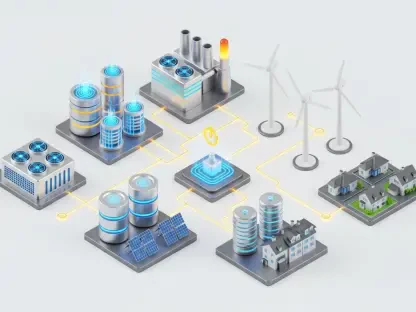
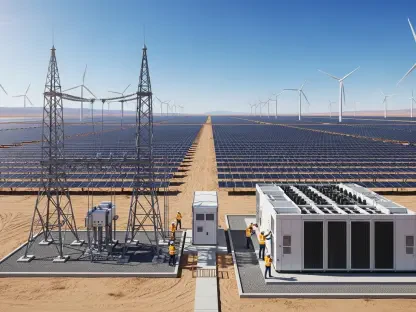
Moreover, renewables facilitate the development of a decentralized and resilient energy infrastructure. Instead of relying on a few large, centralized power plants that act as single points of failure, a nation can build a distributed network of thousands of generation and storage assets. This network, comprising offshore wind farms, utility-scale solar fields, rooftop solar panels, batteries, and microgrids, is significantly more difficult for an adversary to cripple. The conflict in Ukraine has provided a powerful proof of concept, where decentralized solar and battery systems have kept clinics, communication hubs, and other critical services operational even after large-scale grid infrastructure has been destroyed.
The Overwhelming Financial Case for Clean Energy
The strategic arguments for renewables are powerfully reinforced by an undeniable economic reality: clean energy is now the cheapest form of new electricity generation in most of the world. This is not a future projection but a present-day fact. A 2024 finding from the International Renewable Energy Agency (IRENA) confirmed that 91% of newly commissioned utility-scale renewable capacity generated power more affordably than the least expensive new fossil-fuel alternative. This economic advantage is accelerating a global shift driven by pragmatism as much as policy.
This momentum is creating a “coalition of the doing,” where nations are acting to secure their economic futures. At COP29, over 170 countries and organizations pledged to massively scale up energy storage and grid infrastructure by 2030, recognizing them as critical enablers of the transition. Real-world examples abound. California, a major global economy, now sources over half its electricity from zero-carbon sources, a move that is increasingly insulating its businesses and consumers from volatile natural gas prices. Similarly, industrial powerhouses like South Korea are rapidly divesting from coal, not only for environmental reasons but to protect their manufacturing competitiveness from unpredictable fossil fuel costs.
From Dependency to Dominance
A common counterargument suggests that shifting to renewables merely trades one form of dependency for another, namely on imported components and critical minerals for solar panels, wind turbines, and batteries. While the current concentration in these supply chains is a valid concern that requires strategic diversification, this new dependency is fundamentally different and less pernicious than the reliance on fossil fuels.
The key distinction is that the reliance on renewable components is “front-loaded.” A nation makes a one-time purchase of equipment that enables decades of domestic energy generation with zero fuel cost. This is a capital investment in permanent energy independence. In contrast, dependence on oil and gas is perpetual and transactional; a barrel of oil is bought, consumed, and must be replaced the next day, creating a never-ending cycle of financial outflow and geopolitical vulnerability. The long-term strategic advantage clearly lies in building and owning the infrastructure for domestic energy production.
In the final analysis, the geopolitical shocks of recent years provided an undeniable verdict on the risks of the old energy system. They revealed that true national security in the 21st century required a foundational shift in how nations power their economies. Global leaders came to re-conceptualize renewables, energy storage, and grid interconnection not merely as elements of climate policy, but as essential defense infrastructure. The recognition dawned that doubling down on these technologies was the most effective path for nations to become safer, more resilient, and far less vulnerable to the coercive tactics of a volatile world.