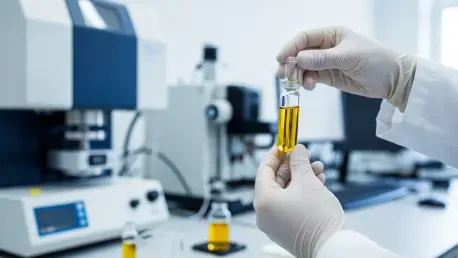

Today we’re joined by Christopher Hailstone, a leading expert in energy management and renewables, whose work on grid reliability and utility systems gives him a unique perspective on the entire energy chain. We’ll be exploring the critical, often unseen, world of biofuel quality assurance. Our conversation will delve into how international laboratories collaborate to maintain high standards, the flexibility required to test everything from raw cooking oil to finished biodiesel, and the future trends shaping the industry’s benchmarks.
The round robin program allows laboratories to anonymously compare their results with over 50 others worldwide. Could you walk me through how this anonymous comparison process works in practice and share a specific example of a performance improvement a lab has achieved through this feedback?
It’s a beautifully simple yet powerful system. AGQM sends out identical, homogenized samples of biodiesel or feedstock to every participating lab, from a small facility in Southeast Asia to a major corporate lab in Germany. Each lab runs its tests and submits the data back. AGQM then collates all this information and provides each participant with a report showing their result as a data point among the anonymized results of over 50 other labs. You can see precisely where you fall relative to the consensus value without anyone knowing your specific identity. I recall one lab that consistently reported slightly off-spec results for total contamination. Seeing their data as a clear outlier in the round robin report was the catalyst they needed to investigate their filtration and sample handling procedures, which they discovered were flawed. In the next round, they were right on the mark, a direct result of that anonymous, objective feedback.
With a modular structure offering 124 different parameters, participants can select tests relevant to their work. How does this flexibility benefit labs with diverse specializations, and which parameters, such as saturated monoglycerides or cetane number, are most critical for ensuring compliance with standards like EN 14214?
This modularity is absolutely essential. The bioenergy world isn’t a monolith; you have labs that specialize only in raw materials like vegetable oils, and others that focus exclusively on the final, market-ready FAME. The ability to choose from 124 parameters across eight sections means a lab isn’t paying for or wasting time on tests outside its scope. It’s about precision and efficiency. For compliance with a rigorous standard like EN 14214, certain parameters are non-negotiable. The cetane number is paramount as it directly relates to ignition quality and engine performance. Likewise, saturated monoglycerides are critical because they can crystallize at low temperatures and clog fuel filters, a major operational hazard. Getting these right isn’t just about passing a test; it’s about guaranteeing the fuel will perform reliably and safely in a vehicle.
The program is introducing a 120°C oxidation stability test in 2025 and will place a special focus on used cooking oils in 2026. What industry trends are driving these specific updates, and what steps should labs be taking now to prepare for these evolving benchmarks?
These updates are a direct response to where the industry is heading. The push for the 120°C oxidation stability test reflects the demand for more robust biofuels that can withstand longer storage and more demanding engine conditions. It’s a way of stress-testing the fuel’s shelf life. The major focus on used cooking oils in 2026 is driven by the global push for circular economies and advanced biofuels. UCO is a key feedstock, but its quality is inherently variable. It can be a real headache to work with. For labs, the message is clear: start preparing now. For the new oxidation test, they should be validating the method on their equipment. For the UCO focus, they need to sharpen their skills in identifying a wider range of potential contaminants and inconsistencies that you just don’t see in virgin vegetable oils.
Your close cooperation with the German standards body DIN is a key feature. How does this partnership directly influence the design of the round robin tests, and what tangible advantages does it provide to international laboratories trying to align their methods with established industry standards?
The partnership with DIN’s Technical Committee for Mineral Oil and Fuel Standardization (FAM) is foundational to the program’s credibility. It ensures that the round robin tests aren’t just an academic exercise; they are designed and vetted by the same body that helps write the official standards. This means the test parameters and methodologies are directly aligned with what regulators and the market demand, particularly with standards like EN 14214. For an international lab, this is invaluable. Participating gives them a direct line of sight into European quality expectations and proves they can perform to that benchmark. It’s a tangible way to demonstrate competence and build trust with international partners, essentially showing that their measurements speak the same language as the German standards.
Since the quality of raw materials like used cooking oils is vital, what are the most common analytical challenges labs encounter when testing these feedstocks? Please describe how participating in this program helps them overcome these specific quality control hurdles before the oils are used for production.
Used cooking oils are a challenge because their history is a mystery. Unlike pristine vegetable oil, UCO can contain everything from excess water and free fatty acids to leftover food particulates and polymers from frying. The biggest hurdle for labs is this sheer variability and the presence of unexpected contaminants. One batch might be clean, the next might be problematic, and this inconsistency can wreak havoc on the biodiesel production process if not caught early. By participating in the “Vegetable and Used Cooking Oils” round robin, labs get standardized, pre-tested samples that mimic these real-world challenges. It allows them to benchmark their methods for detecting these exact contaminants. It’s like a dress rehearsal that hones their ability to spot trouble, helping them perfect their quality control gates before a bad batch of oil ever enters the refinery.
What is your forecast for the biodiesel quality assurance sector?
I foresee the sector becoming even more data-driven and focused on non-traditional feedstocks. As we move deeper into the circular economy, the ability to rapidly and accurately characterize diverse waste streams like UCOs, animal fats, and even algae oils will be the defining skill. We’ll see a greater demand for real-time analytics and more sophisticated tests to screen for a wider array of trace contaminants. Programs like this round robin will become even more crucial, not just as a benchmark, but as a collaborative platform for the entire industry to adapt and maintain quality in the face of increasingly complex and valuable raw materials. Consistency and trust will be the currency of the future.