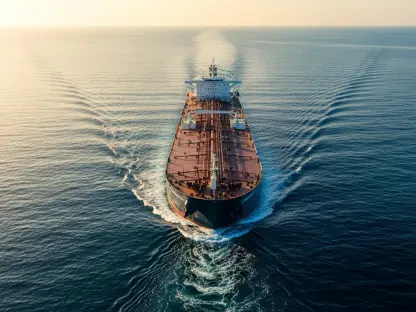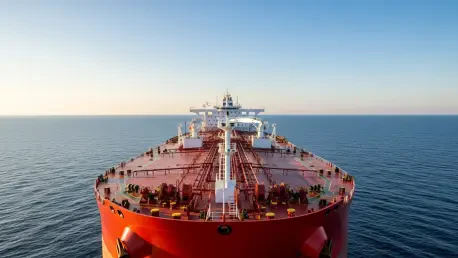

The shipping lanes leading to Cuba’s ports have fallen into a disquieting silence, a vast emptiness that mirrors the draining fuel tanks and growing anxiety of an entire nation. This is not a logistical delay or a temporary shortage; it is a calculated, full-scale halt of the island’s primary energy lifeline. For 10 million people, the consequences of this politically engineered drought are rapidly shifting from an abstract threat to a devastating reality, forcing a country already on the brink to confront the possibility of a complete societal shutdown. The core of this crisis lies in a geopolitical gambit, where the flow of Venezuelan oil has been weaponized, placing the daily survival of the Cuban people directly in the crosshairs of international power struggles.
The Countdown Begins as a Nation’s Fuel Supply Vanishes
For an entire month, not a single tanker of Venezuelan oil has reached Cuban shores, a stark reality confirmed by shipping data and internal documents from the Venezuelan state oil company. This abrupt cessation is not a gradual slowdown but a complete stop, triggering an immediate and escalating crisis across the island. As Cuba’s limited domestic reserves dwindle with each passing day, the government faces the monumental challenge of managing a rapidly depleting resource essential for everything from electricity and transportation to food production and medical services. The question is no longer if a collapse will occur, but how catastrophic it will be when it does.
The magnitude of the loss is staggering. Prior to the cutoff, Venezuela was Cuba’s top supplier, providing an average of 26,500 barrels per day (bpd), a volume that accounted for roughly one-third of the island’s total daily consumption. This figure dwarfs the contributions from all other sources combined. Mexico, the next largest supplier, provided a mere 5,000 bpd, while scant deliveries from Russia and other allies are but a drop in an ocean of need. The sudden removal of such a significant portion of its energy supply has left Cuba with a deficit that cannot be filled, pushing its already fragile systems toward an inevitable breaking point.
The Perfect Storm of a Siege Scenario Years in the Making
This crisis did not materialize overnight; it is the culmination of a perfect storm that has been gathering for years. At its center is Cuba’s profound and long-standing dependency on Venezuelan oil, an alliance forged in political solidarity that became an economic Achilles’ heel. This reliance left the island uniquely exposed when its benefactor fell under intense international pressure. Decades of a centralized, struggling economy meant there were no robust domestic industries or foreign currency reserves to cushion the blow, making the nation completely susceptible to external shocks.
Compounding this dependency is the fragile state of Cuba’s internal infrastructure. The nation’s power grid is antiquated and unreliable, with frequent outages being a normal part of life long before the fuel vanished. Public transportation is chronically strained, and agriculture remains heavily dependent on fuel for machinery and distribution. This pre-existing state of decay created a scenario where any disruption to the energy supply would have an immediate and amplified effect. The Trump administration’s targeted economic warfare was therefore not just a push but a decisive shove against a structure that was already poised to topple.
Anatomy of a Blockade and How the Tap Was Turned Off
The mechanics of the blockade were ruthlessly efficient, designed to sever Cuba’s energy lifeline at its source. The United States implemented a series of sanctions and diplomatic pressures that effectively scared off shipping companies, insurers, and vessel owners from facilitating oil deliveries. This policy created a high-risk environment where any entity involved in the Venezuela-Cuba oil trade faced severe financial penalties. The result was a de facto maritime blockade, where even clandestine attempts, like a mid-December delivery of 600,000 barrels from a tanker that had switched off its transponder, became increasingly rare and perilous missions.
This strategy was an explicit component of the Trump administration’s broader geopolitical endgame. The objective was twofold: to cripple the government in Caracas and to destabilize its staunchest ally in Havana. By choking off Cuba’s oil supply, Washington aimed to accelerate the collapse of its communist-run government, viewing the island’s economic distress as a powerful tool for political change. Public statements urging Cuba to “strike a deal ‘before it is too late'” underscored the administration’s intent to use the embargo as a weapon to force political concessions, turning energy into an instrument of statecraft.
In this high-stakes confrontation, Cuba found itself increasingly isolated on the world stage. Other oil-producing allies, such as Angola and Brazil, remained conspicuously silent, unwilling to risk invoking the wrath of the United States by offering assistance. This left Cuba with only a trickle of aid and no viable, large-scale alternatives to replace the torrent of Venezuelan oil. The limited support it received, including a single Mexican tanker carrying just 85,000 barrels of fuel, was a symbolic gesture rather than a sustainable solution, highlighting the stark reality that Cuba was largely alone in facing its darkest hour.
Echoes of a Crisis Through Expert Predictions and Citizen Fears
The consensus among energy analysts is grim and unequivocal. Jorge Pinon, an energy researcher at the University of Texas at Austin, offered a stark assessment, labeling the situation as “catastrophic” for the island nation. “I just don’t see any light at the end of the tunnel for Cuba to survive the next few months facing zero deliveries of oil from Venezuela,” Pinon stated, capturing the professional consensus that the country is heading toward a full-blown humanitarian emergency with no clear exit strategy. His analysis reflects a broader understanding that the island lacks the resources and international support to weather this storm.
This expert view is mirrored in the palpable anxiety spreading through the Cuban population. For ordinary citizens, the geopolitical conflict has translated into an existential threat to their daily lives. “What will happen now?” asked Deyanira Gonzalez, a 57-year-old housewife who already cooks with charcoal due to unreliable electricity. “If Donald Trump doesn’t let fuel into Cuba, we’ll be in the dark with our kids suffering.” Her words echo the fears of millions who see their ability to cook, travel, and provide for their families hanging in the balance. Victor Romero, a 75-year-old retired state worker, encapsulated the collective stress, noting the profound uncertainty of what either the Cuban or U.S. government would do next.
In stark contrast to this widespread dread stands the defiant posture of the Cuban government. President Miguel Diaz-Canel has consistently projected an image of unwavering resistance against U.S. pressure. In public addresses, he has asserted Cuban sovereignty with declarations like, “Nobody tells us what to do,” and has vowed that the nation is “prepared to defend the homeland until the last drop of blood.” This narrative of high-stakes political brinkmanship creates a jarring juxtaposition between the government’s rhetoric of strength and the tangible fears of a populace bracing for profound hardship.
Surviving the Blackout in a Portrait of Cuban Resilience and Disparity
The unfolding crisis is not a monolithic event but a tale of two Cubas, starkly divided along urban and rural lines. For much of the countryside, life already resembled a caricature of a bygone era, with horse-drawn carriages and bicycles serving as primary modes of transportation and power outages being more common than not. In these areas, the fuel shortage has deepened an existing reality of scarcity. In contrast, the capital city of Havana has experienced a more managed, though still precarious, rationing of resources. Residents reported that while fuel was being conserved, essential services continued, and blackouts had even decreased slightly in early January, a likely consequence of lower post-holiday energy demand.
Decades of economic hardship have inadvertently equipped the Cuban people with a unique set of survival skills. Strategies born from scarcity are now essential coping mechanisms in this deepening energy emergency. The widespread use of bicycles is not a lifestyle choice but a transportation necessity. Cooking with charcoal is a practical adaptation to an unreliable power supply. This ingrained resilience, while a testament to the ingenuity of the people, also underscores the chronic nature of the island’s struggles, which have now been pushed to an extreme by the blockade.
These adaptations, however, are measures of survival, not prosperity. They reveal a society that has learned to function on the margins, making do with less for generations. The current crisis threatens to overwhelm even these time-tested strategies, pushing the limits of Cuban resilience. The ability to endure does not negate the suffering involved, and as the fuel reserves continue to fall, the daily lives of millions are being systematically dismantled, transforming a nation’s spirit of endurance into a desperate struggle for existence.
The politically motivated disruption of Venezuela’s oil supply ultimately triggered a severe humanitarian emergency in Cuba. This targeted action did not occur in a vacuum; it compounded the daily struggles of a population already reeling from decades of economic hardship and infrastructural decay. The crisis served as a stark reminder of the profound human cost of geopolitical conflict, where the intricate chess moves of global powers were paid for by the suffering of ordinary people. The uncertainty that gripped the nation became a defining, and stressful, feature of modern Cuban life, leaving a lasting legacy of hardship and anxiety.