
With major investments reshaping public transport, we’re seeing a powerful shift towards sustainable, zero-emission travel. Nowhere is this more apparent than in Norfolk, where a new £13.8 million project is set to bring electric buses to Great Yarmouth. We sat down with Christopher Hailstone, a leading expert in energy management and utility infrastructure, to unpack this transformation. Our conversation explores the mechanics of the public-private partnership driving this change, the technical and operational hurdles of electrifying a fleet, the business case for shared charging networks, and the valuable lessons learned from an even larger rollout in nearby Norwich.
The Great Yarmouth project involves an £8.9 million contribution from First Bus and significant funding from Norfolk County Council. Could you elaborate on how this public-private partnership was structured and what key milestones are planned to ensure this £13.8 million investment is used effectively?
This is a classic and highly effective model for funding large-scale infrastructure transitions. You have the private operator, First Bus, committing the lion’s share of the capital—£8.9 million—which covers the assets like the buses and a portion of the depot work. Then, the public entity, Norfolk County Council, steps in with the remaining funding through its Bus Service Improvement Plan. This public capital de-risks the investment for the operator and aligns the project with broader regional goals like emissions reduction. The milestones are staged logically: first, the civil engineering work at the Caister Road depot, then the installation of the complex high-power charging equipment. Following that, the 10 electric buses are delivered and commissioned, with the final milestone being the full launch of the service, which is anticipated by this autumn.
The 10 new electric buses will run on Service 8 between the hospital and Caister. What specific operational challenges do you anticipate in this rollout, and how will passengers and local communities experience the promised benefits of quieter, zero-emission journeys on this specific route?
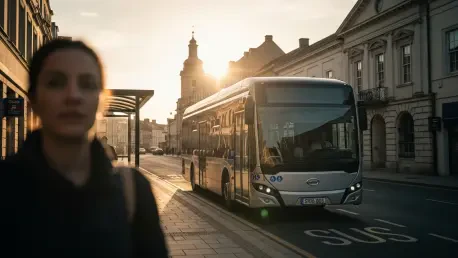
Operationally, the primary challenge is always ensuring absolute reliability. This means meticulous management of charging schedules to guarantee the buses are always ready for service without straining the local grid. Driver training is also crucial, as operating an electric bus to maximize its range and efficiency is different from driving a diesel. For passengers and the community, the change will be immediately noticeable. Imagine the area around James Paget University Hospital, where the usual rumble and exhaust fumes of a bus are replaced by a quiet, smooth hum. This creates a much more pleasant, less stressful environment. For residents along the route through Great Yarmouth town centre, the reduction in noise and the complete elimination of tailpipe emissions will directly contribute to better local air quality and a more peaceful streetscape.
The depot upgrade includes high-power charging, and the site will join the First Charge network, offering charging to other fleet operators. Can you walk me through the technical requirements for this system and explain the business model for providing this service to other companies?
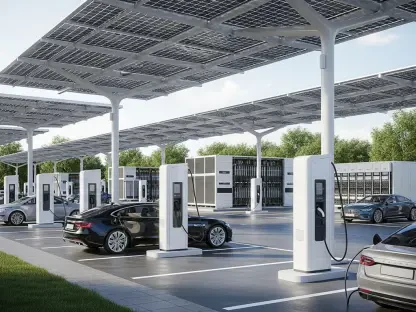
Installing high-power charging at a commercial depot is a significant undertaking that goes far beyond simply putting in charge points. It requires a substantial grid connection upgrade, working with the utility provider to ensure the depot can draw enough power to charge a fleet of buses simultaneously without destabilizing the local network. The business model for the First Charge network is quite savvy. First Bus is already incurring the high capital cost of this grid upgrade for its own needs. By opening up that infrastructure to other local commercial fleet operators, they turn a cost center into a new revenue stream. This helps other businesses transition to electric without each one needing to fund its own expensive grid connection, which in turn accelerates the decarbonization of transport across the region, well beyond just the bus service itself.
This program in Great Yarmouth builds on a much larger rollout of 70 electric buses in Norwich. What were the most valuable lessons learned from the Norwich project, and how are you applying them to ensure a smooth and successful launch in Great Yarmouth by the autumn?
The Norwich project was a massive undertaking, with a £37.2 million investment and 70 buses hitting the road earlier this year. The single most important lesson from that experience was validating the power of a committed partnership. The collaboration between First Bus and Norfolk County Council, which secured £14.7 million in government funding, was the bedrock of its success. That project essentially created a blueprint. It taught them precisely how to manage the complex depot conversion, how to phase the vehicle rollout, and how to engage with the public. Applying this proven model to Great Yarmouth significantly reduces the project risk. They aren’t starting from scratch; they are executing a refined plan, which is why they can confidently target a launch this autumn.
What is your forecast for zero-emission public transport in the East of England over the next five years?
My forecast is one of accelerated adoption. What we’re seeing in Norfolk isn’t an isolated event; it’s a template for the future. With the successful launch of 70 buses in Norwich and now the expansion into Great Yarmouth, the model of blending private investment with public funding from sources like the Bus Service Improvement Plan has been proven effective. I expect to see this pattern replicated in other towns and cities across the region. As the technology matures and the financial models become even more refined, the transition will gather momentum. Within five years, I believe electric buses will become the default standard for new vehicle procurement, leading to a significant and visible improvement in air quality and a much quieter, more modern public transport experience across the East of England.