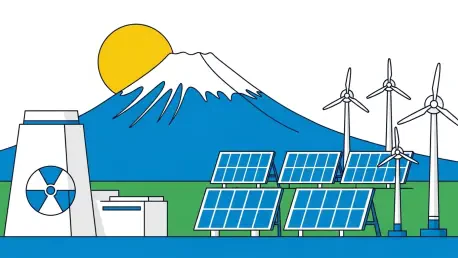

In a remarkable turnaround for one of the world’s most resource-dependent nations, Japan has engineered a significant reduction in its reliance on imported fossil fuels, driving its consumption of oil, gas, and coal for electricity generation to the lowest point in over a decade. This profound shift is not the result of a single policy but a powerful confluence of two parallel and accelerating trends: the strategic revival of its nuclear power sector and an unprecedented surge in renewable energy production. After years of navigating the complex aftermath of the 2011 Fukushima disaster, the nation is charting a new course toward energy independence. This transition is redefining its economic vulnerabilities and repositioning it as a leader in clean energy adoption among industrialized nations. The dual-pronged strategy has already yielded tangible results, displacing vast quantities of expensive foreign energy sources and laying the groundwork for a more secure and sustainable domestic power supply, signaling a permanent change in the country’s energy landscape.
The Dual Engines of Change
A Nuclear Renaissance Post-Fukushima
The resurgence of Japan’s nuclear power capacity has been a cornerstone of its recent energy success, with the nation’s fleet of reactors generating more electricity in 2025 than in any year since the near-total shutdown following the 2011 catastrophe. While current nuclear output remains approximately 73% below its 2010 peak, the steady and deliberate recovery marks a critical turning point. So far this year, nuclear power has supplied over 10% of the country’s utility-scale electricity, a significant milestone that has not been achieved in fourteen years. This comeback is the culmination of a lengthy and meticulous process involving rigorous safety upgrades, stringent regulatory reviews, and a gradual rebuilding of public and political confidence. Each reactor brought back online represents a substantial source of reliable, carbon-free baseload power, directly contributing to grid stability and reducing the intermittent gaps often associated with renewable sources. The methodical nature of this revival underscores a long-term commitment to nuclear energy as an indispensable component of Japan’s decarbonization and energy security strategy.
This calculated increase in nuclear generation has had an immediate and profound effect on Japan’s consumption of fossil fuels, particularly liquefied natural gas (LNG). The consistent power supplied by the reactivated nuclear plants has enabled utilities to significantly curtail the operation of gas-fired power plants, pushing their output to a six-year low. This displacement is not merely an environmental victory but a crucial economic one. By lessening its dependence on imported LNG, Japan insulates itself from the volatile price fluctuations and geopolitical risks that characterize the global gas market. The strategic decision to revive its nuclear fleet is therefore a direct response to the economic pressures of a massive energy import bill. This shift represents a fundamental realignment of national policy, prioritizing domestic energy production to enhance security, stabilize consumer electricity costs, and reduce the outflow of capital for foreign energy resources, creating a more resilient and self-sufficient power system for the future.
The Unprecedented Growth of Clean Energy
Complementing the nuclear revival is an explosive and record-setting expansion across the renewable energy sector. Throughout the first ten months of 2025, generation from bioenergy, solar, and wind farms has surged, with each category increasing its output by at least 10% compared to the previous year. This growth has been particularly pronounced in solar and bioenergy, which have achieved their largest-ever shares of the national power supply. Solar power, benefiting from years of policy support and declining technology costs, now accounts for a remarkable 14% of the energy mix. Meanwhile, bioenergy has carved out a 7% share, showcasing the nation’s commitment to diversifying its renewable portfolio beyond solar and wind. This rapid deployment reflects a mature and robust clean energy market, where sustained investment and technological innovation are translating into significant contributions to the national grid, fundamentally altering the country’s generation profile away from its historical reliance on imported fuels.
The combined output from all clean energy sources—encompassing nuclear, solar, wind, and bioenergy—has created a powerful synergy that is reshaping Japan’s energy landscape. Together, these sources generated an impressive 326.3 terawatt-hours (TWh) of electricity, the highest total volume recorded for any full year since 2010. This landmark achievement highlights the effectiveness of Japan’s multi-faceted strategy, which leverages the strengths of different clean technologies. Nuclear power provides a stable, 24/7 baseload supply, which is critical for industrial operations and grid stability. This is increasingly supplemented by the variable but abundant power from solar and wind, whose peak generation often aligns with periods of high demand. This integrated approach demonstrates a sophisticated understanding of modern grid management, proving that a diverse portfolio of domestic, low-carbon energy sources can reliably power a major industrial economy while simultaneously advancing national goals of security, affordability, and environmental stewardship.
Policy, Economics, and Global Impact
A Mandate for Energy Independence
The momentum behind Japan’s energy transition is strongly reinforced by a clear political will to achieve greater self-sufficiency. This agenda is championed by the nation’s new Prime Minister, Sanae Takaichi, whose administration has made energy security a central policy pillar. During her campaign, Takaichi pledged to bolster domestic electricity supplies, lower costs for consumers and businesses, and decisively reduce the nation’s heavy reliance on expensive foreign energy. These promises are now being translated into concrete action, most notably through the government’s strong support for restarting additional reactors, including those at the Kashiwazaki-Kariwa nuclear power plant, the largest in the world. This top-down political support provides the regulatory certainty and public backing necessary to accelerate the revival of the nuclear fleet and continue the aggressive deployment of renewables. The alignment of political leadership with national energy goals has created a powerful, unified front aimed at fundamentally re-architecting Japan’s energy future.
The political drive for energy independence is deeply rooted in stark economic realities. In 2024 alone, Japan spent a staggering 10.7 trillion yen, equivalent to $68 billion, on imports of liquefied natural gas and coal. This immense expenditure represents a significant drain on the national economy and exposes the country to the whims of volatile international commodity markets and geopolitical instability in energy-producing regions. Consequently, the push toward domestic clean energy is framed as much as an economic imperative as it is an environmental one. By shifting investment from foreign fossil fuels to domestic nuclear and renewable infrastructure, the government aims to retain capital within Japan, create high-skilled jobs, and foster technological innovation. This strategic pivot is designed to transform a long-standing economic vulnerability into a source of strength, ensuring a more stable, predictable, and affordable energy supply that will enhance the nation’s long-term economic competitiveness and security.
A New Paradigm in Global Energy
Japan’s decisive shift away from fossil fuels is poised to create significant disruptions in global energy markets. As one of the world’s foremost importers of LNG and thermal coal, any substantial reduction in its demand has immediate and far-reaching consequences for exporting nations. Countries that have long relied on Japan as a key customer will face mounting pressure to find alternative buyers for their output, a task made more challenging as other developed nations also pursue decarbonization. This shrinking demand from a major market could lead to a supply glut, potentially depressing global prices for natural gas and coal. The ripple effect of Japan’s transition extends beyond market dynamics; it signals a broader trend among industrialized, import-dependent nations to prioritize energy security through domestic clean energy. This strategic pivot will likely compel energy exporters to reassess their long-term business models and accelerate their own transitions toward a more diversified economic base.
Ultimately, Japan’s strategic revival of its nuclear capacity, married with an aggressive and successful deployment of renewable energy, created a profound and lasting transformation of its energy landscape. This dual-pronged approach proved to be a powerful formula that not only displaced significant volumes of imported fossil fuels but also fortified the nation’s economic and energy security. The transition sent an unmistakable message to global energy suppliers about the accelerating decline in long-term demand for coal and natural gas from one of their most crucial markets. For Japan, the continued growth of domestic clean energy sources solidified a path toward a more secure, cleaner, and more affordable electricity supply. This journey offered a compelling model for other nations, demonstrating that a determined and diversified clean energy strategy was an achievable solution to the trilemma of energy security, economic stability, and environmental responsibility.