
A nation historically defined by its formidable nuclear power is now caught in a state of strategic paralysis, struggling to chart a course that balances its atomic legacy with the urgent demands of a green energy transition. France’s critical 10-year energy planning law, the essential blueprint for its future, has become ensnared in political conflict and industrial uncertainty. The delay raises a pivotal question: how can one of Europe’s energy leaders secure its future when it cannot agree on the path forward?
The High Stakes Blueprint for a Nation’s Future
At the heart of the deadlock is the Programmations Pluriannuelles de l’Énergie (PPE), a comprehensive 10-year strategy that has been delayed well past its intended release. This document is far more than a bureaucratic exercise; it is the definitive roadmap that sets national targets for nuclear power generation, renewable energy deployment, and the country’s overarching climate commitments. It dictates the very structure of France’s energy mix for the next decade.
The consequences of this paralysis extend deep into the French economy and its international standing. For industries, the PPE provides the certainty needed to make long-term investments, plan infrastructure projects, and create jobs. Its absence creates a holding pattern that stifles growth and innovation. Furthermore, this framework is the linchpin for ensuring France’s energy security and its ability to meet legally binding climate goals, making its finalization a matter of national strategic importance.
The Core of the Conflict a Nation Divided
The primary driver of the gridlock is a fierce political battle. The current government is pushing to significantly expand renewable energy capacity, a move that has been met with a strong and sustained opposition campaign from the far-right. This ideological clash over the role of wind and solar power in France’s energy landscape has transformed the PPE from a technical plan into a political battleground, effectively stalling its progress.
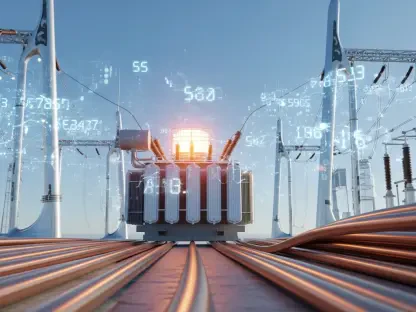
This political stalemate has created a ripple effect of uncertainty across the energy sector. The renewable industry faces a significant business slowdown, as companies await the PPE’s final targets and government tender schedules before committing to future investments. In parallel, the nuclear sector, while a source of national pride, is also in limbo. The law is considered essential to legally shield the ambitious plan from utility EDF to construct six new reactors, protecting the multi-billion-euro project from potential future legal challenges.
Voices from the Gridlock
Amid the political pressure, the government has maintained a firm stance. Prime Minister Sebastien Lecornu has definitively ruled out any moratorium on renewable energy development, signaling an unwavering commitment. He has underscored the government’s intent to support the “French sovereign industrial sectors” that are integral to building out these technologies, framing the green transition as an industrial opportunity as much as an environmental necessity.
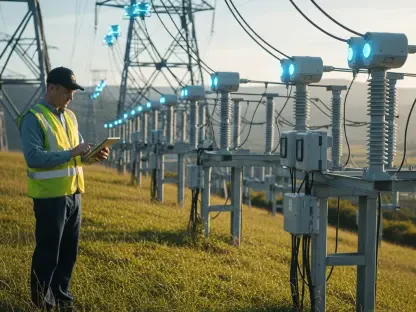
However, a complicating factor has emerged from an unexpected source. A new report from RTE, France’s independent grid operator, indicates that national power demand is growing more slowly than previously forecast. This analysis introduces a critical new variable into the debate, raising questions about a potential future oversupply of electricity if both nuclear and renewable expansion plans proceed at full scale. Policymakers now face the challenge of justifying a massive energy build-out in the face of potentially flattening demand.
Key Signposts on the Path Forward
With a critical Christmas deadline looming for the PPE’s finalization, all eyes are on how the government will navigate these competing pressures. Missing this deadline would prolong the uncertainty, further impacting investor confidence and delaying critical infrastructure projects needed for the country’s energy transition.
The final version of the law will be scrutinized for several key elements. Observers are watching to see how it legally enshrines and protects the construction of new nuclear reactors, providing the long-term stability EDF requires. For the renewables sector, the crucial details will lie in the scale and structure of future government tenders. Finally, the plan must address how policymakers will balance the new forecasts of slowing power demand within a strategy originally designed for massive energy expansion, a decision that will shape France’s energy market for years to come.
Ultimately, the protracted struggle to finalize France’s energy plan highlighted the profound difficulty of balancing deep-seated political divisions with ambitious industrial goals. The path forward was complicated by shifting energy forecasts that forced a re-evaluation of the nation’s needs. The final decisions made were not just about megawatts and timelines; they were a reflection of a country grappling with its identity in an era of unprecedented energy transformation.