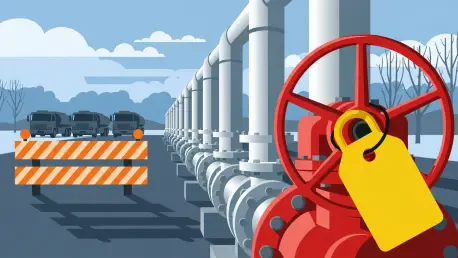

A four-day countdown begins
Four days to idle Serbia’s only refinery—what happens when financing stops before fuel does, when wires go silent while tanks still hold product and workers keep gauges steady yet crude cannot cross a pipeline that yesterday flowed without fuss. The clock started when banks and a pipeline operator signaled they would no longer touch transactions linked to NIS, the country’s dominant oil company, even though its units remained ready to run.
President Aleksandar Vucic put it bluntly: “Without relief, the refinery will shut in four days,” a line that cut through technical caveats and landed like a siren for drivers, airlines, and grid managers. The paradox felt stark—machinery in order, staff on shift, but financial and logistical valves tightening to a near close.
Why this story mattered now
This was not an isolated disruption. NIS, anchored by Gazprom Neft’s 44.9% stake and Gazprom’s 11.3%, controlled the refining heart of Serbia’s fuel market, with the state holding 29.9% and small investors the balance. When U.S. secondary sanctions moved from waivers to full enforcement in October, the ripple moved quickly from Washington guidance to Balkan forecourts.
The pivot from leniency to enforcement turned intermediaries into enforcers. Banks refused to process NIS payments, and Croatia’s JANAF pipeline halted crude flows. Washington offered an off-ramp with a firm condition: complete Russian divestment by February 13 to reopen normal financial and logistical channels. For Serbia, the stakes ran beyond pump prices into regional energy security and political leverage.
Pressure points and timeline
Sanctions relief had stretched through multiple waivers, allowing trade to limp forward under tight scrutiny. That grace ended when OFAC enforcement fully applied in October, activating compliance alarms across European banking desks. Within days, correspondent banks froze transactions and insurers stepped back, while JANAF notified counterparties that crude for NIS would not move.
The immediate effects showed how policy travels through pipes and spreadsheets. No physical blockade was needed—payment rails, trade finance, and a single pipeline chokepoint delivered a comprehensive pause. Banking sources were frank: “Processing NIS transactions now carries secondary sanctions exposure,” a risk that most compliance teams met with an unambiguous “no.”
Inside the refinery on “hot standby”
NIS shifted the Pancevo refinery into hot standby, a state that keeps units warm, staffed, and safe for a rapid restart once crude returns. That posture preserved catalysts and equipment while curbing throughput, a costly balance between operational readiness and idling losses.
Management briefings insisted the market could be served from existing stocks for now. “Hot standby allows a rapid restart once crude arrives,” executives said, signaling to traders and staff that the pause was logistical, not mechanical. Serbia’s central bank added pressure, indicating it would halt NIS payments if the operating license was not extended—another lever that narrowed room to maneuver.
Politics, ownership, and a narrowing path
Vucic set a 50-day window for Russian shareholders to sell, underscoring a choice between negotiated exit and a state-led takeover or buyout. Each path carried its own thicket: legal liabilities, valuation under sanctions stress, and diplomatic reverberations with Moscow and Washington.
A third-party buyer faced due diligence pitfalls, from sanctions screening to future crude sourcing and insurance. A state acquisition might deliver control but invite retaliation or further restrictions. Belgrade therefore had to weigh short-term fuel stability against longer-term alignment with European compliance norms and financing access.
Inventory buffers and short-term supply
Authorities outlined a cushion. NIS held about 55,000 tons of diesel and 50,000 tons of gasoline, while state reserves added roughly 184,000 tons of diesel and 19,000 tons of gasoline. Import plans for December and January aimed to stretch that buffer, though storage limits, truck and rail capacity, and counterparties’ risk tolerances imposed real boundaries.
Fuel retailers reported steady deliveries through the week, but warned of “supply gaps” if imports lagged and inventories drained faster than expected. Price volatility loomed as a second-order risk; even modest delays could force airlines, logistics firms, and farmers into higher-cost spot purchases.
Beyond the pump: power and industry risks
A prolonged shutdown could strain electricity generation if diesel backup and fuel oil supplies tightened, especially during cold snaps when demand spikes. Industrial sites that rely on steady diesel and gasoline flows would face curtailments, with downstream impacts on employment and exports.
Airlines felt exposed to jet fuel swings, while trucking firms modeled surcharges and route changes to hedge uncertainty. Analysts flagged a familiar pattern: secondary sanctions “weaponize intermediaries,” turning banks and pipeline operators into the decisive constraint without a single soldier or seal on a valve.
Learning from other sanctioned refineries
Past cases echoed in the Balkans. Refineries in sanctioned jurisdictions often failed not from broken units but from evaporating letters of credit, stranded cargoes, and insurers stepping back. Workarounds—shell buyers, barter-like swaps, or off-ledger financing—tended to collapse under audit and compliance scrutiny.
Successful transitions hinged on transparent ownership changes, credible compliance programs, and diversified crude routes. Those that diversified financing toward non-exposed banks and aligned procurement with strict standards recovered faster, even if throughput returned at a lower baseline for months.
A practical roadmap forward
Serbia’s decision tree sorted into three phases. In triage over the next month, priorities included jet fuel and diesel allocations, swap deals with compliant suppliers, and an extension of NIS licensing to keep permitted payment rails open. In transition through the next quarter, due diligence for a third-party buyer had to accelerate, with legislation ready for a temporary operating mandate or escrowed management if a sale stalled.
Stabilization beyond that meant diversifying crude sources and routes, building non-Russian financing lines, and aligning plant compliance with EU standards to calm banks and insurers. NIS and partners could maintain hot standby integrity, pre-clear compliant cargoes, and arrange insurance with non-exposed carriers—all while publishing weekly inventory data to deter panic buying.
What to watch next
Five variables told the story in real time: divestment milestones, bank compliance posture, JANAF access, the inventory burn rate, and regional diesel and jet price spreads. A narrow license from Washington tied to a binding sale agreement could restore limited flows, while an escrow structure might keep payments lawful during a transition.
For market participants, the signal would come from freight fixtures and LC issuance; if neither moved, the countdown would grow louder. Retail prices, airport allocations, and power-plant dispatch choices would reveal how close Serbia stood to the edge.
Conclusion
The crisis had clarified the leverage points, and the tools for relief were on the table: a clean divestment, a temporary operating mandate under escrow, and a disciplined import program that met compliance standards. The decisive moves rested on swift ownership action and credible assurances to banks and JANAF that exposure had diminished. If those steps landed, hot standby could have become restart, and the refinery’s role in Serbia’s energy system would have been stabilized under new rules. If they slipped, the four-day warning would have turned into a longer silence—one broken only when finance, law, and logistics were realigned toward a sanctioned-proof future.