
A Landmark Project Under a New Political Lens
The Trump administration has initiated a review of the federal approval for Dominion Energy’s Coastal Virginia Offshore Wind project, casting uncertainty over a flagship renewable initiative. Revealed in a court filing, the move signals a potential policy reversal, placing the nearly complete, multi-billion-dollar project in a precarious position.
From Green Light to Gridlock: The Project’s Journey So Far
The $11.2 billion CVOW project received federal approval under the previous administration, positioned to power 660,000 homes. Its development was a major step for U.S. offshore wind, but lawsuits from conservative groups created the legal opening for the new administration’s intervention and the current re-evaluation.
Navigating a Shifting Policy Landscape
The Ideological Underpinnings of the Re-evaluation
A directive from Interior Secretary Doug Burgum to end “preferential treatment” for renewables drives this review, aligning with President Trump’s skepticism of offshore wind. The department may ask a court to “remand” the approval, sending it back to the agency for a do-over under a more critical framework.
Concrete Progress vs. Political Uncertainty
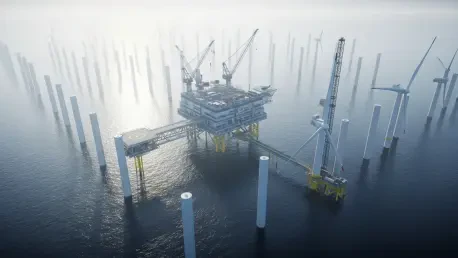
While Washington debates, the project is nearly complete. Dominion Energy has installed all 176 monopile foundations and laid deepwater cables, with one of three substations finished. This advanced state creates a high-stakes dilemma, as the project is a tangible piece of infrastructure, not a blueprint.
Legal Strategy and the High-Stakes Courtroom Battle
A 45-day stay in litigation, requested by the Interior Department and plaintiffs, provides the mechanism for this review. While Dominion consented to the procedural pause, it has not conceded the legitimacy of any attempt to revoke its permit. This highlights the complex interplay between the executive, judiciary, and industry.
The Ripple Effect: What the Virginia Review Means for U.S. Offshore Wind
This re-evaluation is a bellwether for the U.S. offshore wind sector. Halting a project this advanced would send a chilling signal to investors, introducing a new level of political risk. The outcome will set a precedent for other projects, potentially grinding the burgeoning industry to a halt.
Key Takeaways for Industry Stakeholders and Investors
The situation offers crucial insights. It underscores the need for developers to factor political volatility into risk assessments and highlights the vulnerability of capital-intensive projects to policy shifts. For policymakers, it is a reminder that regulatory certainty is the bedrock of private investment.
A Defining Moment for America’s Energy Transition
The project’s reconsideration encapsulates America’s energy policy conflict between established priorities and a renewable future. With foundations in the water, the project is a testament to progress, yet it faces a political current that could stop it. The resolution will signal the direction of the nation’s long-term energy strategy.