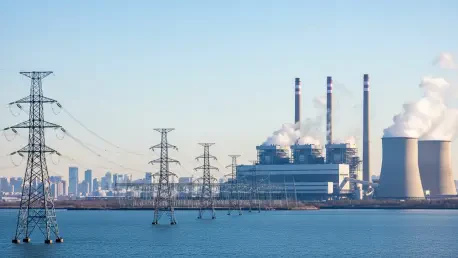

A 64-year-old coal plant on the shores of Lake Michigan, once slated for retirement, has unexpectedly become the epicenter of a high-stakes national power struggle, pitting federal authority against states’ rights in a contentious debate over America’s energy future. The J.H. Campbell power plant in Ottawa County was scheduled to power down permanently in May of last year, marking another milestone in the nation’s transition away from fossil fuels. Instead, it remains online, a symbol of a deep-seated conflict that questions the very definition of a national emergency and carries a nine-figure price tag for consumers. This confrontation is more than a dispute over a single facility; it represents a fundamental clash of ideologies, testing the limits of executive power and setting a precedent that could reshape energy policy for years to come.
Defining a Grid Emergency in the Energy Transition
The central question fueling the conflict over the Campbell plant is who holds the authority to declare a grid emergency. The Trump administration, through the Department of Energy (DOE), has repeatedly invoked federal emergency powers to keep the aging facility operational, issuing a series of 90-day directives that override a carefully constructed state-approved retirement plan. These powers, traditionally reserved for short-term crises like natural disasters, are being used to extend the life of a plant nearly a year past its planned closure, raising legal and procedural questions about the scope of federal oversight.
This escalating use of executive authority has transformed a local decommissioning into a national test case. State regulators and a coalition of attorneys general argue that the decision to retire the plant was part of a long-term strategy to ensure grid stability while transitioning to cleaner energy sources. They contend the federal intervention is an overreach, creating a “manufactured crisis” to justify a policy objective. In contrast, the administration maintains that its actions are a necessary precaution to prevent blackouts, forcing a confrontation that will ultimately determine whether federal agencies or state bodies have the final word on critical energy infrastructure decisions.
A Local Plant at the Center of a National Debate
While the J.H. Campbell plant is a local fixture, its fate reverberates across the national energy landscape. The conflict it embodies is a microcosm of the broader transition occurring throughout the United States, as utilities move away from coal in favor of natural gas and renewable energy sources. Michigan’s plan to decommission the plant was not an isolated event but part of a multi-year, state-sanctioned strategy by its owner, Consumers Energy, to modernize its portfolio and reduce its carbon footprint.
The Trump administration’s intervention, however, represents a direct challenge to this trend. By forcing the plant to remain open, the federal government is asserting a pro-fossil fuel policy that clashes directly with state-level planning and market dynamics. This action establishes a significant precedent, suggesting that federal priorities can supersede state-approved energy roadmaps. Consequently, the outcome of this dispute will likely influence future infrastructure projects nationwide, as states and utilities weigh the risk of federal intervention in their long-term investment and retirement decisions.
The Anatomy of a Federal and State Standoff
The conflict is being waged on multiple fronts, with each side deploying distinct strategies and justifications. At the federal level, Department of Energy Secretary Chris Wright has orchestrated the intervention through repeated 90-day emergency orders. This tactic is not unique to Michigan; Wright has applied a similar playbook to prop up five other aging coal plants across three states, signaling a coordinated, administration-wide effort to support the coal industry under the banner of national security.
In defense of these actions, the administration points to the need for unwavering grid reliability, citing rising electricity demand from new industries like AI data centers. Secretary Wright specifically highlighted the Campbell plant’s performance during a late-January weather event, “Winter Storm Fern,” as proof of its essential role. This narrative of necessity frames the intervention as a critical measure to safeguard the power supply. In direct opposition, a coalition of states, including Michigan, Minnesota, and Illinois, alongside environmental groups, has mounted a formidable legal challenge. They argue that the DOE is abusing its authority and ignoring the comprehensive replacement plan already approved by Michigan regulators, which they insist is more than adequate to meet energy needs.
The High Cost of Keeping Coal Online
The decision to keep the Campbell plant running carries significant financial consequences that extend far beyond Michigan’s borders. According to regulatory filings from last year, operating the facility cost Consumers Energy more than $600,000 per day. After factoring in revenue from electricity sales, the utility was left with a net cost of $135 million. Consumers Energy is now seeking to recover these expenses from ratepayers not just in Michigan but across an 11-state Midwestern grid region, with an initial request for $40 million already filed for federal approval.
The economic debate is amplified by sharply contrasting views from key figures. Secretary Wright has lauded coal as the “MVP of recent winter storms,” declaring that President Trump’s policies are saving American lives by ensuring “affordable, reliable, and secure electricity access.” This sentiment was echoed by an industry advocacy group that recently named President Trump the “Undisputed Champion of Beautiful Clean Coal.” In stark contrast, Michigan’s state regulators have publicly maintained that no emergency exists that would justify the federal mandate and its associated costs, reinforcing the position that consumers are being forced to pay for a crisis that was politically motivated rather than technically necessary.
Legal Limbo and the Plant’s Uncertain Future
With legal challenges piling up in the U.S. Court of Appeals after each new emergency order, the ultimate fate of the J.H. Campbell plant remains suspended in judicial uncertainty. The coalition of states and advocacy groups continues to argue that the DOE’s actions are an illegal overreach, but the legal process has been slow. Progress has been hampered by procedural delays, including a request from a DOE lawyer to postpone a filing deadline due to a work backlog created by a prolonged government shutdown last year.
While the legal battle unfolds, the immediate reality is one of compliance and continued operation. Consumers Energy has stated its intent to follow the federal directives, and there is widespread anticipation that the DOE will continue issuing 90-day extensions. This cycle of short-term orders keeps the plant running indefinitely, creating a holding pattern that leaves consumers, regulators, and the energy industry awaiting a definitive judicial ruling that could redefine the balance of power between Washington and the states.
The protracted conflict over the J.H. Campbell plant ultimately underscored a fundamental schism in American energy policy. The administration’s use of executive power created a precedent that challenged state-level authority, while the economic burden raised critical questions about the cost of maintaining aging infrastructure. The legal battles it sparked left an indelible mark on the regulatory landscape, forcing a national conversation about how to balance grid reliability with the transition toward a new energy economy. In the end, the small Michigan plant became a powerful symbol of a larger, unresolved national debate.